Bowerman’s Nose: Legends are like memes in slow motion
“The universe is full of magical things patiently waiting for our wits to grow sharper.”
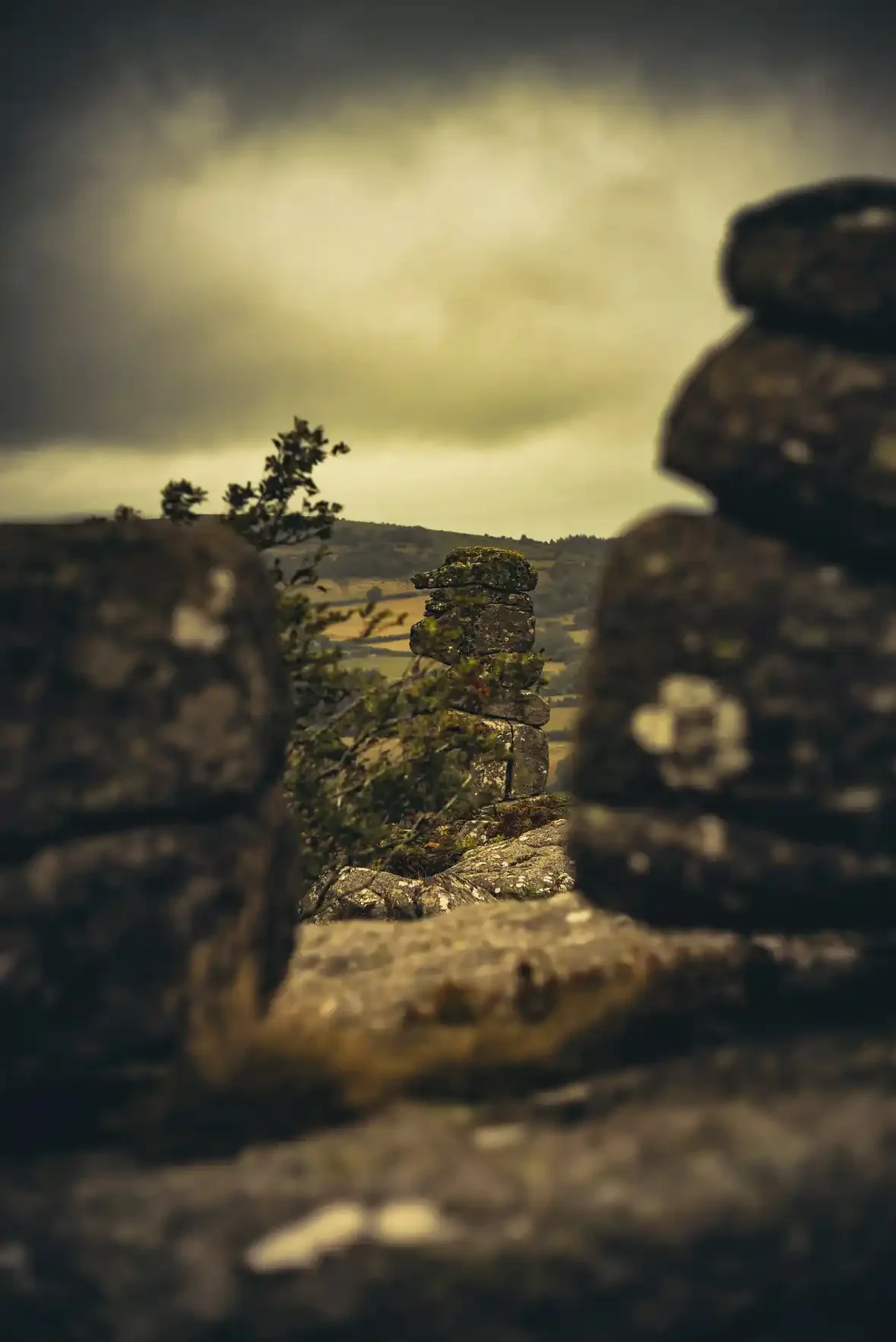
Bowerman’s Nose, shot on my Sony a7r with a Pentax 110 24mm lens - The vignetting adds to the mystique
Search anywhere for "Bowerman's Nose" today and almost every result will tell you basically the same story. A cocksure hunter and his faithful hounds are turned to stone by witches whose ritual they disturb.
The Dartmoor National Park website tells it. Atlas Obscura tells it. Nearly every local holiday cottage blog repeats it almost verbatim. ChatGPT, of course, will happily retell it with some extra bells and whistles.
The Legend of Bowerman’s Nose
Here is the basic outline: (in case you either don’t know, or can’t be bothered to read any of the online sources) - there are embellishments and slight deviations from this, however those are expected (and indeed, actively encouraged when you are constructing a legend).
Bowerman is a hunter (loved by all in the local area for his wonderful generosity and all round loveliness, because; as we all know; throughout time, every member of the landed gentry has been absolute saints).
An unfortunate Bowerman (and his hounds) accidently (or maliciously, depending on the version) upset a witches ritual, and they without hesitation decide that this mild inconvenience is worth petrifying somebody and in the process; making themselves an easy target for some not unwarranted local antagonism. Standard legend fair.

Now, I’m the first to say that I love a good myth, legend or random snippet of local folklore, however here's the really interesting bit about Bowerman’s Nose. The story, in the “complete” form that everyone knows, appears to have been reintroduced to the world in the early 80’s by two cheap visitor booklets sold in Devon gift shops.
Before that, you have to go back to a rather (to my mind) tongue-in-cheek book from 1939 to find anything resembling it. In the very same story, the author also manages to shoehorn in an appearance by Sir Francis Drake and blaming the witches for inventing the Welsh national dress 🤣
Before that, the rock had a profusion of disparate stories attached to it.
Let me try and explain why “Legends are like memes in slow motion” (or, I suppose “Memes are like Legends on Fast Forward” - whichever takes your fancy).
Preamble: I should probably explain that this piece started, as a lot of my better tangents do, with a recon mission.
I'd been asked to photograph a coven of witches (yes, they still exist, and yes, that's a different blog post) and my Hill & Moorland Leader brain decided Hound Tor was the right venue, accessible enough for a group with varied physical ability, and dramatic enough to make the slight incline worthwhile.
Whilst I was in the area checking the lay of the land, I wandered over to Bowerman's Nose because it was close enough and it had been a while since I’d last visited.
Whilst lying amongst fern and sheep poop, it occurred to me that I'd never taken the time to properly look into the legend behind the rocks.
So I did just that.
I also ended up using an abridged version of what you are about to read as the “presentation” you have to make for your Hill & Moorland Leader Assessment. Basically, you have to talk for ten minutes on the moor about something that interests you about Dartmoor. I presented my talk on the edge of Hartland Tor (it was pretty well received, if I say so myself).
What follows is the story of that story.
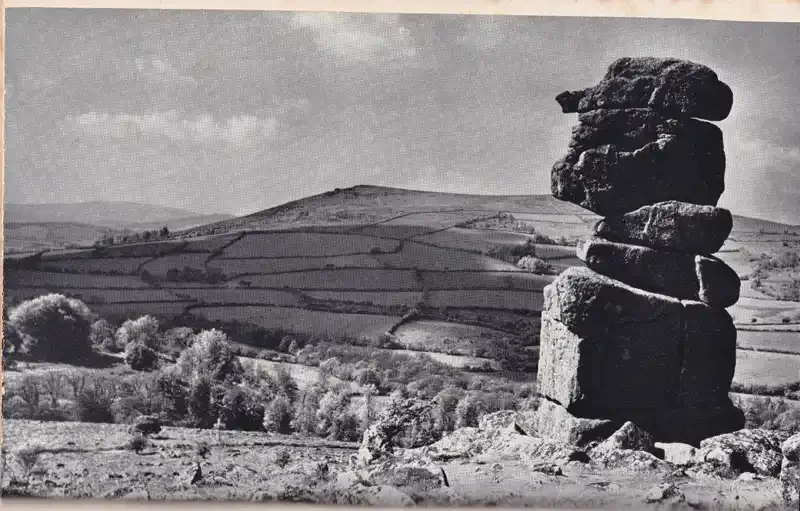
Photograph of Bowermans Nose - from “Dartmoor” by EW Martin 1958
A "Rock Idol" - Carrington and the Druids (1826)
As with most myths and legends there seems to be very little logic or even the pretence of coherence between the various lines of thought.
The earliest serious literary reference I can find to Bowerman's Nose is in Noel Thomas Carrington's 1826 poem “Dartmoor”. Carrington describes the “structure” as a "Rock Idol"; not in the Jimi Hendrix sense; and many commentators ran enthusiastically with the idea that Druids had carved the stones to this shape for ritual purposes.
This was very much the fashionable nineteenth-century reading. Antiquarians of the period were keen to find pre-Christian religious infrastructure absolutely everywhere on Dartmoor, and a thirty foot column of weathered granite that vaguely resembles a man was an obvious candidate.
There are zero witches in this version. There are absolutely no hounds and certainly no hare. There's just a bunch of rocks that kind of resemble a fellow in a flat cap, if you’re squinting, or have partaken of way too much strong Westcountry cider.
“On the very edge
Of the vast moorland, startling every eye,
A shape enormous rises ! High it towers
Above the hill’s bold brow, and, seen from far.
Assumes the human form ; - a Granite God !
- To whom, in days long flown, the suppliant knee
In trembling homage bow’d. The hamlets near
Have legends rude connected with the spot,
(Wild swept by every wind,) on which he stands
- The Giant of the Moor.”

Carrington himself, writing in the notes to his poem says;
“This is an enormous mass of stone or pile of rocks upon Heighen Down in Manaton, rising to a height of more than 30 feet. At a distance it wears the appearance of a rude gigantic figure, but, on a nearer approach, it is found to consist of ledges of granite, irregularly piled on each other. It is generally considered as a rock idol, and bears the name of Bowerman’s Nose, of which name there was a person in the Conqueror’s time, who lived at Huntor or Houndtor in Manaton. In the road from Two Bridges to Tavistock Dr. Berger and his friend Mr. Necker were both struck at once with the resemblance of a granite rock to the Egyptian Sphinx in a mutilated state.””
He goes on to expound the idea that those who think druids didn't have anything to do with Dartmoor are obviously deluded.
The Conqueror's man and the great stone - 1870-1900
By 1870 we get a different angle. A reference from the rather ramblingly named guidebook “The South of Devon and Dartmoor : Torquay, Teignmouth, Dartmouth, Dawlish, Totnes, Ashburton, Newton, Moreton, Kingsbridge, Tavistock, [etc.] with a Sketch of the natural history of the district” gives us another reading.
“This is assumed to have been a rock idol, but whether correctly or not we have no means of judging ; the cognomen of Bowerman being derived from a person of that name, who is said to have lived at Houndtor in the Conqueror’s time. These rocks are seen to the greatest advantage on the Manaton side, and consist of five layers, some of them severed into two distinct masses, the topmost stone being a single block, giving a fancied resemblance to the human organ. Carrington’s highly graphic and poetical description is immediately realised on approaching its vicinity —”
Suddenly the rock isn't a druid idol; it's a memorial to a real Norman local with a very large nose. Fifty years on from Carrington and still no witches, no hounds, no hare.
In 1898, Hilderic Friend's “Bygone Devonshire” throws all of this out. Friend can find no historical landowner named Bowerman, so he turns to his Celtic wordlist and proposes that the name is really maur + man - corrupted Celtic for "great stone."
“The curious pile of rocks, which is pointed out to the tourist near Manaton, bears the name of Bowerman’s Nose. One naturally expects so suggestive a name to have a legend attached to it. Bowerman is therefore a whilom worthy who owned the estate in the olden time, and was remarkable for his facial peculiarities. The rocks resemble the nose of the man, and are therefore named after that person. Alas! your unimaginative antiquary comes and cuts the ground from under you. He has been through Domesday, but can find no landowner named Bowerman ; and, moreover, he has turned up his Celtic wordlist and found that man means ‘a stone,’ and Bower is a corruption of “maur” which means ‘great’
The name Manaton itself is on the same principle shewn to have a purely rocky, and not a human association.”
This sounds very satisfying and is almost certainly totally incorrect. Various writers have noted that Celtic word order would put the noun first, giving us maen vawr, which would corrupt into something like "Minevower", not "Bowerman." Even with a broad Westcountry accent, they’re very different words.

The Dartmoor scholar R. Hansford Worth made this objection:
“No violence should be done to the forms of the language in which the name is assumed to have been framed. As an example: it is not permissible to derive ‘Bowerman’ from Vawr maen, the Great Stone, since the Celtic form would be maen vawr, as in the ‘Man of War’ rock off the Cornish coast.”
The much simpler explanation, as Eric Hemery later noted
“This is Bowerman’s Nose, a name perhaps attributable to the proboscis of a former moorman of the locality named John Bowerman, who was buried at North Bovey in 1663. More fanciful origins, such as are commonly attached to natural phenomena, may be discounted.”
The surname apparently turns up in Dean Prior records of 1772. It's a local family name. The rock memorialises a man, somehow, in some way, just as the 1870 source said.
In 1900, the Reverend Sabine Baring-Gould weighs in via “A Book of Dartmoor” and scolds anyone ridiculous enough to believe Druids had anything to do with the moor at all.
“There are, indeed, to be seen curious piles of rock, but none of these are artificial, and there is not a particle of evidence that any of them received idolatrous worship.”
Being of good Christian stock, it's hardly surprising he's keen to distance himself from the idea of druids (just pointing out, not judging). Baring-Gould is a renowned author and his debunking of ridiculous pagan theories is a recurring motif of his.
So, here’s the state of play at the beginning of the twentieth century: a possibly-Norman, possibly-Celtic, possibly-just-a-rock with a man's surname attached. Still no witches. Still no hounds. Still no hare.
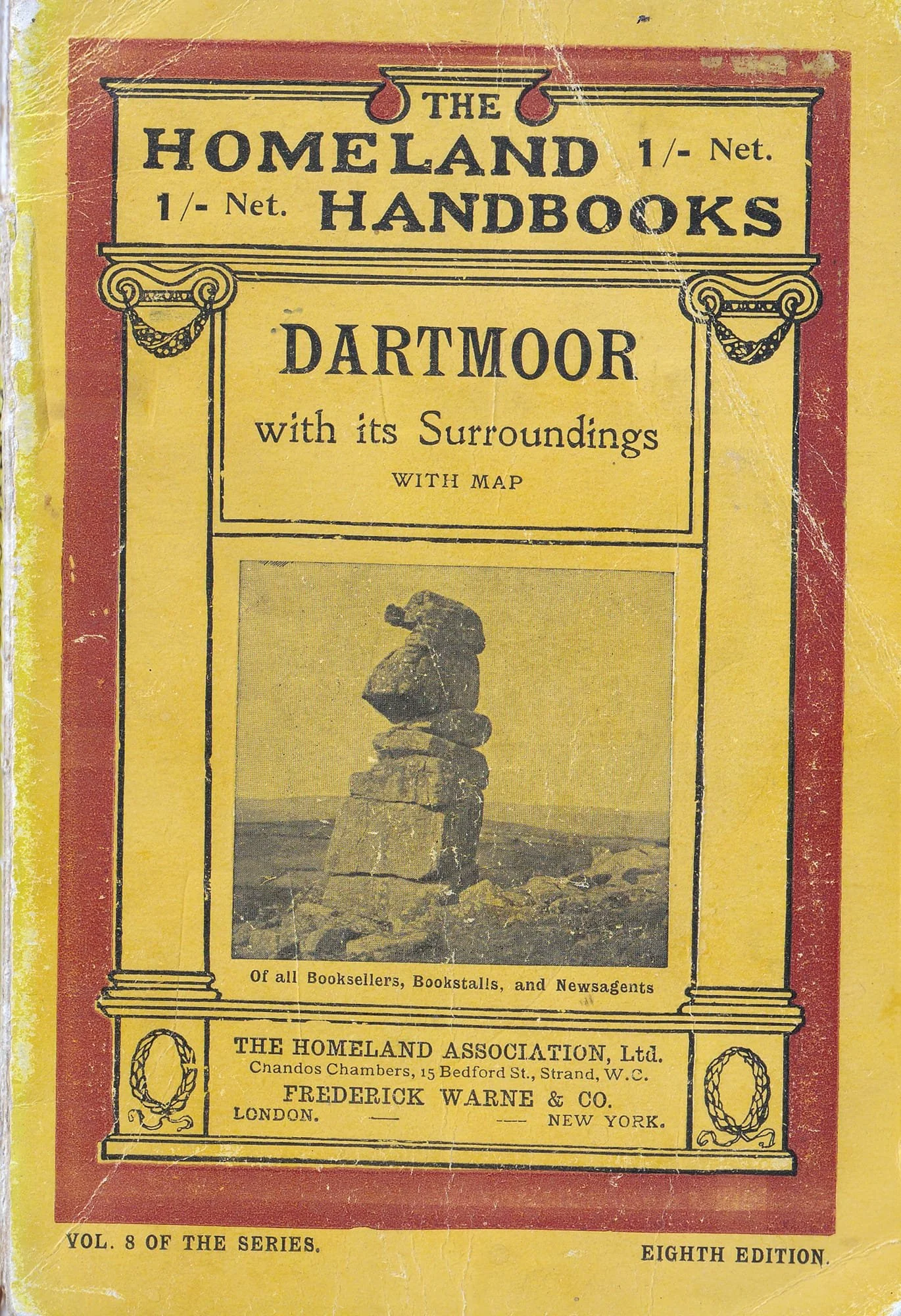
My own copy of "The Homeland Handbooks - Dartmoor" ... 1913 Edition
God did it - Lisle and Clinton-Baddeley (The Nineteen Twenties)
In 1920, Clifton Lisle in his book “Hobnails and Heather” (the story of a hike through England and France made by the boy scouts of Troop 1) informs us that Bowerman was turned to stone by God:
“East of Grimspound is Bowerman’s Nose—another strange sight of the moor, a record and warning in one.
The Nose is a huge rock standing on Hayne Down, but once it was lively enough, so they say, being none other than Bowerman himself.
Bowerman was a good chap, from all reports. He lived on a farm and helped build Manaton Church. Everybody liked him, even the parson,as he went about his lawful occasions.
But human as the rest, he had his failing, and it scotched him in the end. When hounds called he had to go.
There was no resisting that appeal, and he knew it. One Sunday, in spite of church and St. Winifrid, the call came and off he went, hounds, horses, and all. Poor soul!
Who can blame him with a dreamland of grass on the hillside above and his pack at their fox in a covert?
But he paid for his fun. That very day he was changed to stone. You can see him yet within sound of his church bells. Dartmoor is full of such awful examples. The Standing Stones on Hamel Down, those that dance on Christmas Eve, are said to be maidens who jigged on a Sunday.”
Not by witches.
This also echoes the story of the Nine Maidens stone circle near Belstone, who are traditionally said to have been petrified for dancing on the Sabbath. Lisle was another devout Christian, and a Sabbath breaking explanation evidently appealing more than some pagan idol worship.
In 1925, V.C. Clinton-Baddeley seems to almost be poking fun at the diverse retelling of the tale:
“At Hounter Farm, nestling beneath the Tor, there lived once on a time, or so tradition says, one Bowerman. He is supposed to have built a church at Manaton, and to have named it after his daughter, Winifred. Many antiquarians believe, however, that it was named after Winfrid or Boniface, the Devonshire saint and the Apostle of Germany.
Bowerman is also said to have erected Bowerman’s Nose. Another legend states that the Nose is Bowerman himself, petrified there for hunting on Sunday. What Sabbath-breakers these Dartmoor people were! They never learned their lesson. Petrification was rife.”
This pattern (no matter how irritating to the researcher) matters.
I’ve mentioned eight different writers and each offers various different explanations for what Bowerman's Nose is. Not one of them mentions witches. Not one of them mentions a hare.
Skinner's 1939 fever-dream - where the witches eventually arrive
And then, in 1939, A.G. Skinner publishes a slim book called “Tales of the Tors”, and everything changes.
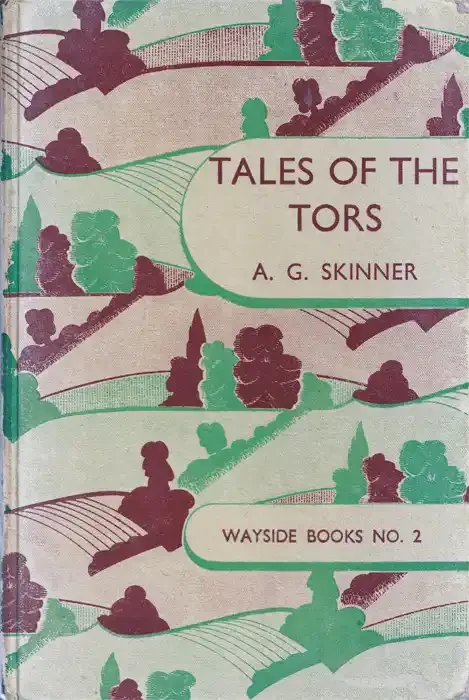
Tales of the Tors by Aileen Georgina Skinner - I was lucky enough to find a copy on eBay (a 1947 reprint)
An aside:
Back in October 2025 (when this idea was first forming) I went to see the wonderful Emma Cunis (Dartmoor's Daughter), at The Museum of Dartmoor Life in Okehampton where she was talking about her brilliant book “Dartmoor: Myths & Legends”. I’d already messaged Emma and told her of a “gap” in my research and she brought along her own copy of “Tales of The Tors” for me to take a look at.
Without her, this piece would be missing its keystone.
Skinner's version is the first one I've been able to find that has the recognisably modern structure. There's Bowerman the much loved hunter, his pack of hounds, the disturbed witches, the witch-turned-into-a-hare, the chase, the petrification. The skeleton of the story we now all love and repeat, are all set in place.
However, Skinner's version also has things the modern story has quietly dropped. A farmer's wife cuts the heads off Bowerman's hounds. Sir Francis Drake gets crowbarred into the narrative (for reasons I discuss later). And, one of the disgruntled witches is, apparently, the source of the Welsh national dress 😜

“The Witches, The Hare and Bowerman and His Hounds” illustration by Brenda Adams - From “Dartmoor Legends Retold”
Purely for transparency (and the fact that a digital copy of Skinner’s retelling doesn’t seem to exist anywhere, here is the tale in full. I shall scan the whole book when I have time and upload it to archive.org.
“BOWERMAN’S NOSE or HOW THE WELSH GOT THEIR NATIONAL HEAD-DRESS
In the time before Domesday Book, when folk never fought each other for land because there was plenty to go round, there lived at Manaton, Dartmoor, a famous huntsman called Bowerman. With his pack of black hounds, he was wont to scour the moor from early dawn to dewy eve. How old he was, no one ever knew, though lots of people made guesses-some said - as old as Methuselah, for, although he lived in the far back ages, he was still alive when William the Conqueror granted Dartmoor to his half-brother, Robert Mortain. Nor was his reputation as a huntsman even then in any wise diminished. When people heard the joyous sound of his famous horn echoing away among the tors and forests they would cry ‘’That be Bowerman, fer certain’, and therewith they would drop their work whatever it might be and join in the chase, for Bowerman’s nose, which was the biggest nose ever imagined, could smell out the wiliest old fox of them all. But one day when Bowerman was hunting over Hay Tor he disturbed the witches who were busy brewing a storm. Their shrill voices could be heard weaving their horrid spells and incantations, accompanied by the croaking of the frogs and the bubbling of the nasty concoction in their huge cauldron:
Come, south wind, bring the rain:
North wind, blow it back, again:
Come, west wind, bring wet weather:
East wind, bring storm and rain together
’Horrible old hags !’ he cried, as he looked up and saw a number of witches hurtling round his head. ‘I’ll teach them to spoil my sport!’ And he blew a mighty blast on his horn-and called in his hounds for fear the witches might ‘overlook’ them.
But one of the witches, the oldest and most wicked, had been so startled by Bowerman’s horn that she fell off the ragwort stem she was riding, right into the middle of the cauldron and not only got a bad ducking which she deserved, but her hat was ruined. It was not fit to be seen even on a witch, so, as you may imagine, she was very angry.
A few days later, on a lovely, frosty morning, Bowerman donned his hunting attire, called his hounds, and rode out to the chase, accompanied by Robert the Earl and all his friends and neighbours. They had a splendid day. As Bowerman rode home along the ancient Abbey Road, his hounds at his heels, suddenly a hare started up beneath his feet. Bowerman and his hounds at once gave chase. The hare was very clever and very swift, for it was the old witch disguised. Mists gathered over the moor, and still the old witch, who had cast a spell over Bowerman, led him on and on till at last he fell off his horse from sheer exhaustion and sank down into a patch of boggy soil.
Here, I think, he would have disappeared altogether, as the witch intended, but he was so eager to save his hounds that with a mighty effort he kept his head above ground. At that moment the witch resumed her former shape and turned what remained of Bowerman into stone. Then, resuming the shape of a hare before his very nose, she led the hounds, who were under her spell, to a farmer’s wife nearby. This old woman was in the witches’ debt, and in return for food she gave the witches, they taught her some of their secrets. When she saw the hare-witch she recognized her at once in spite of her disguise and ran out to see what she could do for her. The witch commanded her to bring out her largest carving knife and cut off the heads of Bowerman’s hounds one by one, they, like their master being too tired to resist. This she did, while the witch, who had resumed her normal shape, looked on approvingly. The farmer was away, otherwise she would not have dared obey the witch’s order, for the good man hated the foxes that stole his grey geese and ran off with them to their dens. Years passed. Folk came who knew nought of the story of Bowerman the Hunter, and they worshipped his stone image as a god. This irked him terribly. It was the last thing he wanted. But once a year between sundown and sunrise he had the power to take his human form, and go a-hunting once more.
Sir Francis Drake is said to have seen him and his headless hounds as he drove along the ancient Abbey Road between Tavistock and Plymouth. Doubtless Sir Walter Raleigh saw them, too, when he was Forester of the Duchy to good Queen Bess. You, too, may see them and hear the shrill blast of Bowerman’s horn on a moonlight night-if you choose the right place and the right moment. And what happened to the old witch? She found she had made the moor too hot for her, for every one loved Bowerman, so she and her sisters mounted their ragworts and flew to Wales. This explains how the Welsh women got their tall black national hats.”
For those of you not willing to spend the time reading this brilliantly inventive piece, here’s me reading it for you …

I would never (heaven forbid) consider suggesting that this book was published purely to excite and titillate. But I will note that it was very obviously written (with tongue very much in cheek) to excite and titillate 🤣
A small note on the author of “Tales of the Tors”.
A.G. Skinner is Aileen Georgina Skinner. For ninety years she has been cited as A.G. Skinner (though rarely cited at all, if my recent research is correct). When I started my dive into this deep rabbit hole, I assumed that the author was a man, because almost everyone writing about Dartmoor in 1939 was.
On re-reading the story (and some of the others in the book) it occurred to me that the style of storytelling was extraordinary if not unique for the time (I’m possibly manifesting here, whatever … it yields results) .
Searching for “Tales of the Tors” on the British Library website told me our author was called Aileen and an even deeper dive using a free month’s subscription on Ancestry revealed the “Georgina”.
Disclaimer: I do not have the resources to 100% guarantee this A.G. Skinner is that A.G. Skinner 😁However she is the only A.G. Skinner in the 1939 Register, and everything else appears to fit!
That being said, let’s reveal the author of our modern day take on a famous legend: Aileen Georgina Skinner was born in Kensington in October 1882, daughter of Colonel Monier Williams Skinner of the Royal Engineers, himself born in Ceylon, into a family with longstanding roots in British colonial service.
By 1911 she was living in Budleigh Salterton. She served in Queen Mary's Army Auxiliary Corps during the First World War and was awarded a campaign medal (I have a copy of her medal card).
She authored three books across two decades, “Mushroom Land, etc.” (1920), “Flower Legends” (1932), and “Tales of the Tors” (1939).
All of these, on the evidence of the first two titles and the publishers who published them are children's books. I’ve no way of proving this (though I have contacted the British Library) and it seems Aileen remained single all her life, though with six brothers and sisters, she would have had plenty of nephews and nieces to write stories for.
She was 57 when “Tales of the Tors” appeared with the Methodist Epworth Press, three weeks after Britain declared war on Germany.
This gives the line …
“when folk never fought each other for land because there was plenty to go round”
… added resonance.
She lived another 27 years, dying in 1966 at the age of 84, and is buried in the churchyard of St Mary the Virgin, Bathwick, in Bath.
Aileen Georgina Skinner has been more or less invisible in everything written about Bowerman's Nose.
The book that started the modern witch story is hers; her name belongs in front of it.
I’m putting together a longer piece about her separately, because she has earned more than a paragraph. In the meantime; here; at least, she gets her name back.
Back to the matter in hand!
Aileen is writing a tall tale, not carefully transcribing an oral tradition, she’s taken aspects of older stories and put a new twist on them. The Francis Drake and Welsh national dress flourishes are the giveaway.
It would appear, to me at least, that the first appearance of the witches and the transmogrification into a hare story in print is an embellishment for comic effect, for entertainment. It isn’t, and doesn’t seem to present itself as, the serious cataloguing of an ancient traditional story.

Hiding in the Bracken - Bowerman’s Nose
The Folklorists' Silence
My research for this time period (incomplete as it is) has turned up at least three serious works dedicated to Devon and Dartmoor folklore by writers who took the subject genuinely seriously. As well as a handful of other guides about the area.
One would assume that if the Bowerman's Nose witches story were authentically traditional; that is, passed down through generations of moor folk through oral tradition; these three would have recorded it. They didn't.
In fact, whilst re-reading my own copy of "The Witchcraft and Folklore of Dartmoor" (1971) by renowned local journalist and author from Sticklepath; Ruth E. St. Leger-Gordon; I was surprised to notice this observation from a Dartmoor resident famed for collecting stories about witches and local folklore;
“Bowerman is the hard core of a small tor, now lying in a clitter of fallen rock around his feet. Weathering of the granite cracked his protecting shell and he eventually emerged in his present form like a chicken from an egg. With grey cap pushed well back from a face consisting mainly of the parrot-like feature which gives him his name, if ever a figure invited legend it is Bowerman. Yet, apart from one mythical murmer [sic], no story emanates from this oddest of “men”. Any old fantasies that surely must once have existed, are now concealed for ever in Bowerman’s granite bosom. All that can be said about him with certainty is that Druids were in no way responsible for what has been fashioned entirely by nature, and that in the name we once more meet the Celtic maen. Bowerman is — or rather was — vawr-maen, the “great stone”. Somebody added the “nose” for obvious reasons; not we hope because he bore any resemblance to a completely mythical Norman bow-man who, according to a misty scrap of folklore, settled on a nearby moorland farm after the Conquest.”
I initially got excited by the mention of “apart from one mythical murmer “ ... yet on reconsideration, this is obviously a reference to the "nose" bit.
Published in 1972, this can only mean that part of the "Legend" must have been "discovered" (or “rediscovered”) sometime between 1973 and when it appears in any sort of written form (more on this later).
My own copy of "The Folklore of Devon" published in 1977 by Ralph Whitlock does not mention Bowerman's Nose at all. Seems like a terrible omission.
In 1981, F.H. "Harry" Starkey, another renowned Dartmoor expert with multiple books to his name, also has nothing to say about witches or hares.
“At the north-western end, just below the highest point, will be found a feature famous in Dartmoor scenery and folk lore. This is Bowerman’s Nose, a natural rock pillar consisting of layers of rock piled one upon the other and standing about 25 feet high. The topmost layer is so shaped as to give the impression of a human figure wearing a peaked cap. In former times this was identified as a rock idol and of course the Druids were held to be responsible. We now know that this strange figure is the result of natural weathering over many thousands, perhaps millions, of years. The name Bowerman has also exercised the imagination of many people in the past. There is an old account which states that a person named Bowerman lived nearby in William the Conqueror’s day, the suggestion being that the rock took its name from him — but is it perhaps the case that he took his name from the rock … ?”
Worth mentioning here that (amongst many other things) F. H. or ‘Harry’ Starkey discovered the old Manga Clapper bridge and when it was restored is now fondly known as Starkeys Bridge. There is also a memorial stone nearby.
Starkey was also a committee member of the Dartmoor Preservation Association and the Devonshire Association and belonged to both the Devon Archaeological Society and the Ramblers Association.
Even some of the popular gift shop titles, still fail to mention witches;
“I prefer the local version, that a man called Bowerman lived at Hound Tor around 1066 and sported a nose identical to the splendidly stubby organ that still adorns the granite column.”
“Strange Stories from Devon” by Rosemary Anne Lauder & Michael Williams
Several writers, producing work over a decade or so, all of whom (you would presume) would have at least mentioned this aspect of the story if it had been circulating in oral tradition (even if they believed them to be untrue).
Silence is the evidence.
“When you have eliminated the impossible whatever remains, however improbable, must be the truth” - hang on, totally different line of thought there!
How a gift-shop pamphlet completed a legend
Finally (and this is where it all starts to come together), in 1983, a small independent publisher called John Pegg puts out two cheap booklets: “A Visitor's Guide To Dartmoor - The Land, Its Legends and History” and “After Dark on Dartmoor”.
I stumbled across these as they were referenced on a few websites and I managed to find a copy of each on eBay 😁
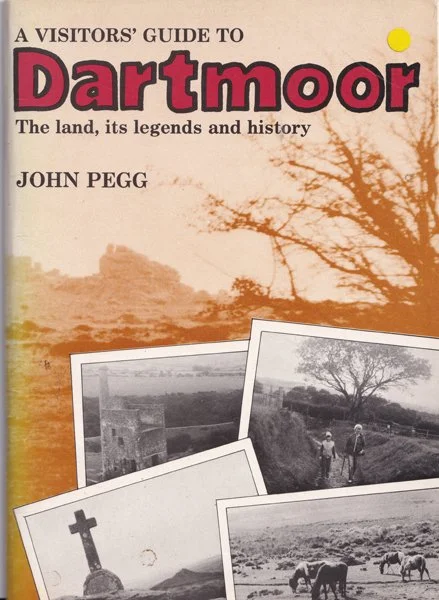
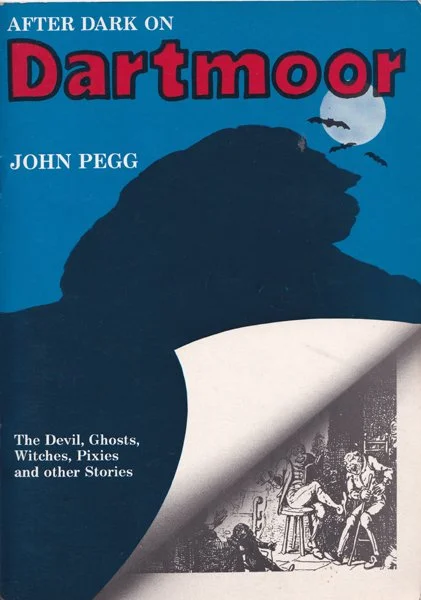
They're the kind of thing you pick up on a day trip as a memento, slim, cheerful, true gift-shop fodder.
They both contain the witches and hare story, discovered, (I’m making an assumption here) presumably from Skinner’s story of 1939 with the more obviously outlandish bits omitted🤣
“A famous Dartmoor landmark, this extraordinary rock formation is not nearly as remote as you might think from photographs. It is located north-east of Widecombe, within a few minutes’ stroll of the narrow road which runs due north from Hound Tor. The resemblance it bears to an idol with a human head wearing a hat is most uncanny, the more so because it is the only standing rock pile at this particular spot. It could almost be one of the mysterious Easter Island sculptures, and at one time was thought to have been the work of the Druids, but is in fact said to be a purely natural formation. You cannot help wondering though, whether the effect was assisted by human agency at sometime.
...
Scholars say that this name is derived from the Celtic ‘vawr-maen’, meaning ‘great stone’. Traditional legend, more romantically, relates that in Norman times a man lived on this part of the Moor, near Manaton, who was an archer or ‘bowman’. He was also a great hunter, and one day he and his pack of hounds were in hot pursuit of a hare when they disturbed a coven of witches in the middle of their magic spells. Furious, the witches decided to punish Bowerman. So the next time he went hunting, one- of them turned herself into a hare and led him such an exhausting chase that he eventually fell from his horse into a bog. Before he had completely disappeared from sight, the witch turned him into stone. The same fate befell his pack of hounds, whose petrified shapes can still be seen on the crest of nearby Hound Tor.”
This is, as far as I can tell, the moment the modern legend enters mainstream circulation.
“There are not many stories featuring witches on Dartmoor, but the one involving Bowerman, is probably the best known. It used to be thought that the famous landmark of Bowerman’s Nose was man-made-‘A granite god” the words of the old Dartmoor poet Carrington’ In his notes to Carringtons work, W. Burt goes-on to say:.’It is generally considered as a rock idol and bears the name of Bowerman’s Nose, of which name there was a person in the Conqueror’s time, who lived at Huntor or Houndtor in Manaton’. This tradition of Bowerman’s Norman origin has remained strong, despite the assertion of scholars that the name is derived from—- the Celtic ‘vawr’maen’, which merely means ‘great stone’. Those favouring the Norman story prefer to think of Bowerman as meaning ‘bowman’ or ‘archer’. He was also said to be a mighty hunter, and one day he and his Pack of hounds were in hot pursuit of their quarry when they disturbed a coven of witches in the middle of their magic spells and actually knocked over their cauldron. Furious, the witches decided to punish Bowerman. So the next time he went hunting, one of them turned herself into a hare and led him such an exhausting chase that he eventually fell from his horse into a bog. Before he had sunk further than his waist, however, the witch turned him into stone. The same fate befell his pack of hounds, whose petrified shapes can still be seen on the crest of nearby Hound Tor.”
After 1983, the references abound.
The story then propagates through numerous guidebooks, websites, Dartmoor National Park's own educational materials. Each new retelling treating the previous one as a primary source, none of them noticing that the trail goes cold, hard, in 1939 with a comic confabulation, and before that doesn't exist at all.
I should make it plain here. I'm not saying Pegg invented the story; he didn't, Skinner did, or at least he playfully combined a series of interesting ideas he’d read about.
I'm not even saying Pegg knew what he was doing, these were small commercial publications, and the most likely explanation is that he came across Skinner's book, thought "the tourists will love this one," and trimmed off the bits that were a bit too much.
In retrospect, the actual effect of the two publications was to take a piece of well meaning, jovial 1939 entertainment and inject it into the gift-shop economy as authentic local folklore. From there, it just grew legs and travelled far and wide.
It doesn’t take long for the myth to spread.
“A folk tale says that they are the hounds belonging to Bowerman the mighty hunter, who were all turned to stone by a wicked witch.”
It’s not at all surprising that our friend Mr Pegg (only two years since rediscovering the “witches”) has them once again, making an appearance in another publication.
“Here Celtic mythology took over. The story goes like this. When Bowerman the hunter was turned to stone on Hayne Down by a gang of local witches, his hounds ran on only to be overtaken by the spell and suffer the same fate as their master. They are the granite shapes which dominate Hound Tor’s stacks and towers.”

From "Devon 100 years ago" by Frank Graham - Publication date 1969 - From a drawing by John Tucker 1860
So, because this is the way my mind works, I now had to have a dig around to find out why Aileen Skinner’s addition of witches and hares just makes sense.
Where the hare actually came from
The witch “transforming into a hare” element didn't just appear as if by magic. I did some reading and by 1939, Dartmoor already had a fairly well documented witch/hare legend and long before anyone attached it to Bowerman's Nose, the story was in active oral circulation in Devon. I’ve managed to track down two independent printed pieces.
The first mention of a witch turning herself into a hare on Dartmoor that I can find turns up in the “catchily entitled” - “Traditions, legends, superstitions, and sketches of Devonshire on the borders of the Tamar and the Tavy illustrative of its manners, customs, history, antiquities, scenery, and natural history, in a series of letters to Robert Southey, esq” by Mrs Anna Eliza Bray in 1838. I transcribe it here in full, as it seems to only appear in one of the copies held on archive.org :
“An old witch, in days of yore, lived in this neighbourhood; and whenever she wanted money, she would assume the shape of a hare, and would send out her grandson to tell a certain huntsman who lived hard by, that he had seen a hare sitting at such a particular spot, for which he always received the reward of sixpence. After this deception had many times been practised, the dogs turned out, the hare pursued, often seen, but never caught, a sportsman of the party began to suspect, in the language of tradition, “that the devil was in the dance,” and there would be no end to it. The matter was discussed, a justice consulted, and a clergyman to boot; and it was thought that, however clever the devil might be, law and church combined would be more than a match for him. It was therefore agreed that, as the boy was singularly regular in the hour at which he came to announce the sight of the hare, all should be in readiness for a start the instant such information was given: and a neighbour of the witch, nothing friendly to her, promised to let the parties know directly when the old woman and her grandson left the cottage and went off together; the one to be hunted, and the other to set on the hunt.
The news came, the hounds were unkennelled, and huntsmen and sportsmen set off with surprising speed. The witch, now a hare, and her little colleague in iniquity, did not expect so very speedy a turn out; so that the game was pursued at a des-perate rate, and the boy, forgetting himself in a moment of alarm, was heard to exclaim, “Run, Granny, run; run for your life!” At last the pursuers lost the hare, and she once more got safe into the cottage by a little hole in the bottom of the door; but not large enough to admit a hound in chase. The huntsman, all the squires with their train, lent a hand to break open the door, but could not do it till the parson and the justice came up; but as law and church were certainly designed to break through iniquity, even so did they now succeed in bursting the magic bonds that opposed them. Up stairs they all went. There they found the old hag bleeding, and covered with wounds, and still out of breath. She denied she was a hare, and railed at the whole party. “Call up the hounds,” said the huntsman, “and let us see what they take her to be; maybe we may yet have another hunt.”
On hearing this, the old woman cried quarter. The boy dropt on his knees, and begged hard for mercy—mercy was granted on condition of its being received together with a good whipping; and the huntsman, having long practised amongst the hounds, now tried his hand on their game. Thus, the old woman escaped a worse fate for the time present; but on being afterwards put on her trial for bewitching a young woman, and making her spit pins, the tale just told was given as evidence against her, before a particularly learned judge, and a remarkably sagacious jury, and the old woman finished her days, like a martyr, at the stake.”
The book this passage came from formed one of the foundational Victorian collections of Devon folklore, recorded by Mrs Bray directly from oral sources on Dartmoor.
My personal favourite is the “The Witch Hare of Tavistock” which comes from the much less well known “English Forests and Forest-Trees: Historical, Legendary, and Descriptive (London: Ingram, Cooke, and Co., 1853)”.
Chapter IX is dedicated to Dartmoor Forest, and there is a section explicitly titled "Witches and Witchcraft" (p. 179). The compiler — working fifteen years after Bray, for a different publisher, in a different city, in service of a completely different project (a national survey of English woodlands rather than a regional folklore collection) — records a witch-hare story for Dartmoor that echoes Bray's so closely that they cannot be coincidence.
“‘Once upon a time’ an old witch lived in the neighbourhood of Tavistock ; and whenever she wanted money, she would assume the shape of a hare, and would send out her grandson to tell a certain huntsman who lived hard by that he had seen a hare sitting at such a particular spot, for which he always received the reward of sixpence.”
A witch and her grandson run a small scam where the boy tips off the local huntsman that he's spotted a huge hare in a local field, the huntsman pays him sixpence, and then the hounds chase the witch (in hare form) for hours and hours without ever quite catching her (not surprising as she has wit beyond that of your average hare).
The huntsman eventually grows suspicious, engages the help of local squires and the clergy, has the cottage watched, and eventually catches the two red-handed. The witch is arrested and burnt at the stake.

These aren't just isolated Dartmoor oddities. The witch as a wounded hare story is a well documented international folk-tale type, with various versions of the story collected in Scotland, Wales, Ireland, Norway, Denmark, and even rural America.
What Skinner appears to have done in 1939 wasn't really invention. It was grafting. She took a pre-existing, demonstrably traditional folk-tale archetype; witch becomes hare, hunter and hounds chase her, witch is eventually unmasked or wounded; and attached it to Bowerman's Nose, a rock that had previously been a druid idol, a Norman noble, a Celtic etymological mishap, and a Sabbath-breaking morality tale, but had never, before 1939, been part of the hare tradition.
Then she changed the ending. Instead of the witch being unmasked, or shot with silver, or burnt at the stake, she tacked on another idea from the legends past, the hunter is petrified.
The component parts were genuinely old. The specific combination was new in 1939. And one of the things that makes legends feel ancient is the recognisability of their parts: Skinner's readers had grown up hearing variants of the witch and hare story, so when she attached one to Bowerman's Nose, the new graft felt like something they already half remembered.
That's how a legend is welded onto a landmark.
Which brings us to the witch's name.
Levera - the witch who turns into a hare
In every modern retelling of the Bowerman's Nose legend I can find, if there is a witch and the witch has a name, that name is “Levera”.
Aileen Skinner doesn’t name her witch in 1939 (even the one who moves to Wales).
The name doesn't appear in either of Pegg's 1983 booklets. It doesn't appear in Tim Sandles's Legendary Dartmoor retelling. Nor does it appear in any printed source I’ve been able to lay my hands on.
Where it does appear, with a unique and very identifiable phraseology is the Dartmoor National Park's very own "Legend of Bowerman's Nose" page. The place I first learnt it.
"Levera by name"
It’s probably a good time to mention that whoever wrote that page has also read “Tales of the Tors” …
“The witches, realising what a hornet’s nest they has stirred up mounted their broomsticks and were carried on the wind over the Bristol Channel into Wales. That is why, even to this day, many Welsh women wear tall, pointed witch’s hats and why there have never since been any evil witches in Devon.”
Once you notice this fingerprint, you start finding it everywhere (at least digitally).
The trail of "Levera by name" is the trail of one piece of late-twentieth or early-twenty-first century web copy, propagating outwards through the search results until it has become the canonical version of the story.
The Wayback Machine has it’s first crawl of the page as 16th January 2018 - I couldn’t discover if there was a previous version before this.
I can't prove the National Park were the originators (and, as I explain later, I’m not trying to point fingers here, I’m merely satisfying my own curiosity).
It is, of course, possible that they heard the name somewhere on their Dartmoor travels, sat by a fire in a pub, pint in hand, storyteller as a companion. The most likely answer though (as Sherlock would point out) is that an education officer at the NPA was composing a child friendly version of the Skinner story, and; deciding the witch needed a name; reached for one.
And here’s the tiny philological joke that makes my day.
When I first read that the witch who turned Bowerman to stone had a name (and it was because I was researching this piece) there was something about “Levera” that kept ringing a very faint, far off bell in the back of my mind.
Days later, it popped back into my head, all at once, possibly something I learnt whilst enjoying English Lit classes with the fantastic Mr Burrows - Lovingly known as “Henry”, even though his name was Trevor.
A “leveret”, from the Old French “levrat”, is the word for a young hare.
It's the term hunters of old and today, more so naturalists and biologists use to refer to a hare in its first year of life. Whoever it was that composed the modern Bowerman's Nose retelling either half-remembered "leveret" (like I did) or knew the word perfectly well and reached for it as a reasonably unusual sounding witch's name.
Shift a few letters around and give it a feminine suffix and you have Levera.
The witch who turned herself into a hare is called “Hare” (well, close enough).
How many people have copy and pasted what Jake the poacher from “Withnail and I” told us all along : “Here hare here” 🤣
My brain finds this oddly amusing.
Folklore has always known that names carry secrets. Rumpelstiltskin is a story about exactly this — a goblin whose power dissolves the moment somebody recognises his name. Levera, the Bowerman's Nose witch, has spent years hiding in plain sight. She was always her own clue.
It also tells you everything you need to know about how legends propagate in the era of search engines and the need to create content. A mutation only needs to happen once. After that, every downstream retelling accepts and repeats the addition without question.
The word "Levera" is now embedded in the Bowerman legend that I’d not be at all surprised if it far outlasts most of the people reading this article 😂
Legends are memes in slow motion
Here's the thing that struck me when I sat down to write this all up.
The "6/7" meme, has gone from an almost incidental lyric in Skrilla's "Doot Doot" to a totally incomprehensible moral panic in primary schools in just over a year. It mutated, propagated, and embedded itself in the language and culture of the young at viral speed. Hashtags accelerated it. TikTok intensified it. Children loved it. Teachers and parents, not so much!
Bowerman's Nose did the same thing. It just took 150 years.
Carrington's “rock idol” begat Friend's "great stone" begat Baring-Gould's debunking target begat Lisle's Sabbath desecrator begat Skinner's witch-cursed hunter which begat Pegg's gift-shop legend that begat the Dartmoor National Park's official version. All culminating in ChatGPT's cocky, confidently asserted fact.
Each generation lifted from the previous and added its own elaborations.
Myths and legends are the OG memes.
Stories that, like stoned snails, went viral very, very, very slowly.
Instead of TikTok, people had hunting trips and pub fires; instead of hashtags, they had heroes and spooky ghostly ladies. The Devil dropping by Widecombe, the Hairy Hands grabbing your steering wheel on the B3212, Bowerman frozen mid-chase on the slopes of Hayne Down - these are the 6/7 memes of their day, propagating slower and mutating with every retelling.
Just like the meme, each new writer adds their own twist. Before long, chaos reigns. The Wisht Hounds chase you through the ancient gnarled woodlands; the piskies lead you astray; humans, as ever, have always loved a good remix.
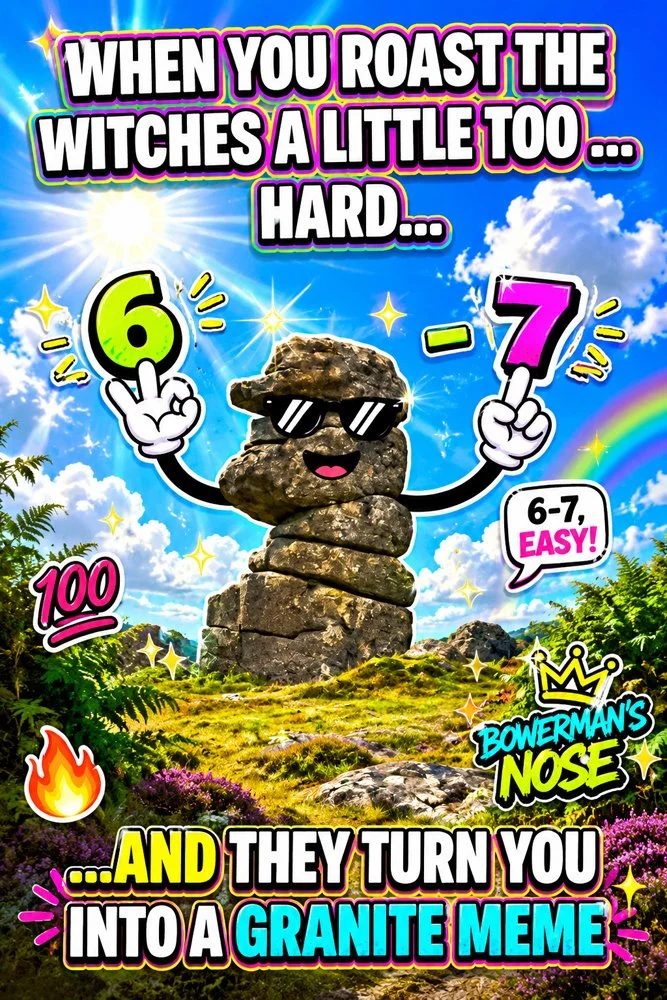
For shits and giggles I asked ChatGPT to make me a meme about Bowerman's Nose using one of my own photographs, so I could use it on my Hill & Moorland Leader presentation.
I hate to admit it, but it's pretty good.
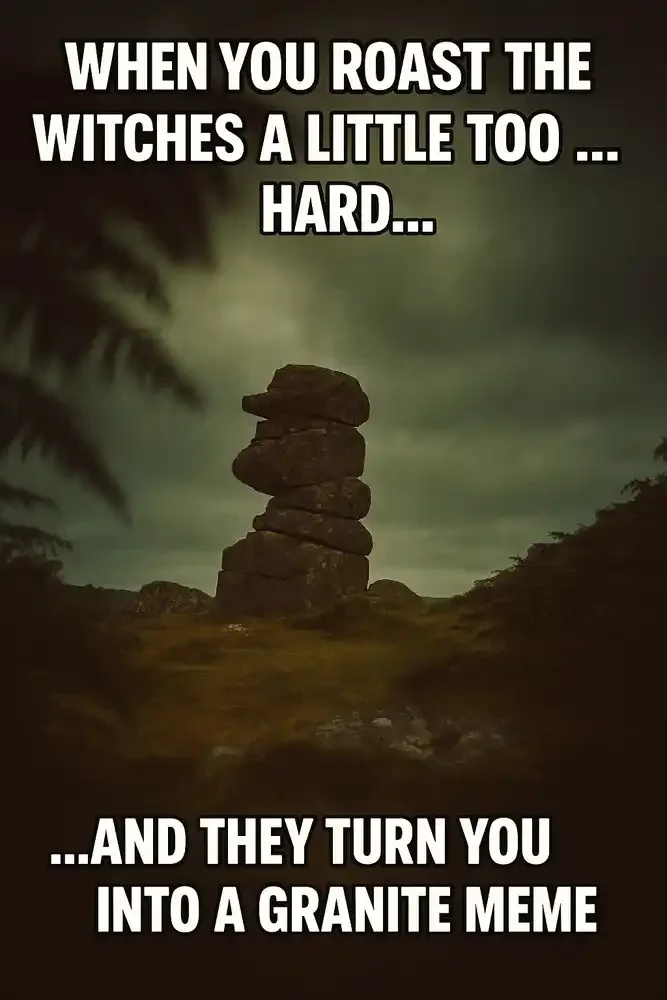
Asking AI to create me a meme about Bowerman’s Nose, so I had something to show my Hill & Moorland Leader group when I did my hillside presentation.
A note on Storytelling before we close
I want to be absolutely clear about one thing.
Nothing in this article is intended as a complaint about the existence of the witches story, or about the writers and tellers who have helped it spread.
I’m just interested in learning and I absolutely love a good mystery. My brain just works like that.
Aileen Skinner did what storytellers have always done. So did John Pegg. So did whoever first wrote "Levera by name" on the Dartmoor National Park's website.
Stories grow in the telling. They accumulate specifics, drop details, attach themselves to different landmarks, swap endings, change protagonists, they discover new homes in new generations and transform to fit the era. That is not a flaw in storytelling. It is what storytelling is.
“We are what we pretend to be, so we must be careful what we pretend to be.”
The Bowerman's Nose witch story has been pretended into existence over the course of nearly a century, told and retold through a series of books, booklets, websites, podcasts, and now the AI chatbots that ingest all of these and spew it out (and still, somehow, mange to give you the wrong answer).
None of that is malicious. It is a quiet demonstration of the reasons why people tell stories at all, and what happens when the pretending becomes so good that nobody really remembers it all started as pretence.
It would be awry of me if I didn’t mention a few of things that have entered the arena in the last forty years or so that the older storytellers couldn't have anticipated or could have even dreamt of.
The first is tourism. Dartmoor's modern visitor economy has a real commercial interest in the moor being ancient, mysterious, and full of legend, and a tourist board with a website is a very different propagation engine than a 1939 children's book.
I’m positive the Victorian tourist market was profitable for Devonians, but the scale of the machine today is one hundred fold. Stories that earn their keep get retained, amplified, retold; stories that don't, fade. That isn't spiteful; it's commerce, it’s capitalism. It does, however, shape which version of the legend you encounter when you stand at the foot of Hayne Down with your phone out (if you can get reception).
It goes without saying that Aileen Skinner, even living until 1966 could not imagine the Internet. Information, good and bad, at your fingertips. Rather than months for a new idea to even permeate the populous and years to take hold, it can take minutes.
Then there is artificial intelligence, which is, at this very moment of you reading, busily storing these thoughts of mine and will no doubt regurgitate them to somebody somewhere who has typed “Bowerman’s Nose” into a search engine.
The trick is to not believe everything you read (and definitely not to thoughtlessly use AI).
Legends transmogrify to fit the social and economic circumstances of their own time. That’s always been known and always the truth. The difference is that today, that cycle has gone from generations to weeks, and the loudest source (or the one with the biggest marketing budget) becomes the “truth” for everyone downstream. This doesn’t just go for Dartmoor Legends.
This article started out as a curious look into a story I thought I knew. It progressed into some research for a talk on a hillside near Postbridge and helped me achieve my Hill & Moorland Leader qualification. It’s become something of a metaphorical hill I just needed to climb. The article has existed in two different versions for some time and it’s taken hours to merge the two into what I hope is a coherent look at several different aspects
This article isn't a debunking of ideas.
My hope is that it’s a small piece of accurate attribution.
The witch in the modern story is named after the hare.
The hare and the witch come from a Devon folk tradition which in turn (it would appear) is repeated all over the world. The hunter, the chase, and the petrification were deftly assembled into their current form in 1939 by a London born, Devon raised writer named Aileen Georgina Skinner, who was 57 at the time, had been active during World War I and was now watching the country prepare for war once again.
The story is hers. It belongs to Aileen, to John Pegg, to whichever education officer added the witch's name to the story and to everyone who has ever heard the tale and repeated it with a little flourish of their own.

From "A Book of Dartmoor" by Rev Sabine Baring-Gould - Publication date 1900
- From a drawing by A. B. Collier, Esq.
I couldn’t resist - when I was editing this article (and it’s been a behemoth of a task) I’m not sure I want to take on anything this size again … I dropped my ChatGPT created “meme” back to it’s creator and asked it to "zhuzh it up a bit" …
“Could you take this meme of Bowerman’s Nose, brighten it up significantly (to make it much more 2026 meme) add some cartoon arms to the stone structure and add some text suggesting the structure is taking part in the “6-7” meme.”
“Books always speak of other books, and every story tells a story that has already been told.”
If you’d like to visit Bowerman's Nose with someone who knows these stories, I don’t just write long winded articles, I take photographs and run guided walks 😍
Further Reading:
Primary sources (chronological)
Carrington, N.T., Dartmoor: A Descriptive Poem (1826)
Friend, H., Bygone Devonshire (1898)
Baring-Gould, S., A Book of Dartmoor (1900)
Lisle, C., Hobnails and Heather (1920)
Clinton-Baddeley, V.C., Devon (1925)
Skinner, A.G. [Aileen Georgina Skinner], Tales of the Tors (Epworth Press, 1939)
St Leger-Gordon, R.E., The Witchcraft and Folklore of Dartmoor (1972)
Whitlock, R., The Folklore of Devon (1977)
Lauder, R.A. & Williams, M., Strange Stories from Devon (1982)
Pegg, J., A Visitor's Guide to Dartmoor and After Dark on Dartmoor (1983)
Pegg, J., The Face of Dartmoor (1985)
Carter, B., Walking in the Wild (1988)
Hemery, E., Walking Dartmoor's Ancient Tracks (1997)
Modern retellings
Cunis, E., Dartmoor: Myths & Legends
Sandles, T., Legendary Dartmoor
Dartmoor National Park's "Legend of Bowerman's Nose"
Online archives used
Ancestry.co.uk (for the Aileen Skinner research)
Witch as a Wounded Hare : Further Reading
The Witch as Hare or the Witch's Hare: Legends & Beliefs in Nordic Traditions
Old Woman As Hare: Approaches to Narrative Folklore Analysis