Curious Photography
A photographic philosophy of exploring, seeing and embracing the unusual or unexpected
Definition:
Photography outside of the norm
Photography driven by curiosity, not by rules or expectations
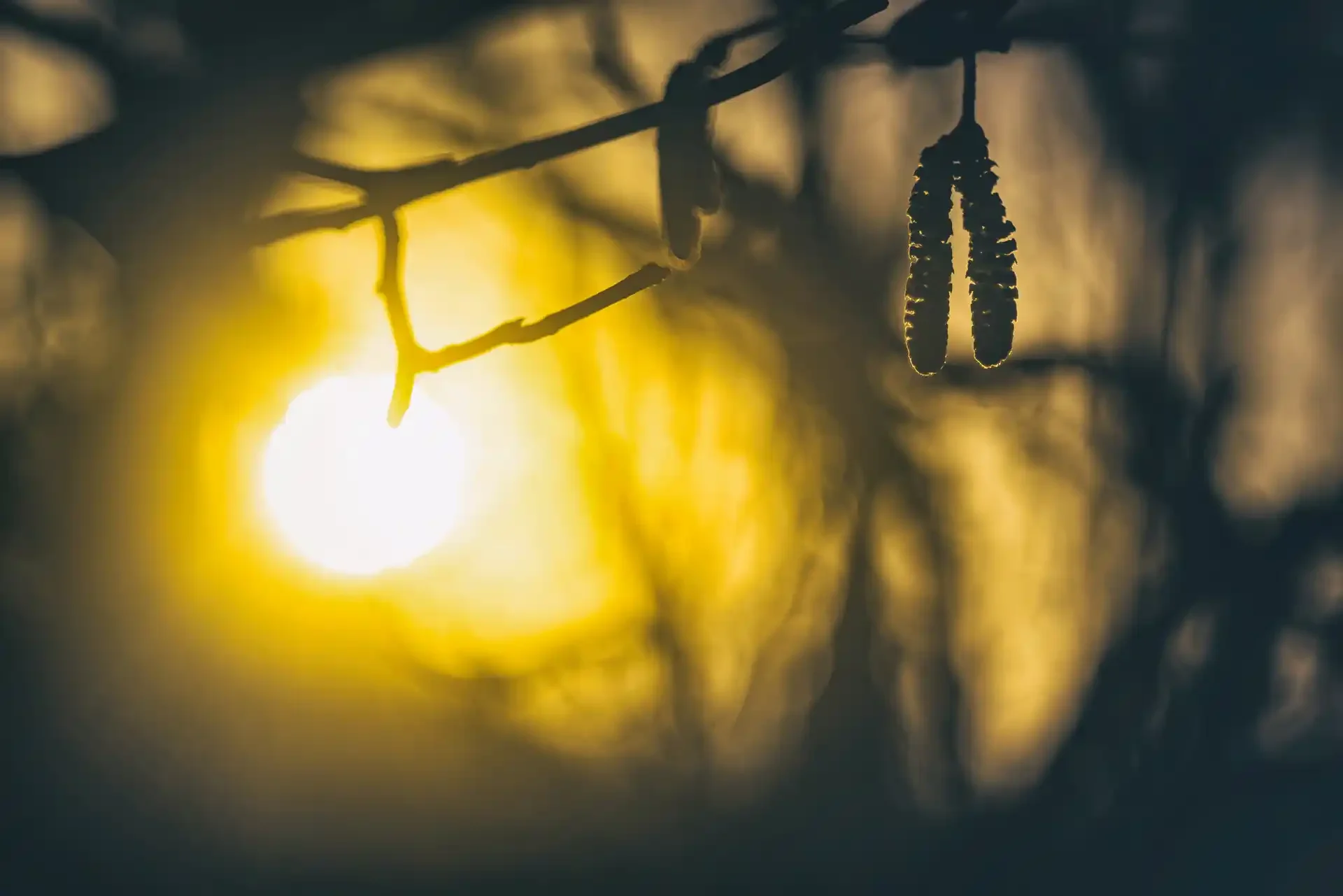
Photograph: Catkins shot with an old darkroom enlarger lens adapted to a Sony a7rPhotograph: A Country Lane in Devon - Shot with an adapted Projector Lens
What Is Curious Photography?
Everybody these days has a camera and quite a lot of those people think they take great photos, some of them are right, but this isn’t for them. This is for people who are struggling to take better photographs, or are in that depressing spot where they’re experiencing a period of creative stagnation. I’ve discussed this elsewhere (and it really is a personal opinion and not one that should be taken with anything but a large pinch of salt) I honestly feel that you’ll only ever make a living from photography if you do something incredibly dull, be a wedding photographer or get stupendously lucky enough to “know” the right people to get work that could most likely be carried out by numerous other snappers. My preferred solution - stop worrying what other people think!
This is where Curious Photography might begin, but not where it’s influence ends.
Firstly, and most importantly, photography should be something you do to please yourself. If you’re not enjoying photography, don’t do it.
“Curious Photography” is a way of working that starts with a very simple concept. Everything becomes much more interesting when you approach it with curiosity.
Think of how a child ask’s questions (all the time).
Instead of chasing perfection, seeking out flawless conditions or predictable results, you need to explore, experiment, and respond to whatever the specific situation offers.
Photography shaped by questions not answers, discovery rather than control.
Photography is a little bit of science wrapped up in a great deal of artistic license - or for those of you who frequent photography clubs or have worked in retail selling cameras - “All the gear and no idea” - though in this case it’s more like “All the gear and no IDEAS”.
I've realised that (without intention and definitely without any real thought) I’ve slowly been developing my own philosophy of photography where it’s my belief that people will become better photographers if they embrace the idea that curiosity is what drives creativity.
If we approach each subject with an open mind, and try not to always follow conventional practise, it will help develop your own unique style.
Even if it doesn’t, it’ll still make your photography better!
For me, curiosity becomes both the map and the compass. It guides how I move through Dartmoor, how I compose, how I experiment with homemade optics and cheap cameras and lenses, and how I try to embrace the beautiful unpredictability of that process.

Photograph: Woodland Fern shot with an adapted projector lens
Photograph: A Woodland Fern - Shot with a projector lens
Why Curiosity Matters in Photography
Let me state, for the record, that anything creative is subjective. Time and time again I have to make the point that what I do isn’t for everybody, and; indeed; my photographic work has been described as “marmite”: some of my closest friends aren’t fans of my work. Do I care? No. My work is for me, and those who enjoy things with (what I’d like to think) a little more heart, a twist of imagination, a pinch of the phantasmagorical 😁
Curiosity keeps my photography alive. I hope it stops me from repeating myself, from relying on formulas, from waiting for “ideal” conditions that rarely arrive.
Here’s what I think happens when you try to work with Curiosity. You notice more. This isn’t just a repeat of the usual maxim I’ve heard from many photographers that you always need to look back towards where you’ve come from, as that might be the shot of the day. This is an attempt to try and imagine you’ve seen (even the most mundane) for the first time.
React more freely. You’re a young child, an alien from a different dimension, you’ve never seen a tree on a hillside before, a river, a puddle. Break those photographic rules. Stop trying to recreate what you’ve been brainwashed into believing is acceptable.
Photograph: One of my images, shot on a £20 Pentax 110 lens and published in The Moorlander Magazine
Let go of perfection. I shoot with old film camera lenses, one of my favourites is the Super Takumar 50mm f1.4. It is almost impossible to get a sharp images at f1.4 and if you zoom into some of my tree images, the chromatic aberration caused by the lens is very noticeable. I’ve had images published that were shot on a Pentax 110 lens mounted on a Sony a7r, this lens is so small that it not only vignettes on a full frame mirrorless camera, it actually distorts the edges of the image.
Helen Bruce - Communications Officer at the Dartmoor Preservation Association one of my images, published in The Dartmoor Magazine (click for full image)
Stay open to surprise. You’ll never learn everything there is to know about photography, so why not lean into that ignorance? Tinker, fiddle with those dials, gaffer tape something interesting to your camera and see what happens.
Curiosity turns photography into an act of exploration rather than an exercise in text book execution. Ask “What happens if I …?” or “What else could I try here?”

Photograph: Nettles Shot on an old Projector LensPhotograph: Hut Circle Entrance overlooking Tavy Cleave
Practising Curious Photography on Dartmoor
Dartmoor’s wild and disparate landscape it’s instantly changeable weather, it’s small, easily missed details and it’s overall cinematic presence make it perfect for this approach to photography.
Try to work with the weather, not fight against it.
Let the mood in the moment lead the way, shoot images that present themselves, not ones that have been carefully thought out.
Embrace the unexpected, the shift in light, the mist, the rolling cloudage.
Don’t rush, slow down, look around.
Be happy to make mistakes, celebrate imperfections in your process and in your results. Experiment to shape your final images.
Curious Photography isn’t about forcing the moor into a preconceived idea. It’s about meeting it as it is, moment by moment.
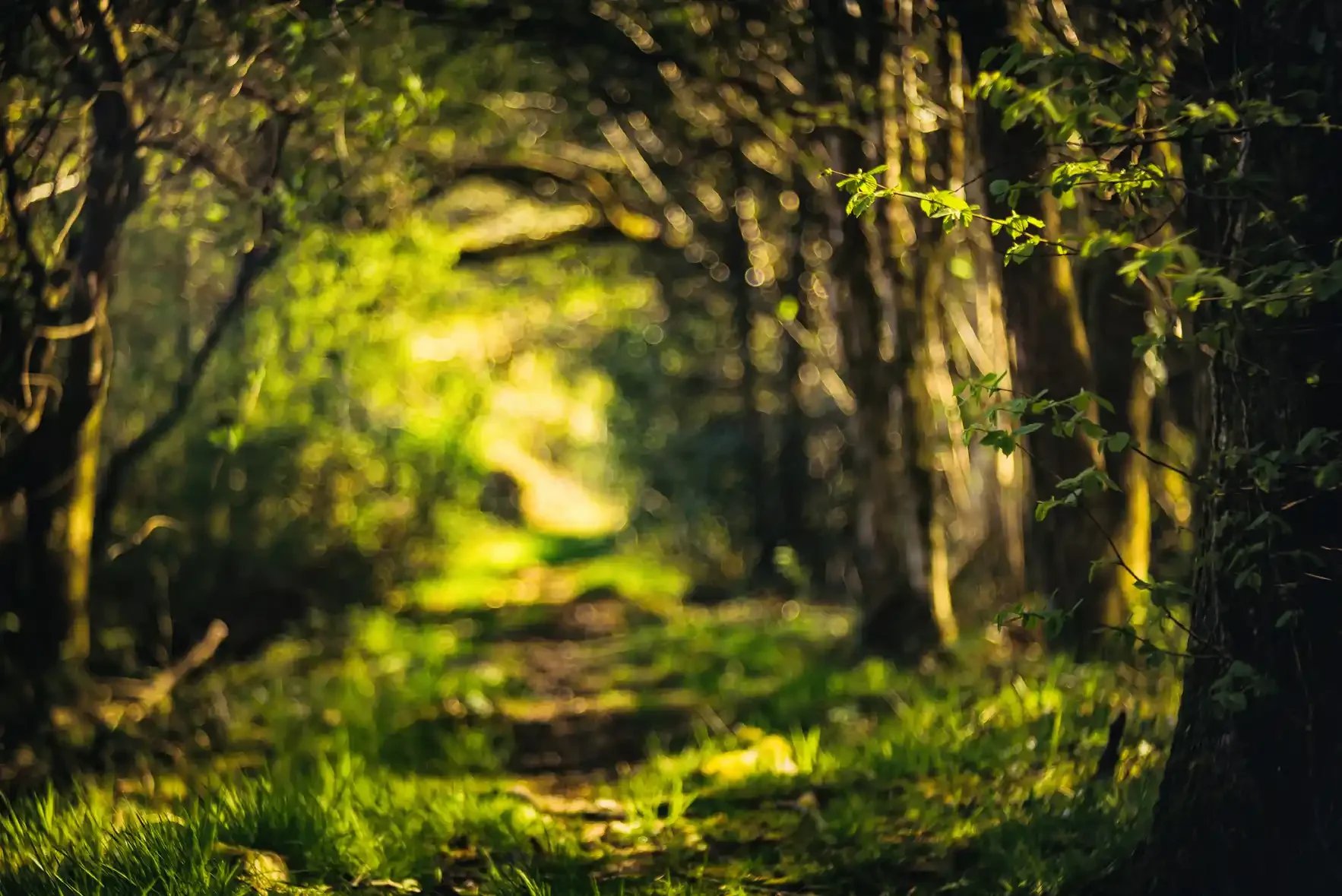
Photograph: Country track shot with a projector Lens
How You Can Start To Practise Curious Photography
You don’t really need any special equipment or even a dramatic landscape, pop to your local park, or walk the high street if you’re urban based.
You only need a willingness to explore and be openminded enough to walk without a plan, to photograph scenes or objects you’d normally ignore. Change you perspective, literally by lying on the ground or reaching over or through and creatively by shooting with odd glass, or by adjusting your camera settings.
Always question why you’re shooting a certain way. I’ve found that my instinct is usually spot on, I can naturally compose an image without much conscious thought (this is obviously a boon to any photographer) so, I now spend time trying to unlearn this skill. Pausing and reassessing. Does it always work? No it most definitely does not. However, when it does, it’s so very satisfying.
Curiosity is a skill. The more you practise it, the more natural it becomes.
Embracing Imperfection
The curious approach naturally welcomes imperfection. It’s not just an excuse to mess about or “make stuff up as you go along” it’s unlearning the processes that until now have just provided you with uninspiring images. I’ve always been drawn to the odd, the flawed, the unpredictable, whether that’s a homemade lens, a darkroom mishap, or a composition that breaks the “rules.”
With Curious Photography you’re encouraged to try techniques you’ve never attempted before, use tools that can behave unpredictably, stop worrying about things being sharp, clean and controlled. Go with the flow, allow accidents to happen and let them become part of the story as well as part of your process
Some of my favourite images began as mistakes. Curiosity turns those mistakes into opportunities.

Photograph: Lisa on 35mm FilmMistakes can be beautiful
Curious Photography in My Workshops & Guided Walks
I’ve tried to root all my workshops and guided walks around this philosophy. When we’re exploring Dartmoor I will always try to encourage participants to look beyond the obvious, the picture postcard composition, the image we’ve seen a thousand times. To experiment freely, respond to the environment; breaking away from a set plan when an opportunity presents itself.
To try and develop your own visual voice, a style that makes you stand out from the crowd.
Curious Photography isn’t really a technique or a set of rules, it’s more a kind of mindset. Once you adopt it, hopefully your photography will become more personal, more expressive, and ultimately more rewarding.
I know that this type of experimentation isn’t for everybody and I’m more than happy to merely guide you if you’re already happy with your process - Contact Me with your requirements.


Why This Idea Appeals to Me
I’ve always enjoyed photography and photography has been an integral part of how I’ve come to understand the world. Many trees, plants, insects or geological features have only become known to me after I’ve taken a photograph and then wondered what they might be called. Gone home and researched them.
I believe that curiosity keeps that relationship alive. It pushes me to keep learning, keep exploring, and to find new ways to see familiar places.
Curious Photography is how I stay connected to Dartmoor, to my surroundings and to the joy of making images that I love.
My article Bowerman’s Nose: Legends are like memes in slow motion is a good example of staying curious 😍