Photographing Hawthorn on Dartmoor: Folklore, Form and the May Tree
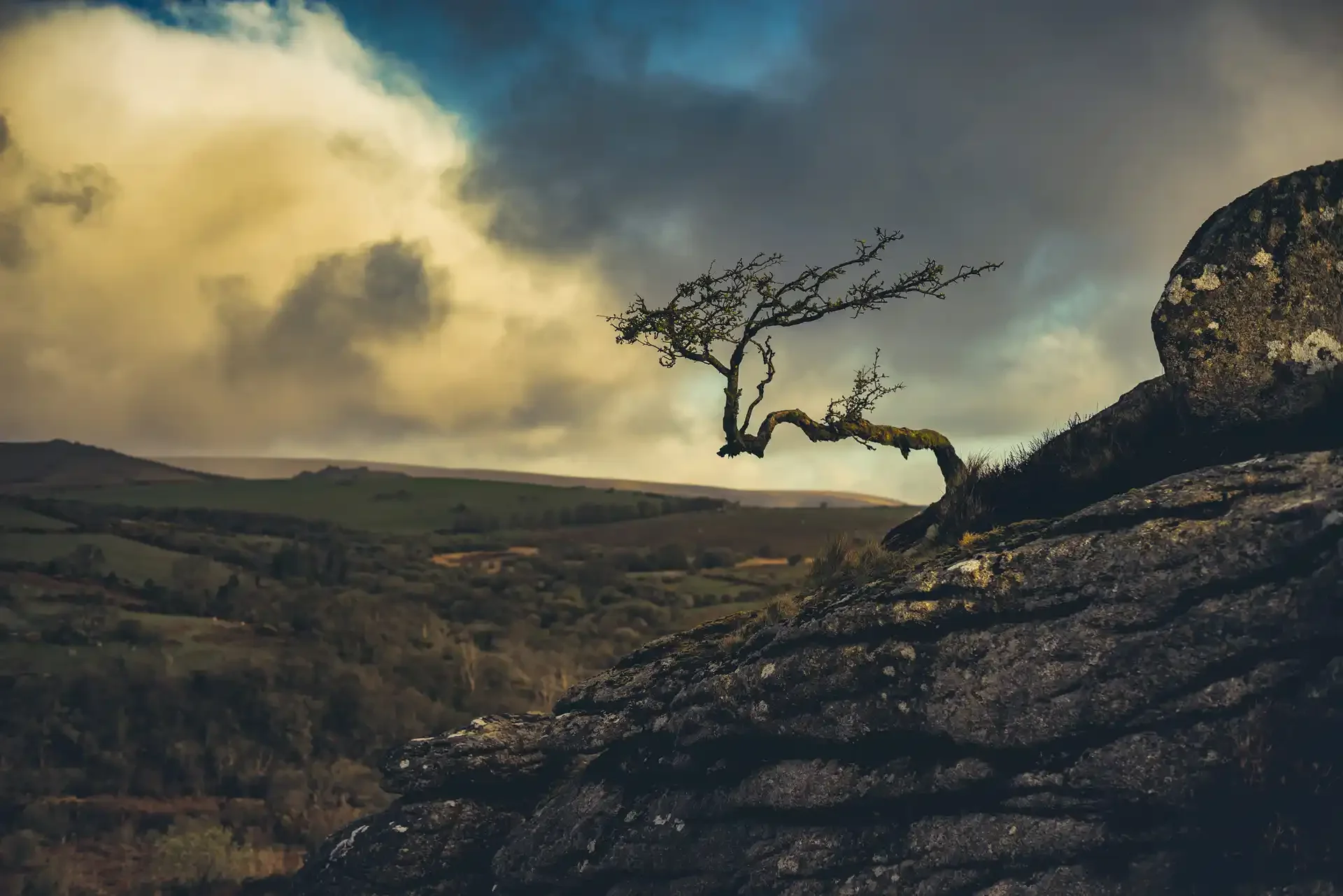
Lone Gnarled Hawthorn near Emsworthy
The Hawthorn in Dartmoor's Landscape
Spend even the shortest moment on Dartmoor and you will notice the convoluted, often lone forms of the hawthorn. Some are graceful in their windswept form, others are twisted and gnarly, a few stand solitary and proud, the only thing within sight for a full mile, all are beautiful.
Even if you don’t visit when the blossom is filling the warm spring air with its sweet scent, the stoic nature of a tree that can withstand weather that at times will blow a fairly sturdy human being off their feet means these little trees deserve all the attention they draw.
“Philips, who looked upon all trees with a poet’s eye, delighted to eulogize the hawthorn ; the garland of Flora does not possess, he said, a more charming blossom than is afforded by its peerless pink or white, nor does the richest perfume of Araby yield sweeter fragrance.”
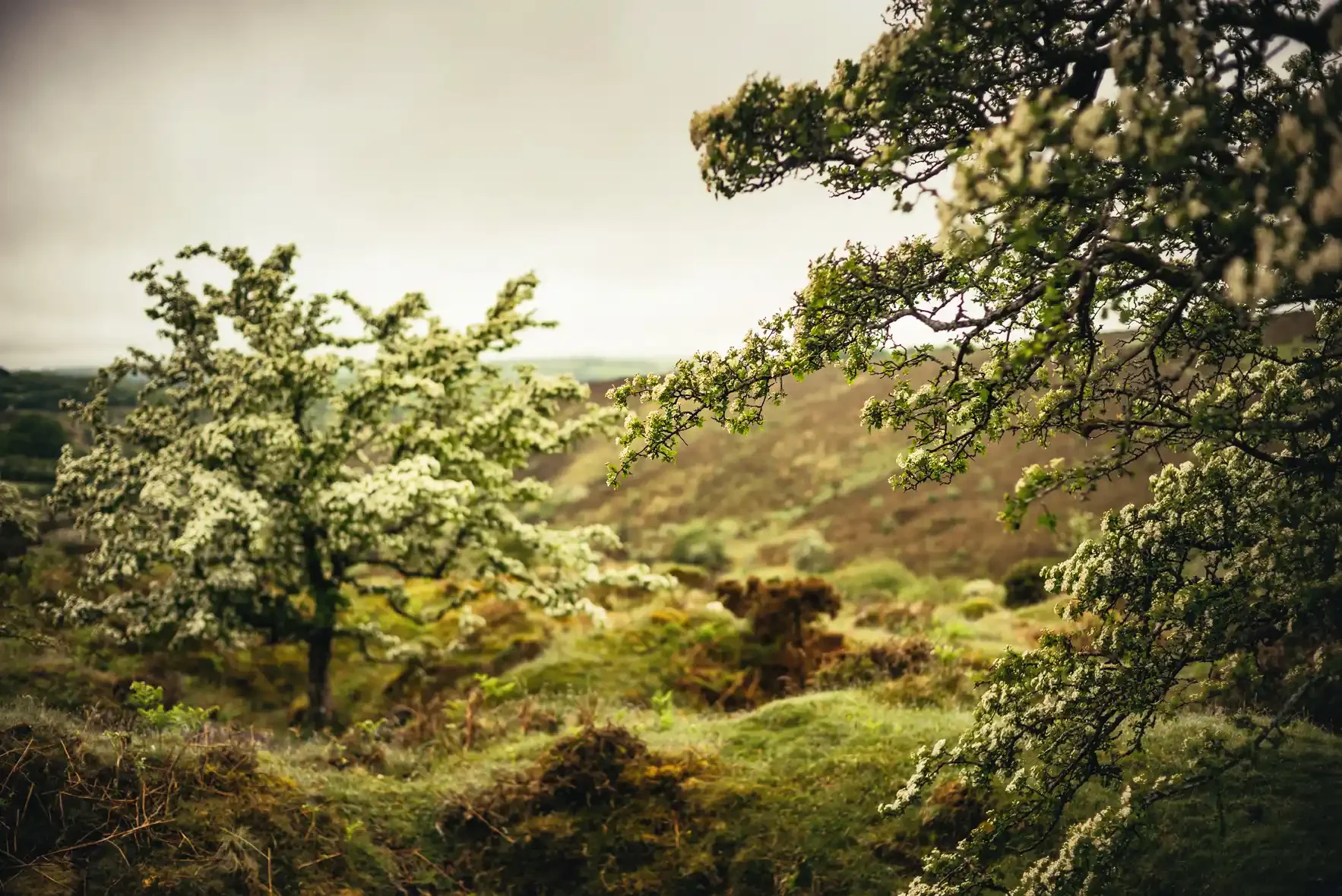
Hawthorn in full blossom (in May) near The River Lyd, below Brat Tor on Dartmoor
They hold on (and even thrive) where others fear to even try. In between rocks, on the edge of steep drops, or in vast wide open seemingly barren spaces. Even continuing with life when they are forced down by weather, overzealous cows, or thoughtless humans.
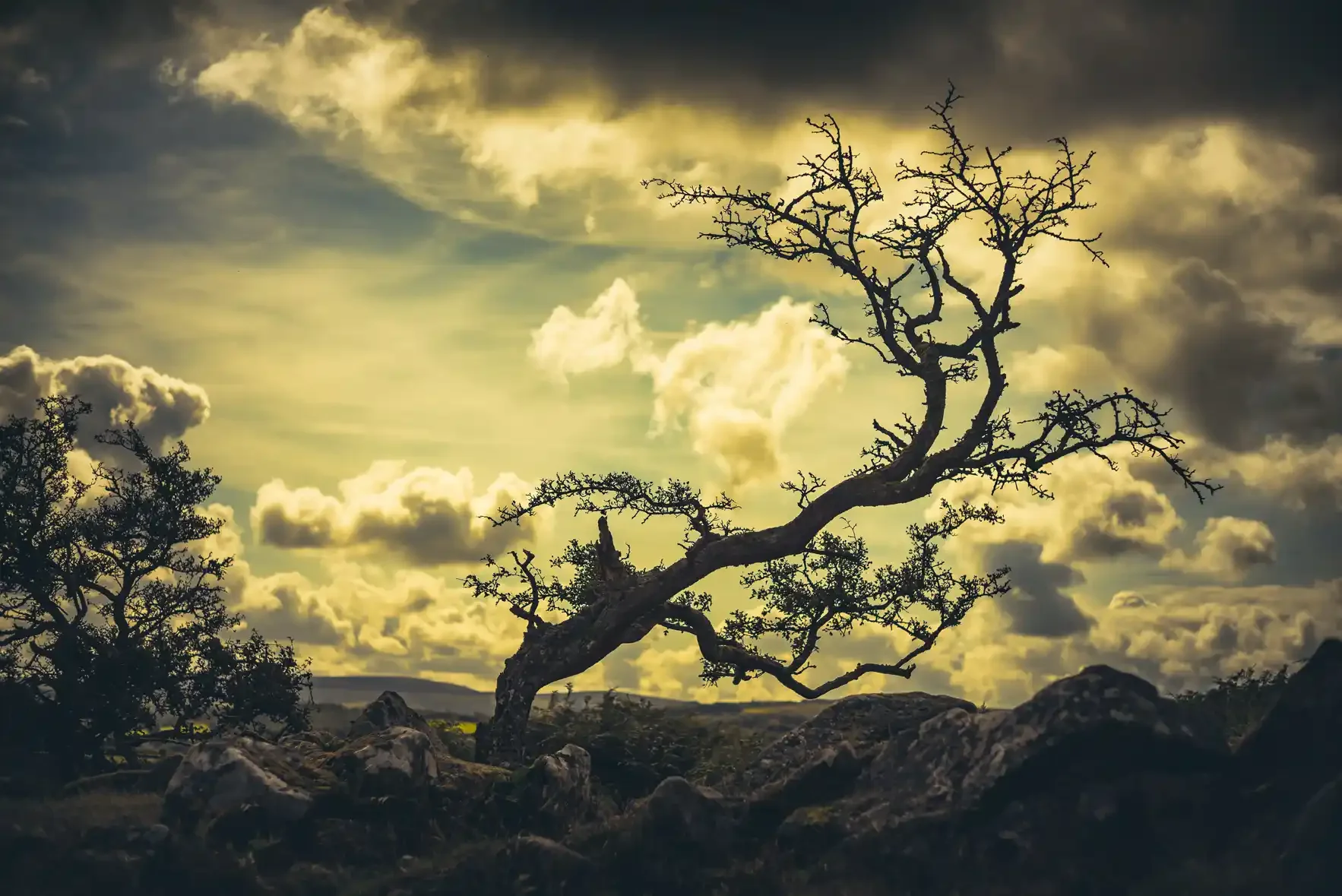
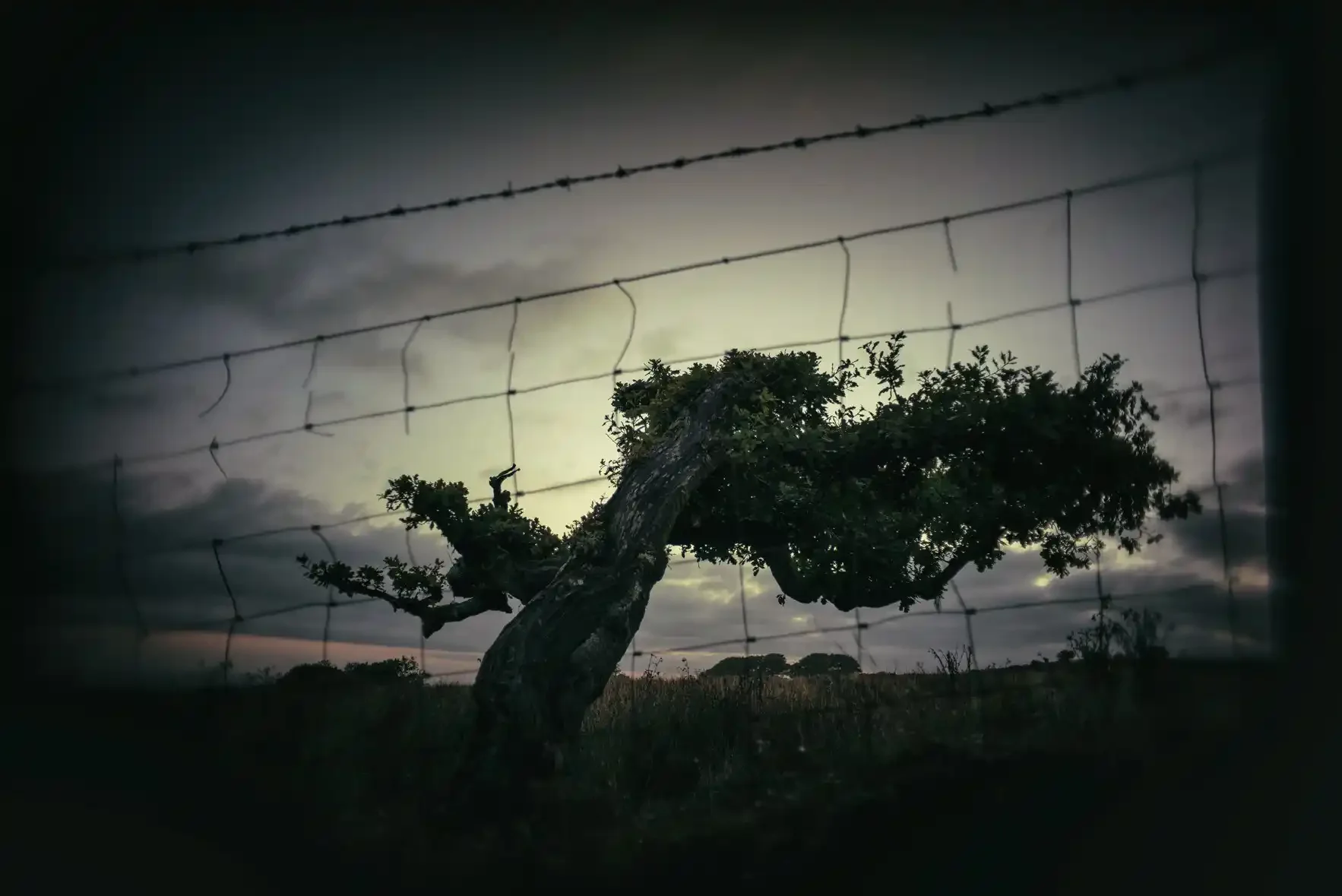
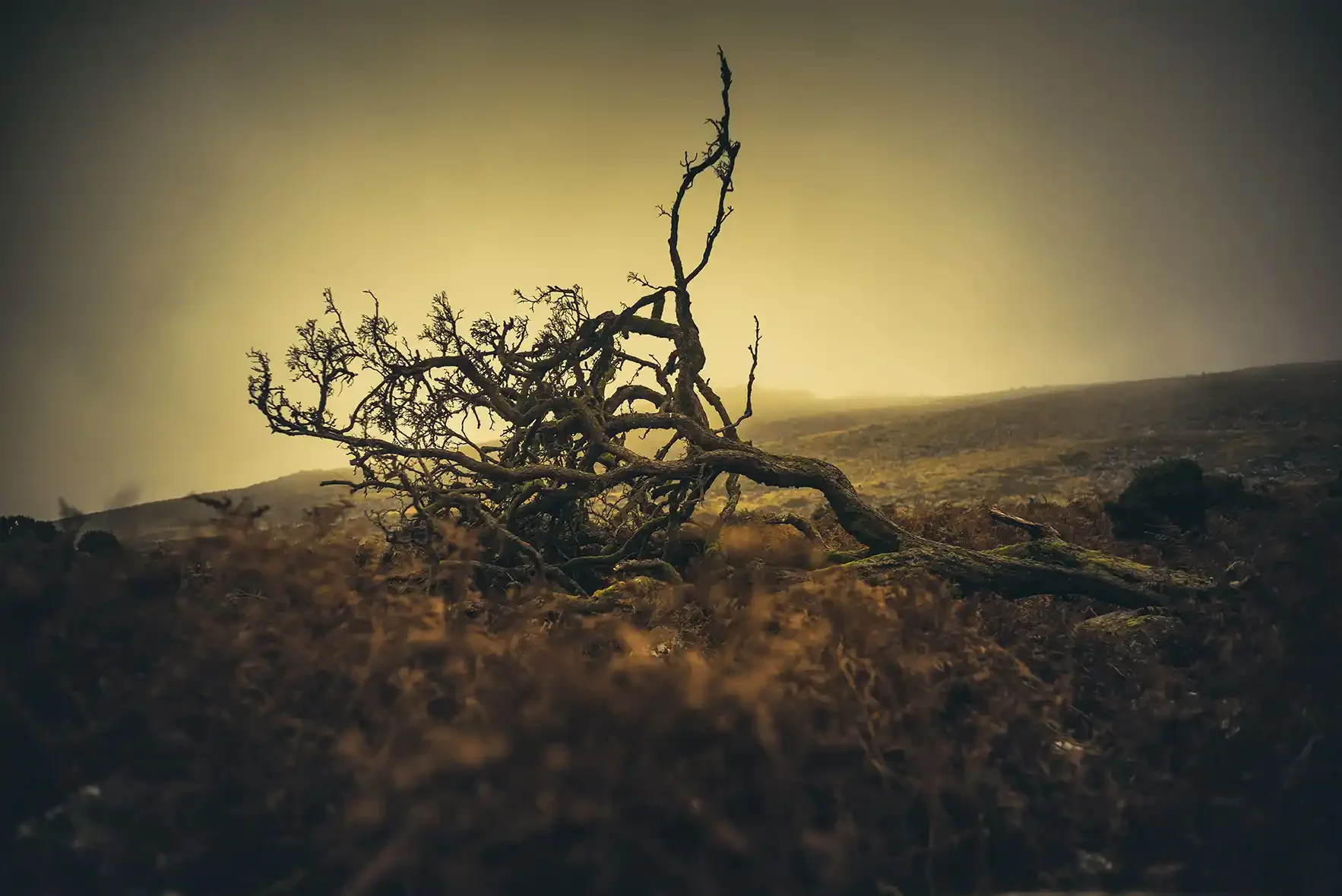
Whilst putting together this little piece, I was excited to realise that, like the sturdy yet spindly trunks of these tenacious little trees, the stories and lore around them is twisted, swirling, wrapping around on itself.
As is my wont, this piece is part pondering, part field notes, part folklore and part haphazard research (usually rewarded). Why the hawthorn rules Dartmoor's hedgerows and tors, why it's tied to Beltane and the fairies, why some people still refuse to bring its blossom indoors, and - probably the most important thing - what makes it such a rewarding subject for a photographer.
Folklore & The Fairy Tree
The May Tree, Mayflower, Quickthorn, Whitethorn, Hagthorn, Haw.
This little fellow has a plethora of names and almost as many superstitions associated with it.
“The botanical generic name Crataegus comes from the Greek word kratos, meaning ‘strength’, partly in the sense of fortification, for at least since Roman times the hawthorn has been used to define boundaries. The hawthorn hedge is older than some people suppose. To the Greeks and Romans, though, hawthorn was sacred to Hymen, the god of marriage. This association transferred itself to our use of its flowers in May Day celebrations, which at one time were the fertility rites of spring. It was probably the rejection of the old beliefs by the simple expedient of standing them on their heads which led in Britain to the association of hawthorn with bad luck of any kind, so that people would not — some still will not — allow the delightful ‘may’ flowers into their houses. According to legend, hawthorn was used to make the crown of thorns worn by Jesus.”
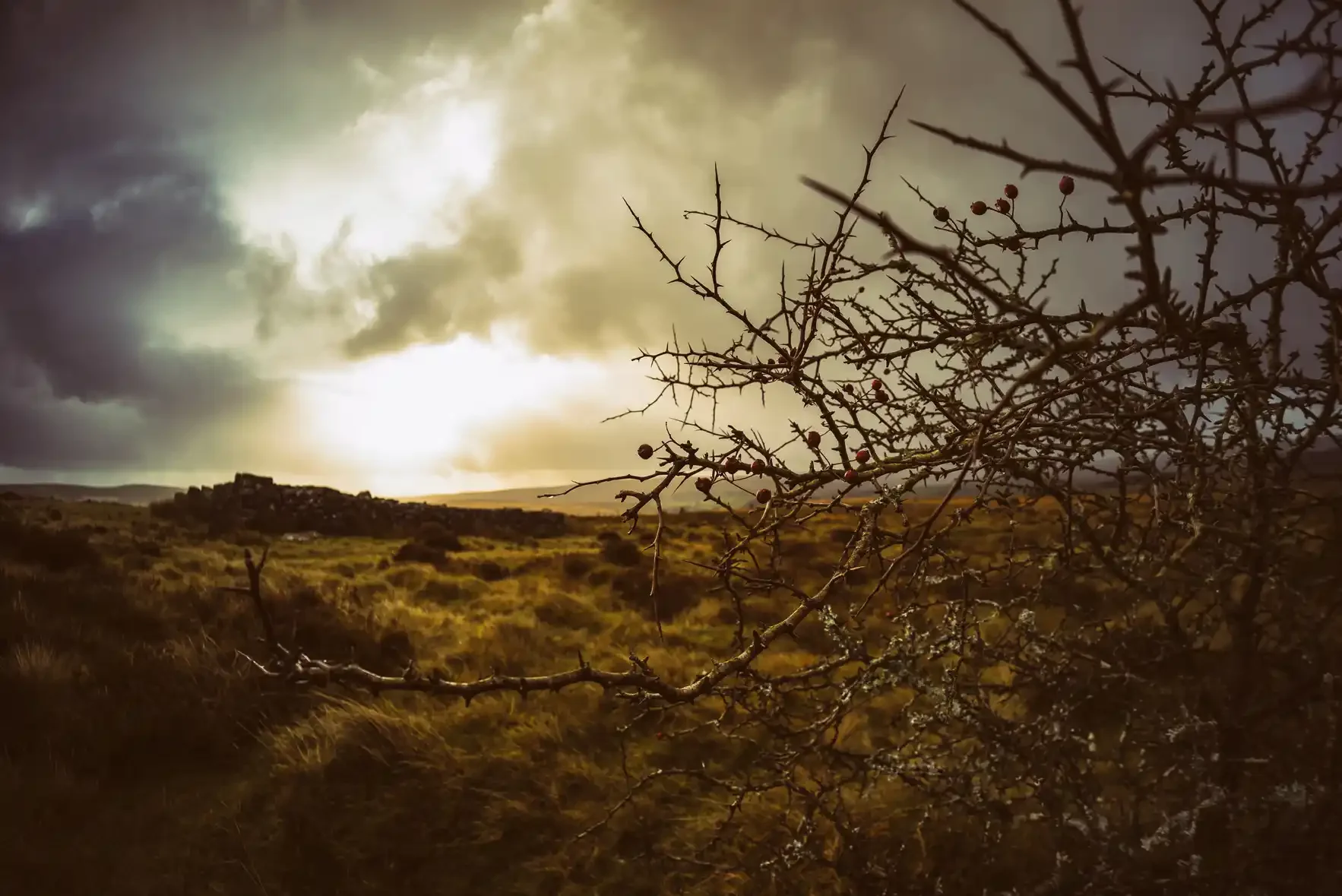
Close to Laughter Tor on Dartmoor
However, from a purely personal level, they’re just rather splendid hardy and (in my humble opinion) happy little trees. This is what I’m talking about when I keep mentioning Curious Photography
There’s not a great deal in the historical texts about Dartmoor and its Hawthorns, a quick search reveals that it’s predominantly an Irish and Scots belief which seems to have permeated the subconscious of others as the years passed. A hawthorn tree was the abode of fairies and stood at the threshold of the “Otherworld”. The rules were quite clear, anyone who cut down a fairy tree was doomed to perish. This is a recurring theme in folklore surrounding hawthorns.
“Their favourite camp and resting-place is under a hawthorn tree, and a peasant would die sooner than cut down one of the ancient hawthorns sacred to the fairies, and which generally stands in the centre of a fairy ring.”
Lady Wilde - the mother of Oscar; you learn new things all the time - collected spoken word stories of Irish legends and myths. It appears this is the first time (in print at least) that hawthorn is associated with fairies, though there’s a tradition of associating The Eildon Tree (of the Scottish legend of Thomas the Rhymer) with the hawthorn. Many neo-pagan writings and plenty of modern folklore websites will just state that this is the case without much real discussion of how this belief came about.
“True Thomas lay on Huntlie bank ;
A ferlie he spied wi his ee ;
And there he saw a ladye bright,
Come riding down by the Eildon Tree..”
A truer interpretation would be that the original text doesn’t specify what type the Eildon Tree actually is.
Retold by Walter Scott, the tree is, a lone tree. This, along with its further associations with the Fairy Queen means it’s become common for it to be inferred that the tree is a hawthorn.
I can’t see any reason why this can’t be true, I’m just pedantic 🤣
May Day & "Bringing in the May"
Beltane, “Beltaine” or even “Bealtaine” celebrated on the first of May, marks the threshold between spring and summer, and the hawthorn, known as the May tree or simply "the May" is the defining botanical emblem, bursting into beautiful, fragrant, white blossom around this date.
This isn’t strictly true on Dartmoor, hawthorn on the low lands will be covered in blossom by the first of May, as I’m writing this, it’s the fourth of May and very few of the hawthorn on the Northern edge of the moor have anything more than buds of blossom.
“There’s not a budding boy or girl this day
But is got up, and gone to bring in May.
A deal of youth, ere this, is come
Back, and with white-thorn laden home.
Some have despatch’d their cakes and cream
Before that we have left to dream:
And some have wept, and woo’d, and plighted troth,
And chose their priest, ere we can cast off sloth:
Many a green-gown has been given;
Many a kiss, both odd and even:
Many a glance too has been sent
From out the eye, love’s firmament;
Many a jest told of the keys betraying
This night, and locks pick’d, yet we’re not a-Maying.”
The flowering of the hawthorn was the natural signal that Beltane had arrived, and its branches and blossoms were gathered to decorate doorways, dress May poles, and crown the May Queen, all symbolising fertility, renewal, and the awakening sexual energy of the land.
The tree was considered sacred to the fae and to goddesses of sovereignty and summer, so much so that bringing hawthorn blossom indoors outside of Beltane festivities was (and in some rural communities still is) considered deeply unlucky … more on this later.

Hawthorn Blossom and Cotton Grass near Venford Reservoir on Dartmoor
“The fair maid who, the first of May
Goes to the fields at break of day.
And washes in dew from the hawthorn tree.
Will ever after handsome be.”
The Devon "never bring it indoors" tradition
Many old books and numerous neo-pagan websites will tell us of the tradition of never bringing hawthorn blossom into the house.
“All across Devon it has been considered extremely unlucky to bring hawthorn into the house as it would be tempting fate and illness or death would surely follow.”
This is one of those traditions that has persisted into living memory; not just a Victorian invention. References to it crop up across the literature, several with believable and sometimes logical grounding.
“In France, the hawthorn is often called l’épine noble, from the idea that it furnished the crown of thorns which was placed around the brow of our Saviour before his crucifixion.”
Hawthorns in Literature
Whilst reading up about hawthorn, I realised that it’s association with so many myths and legends and superstitions means it appears in an inordinate number of works of fiction. The hawthorn appears in no less than five of Shakespeare’s plays.
Henry VI, Part 3:
"Gives not the hawthorn-bush a sweeter shade
To shepherds looking on their silly sheep,
Than doth a rich embroider'd canopy
To kings that fear their subjects' treachery?"
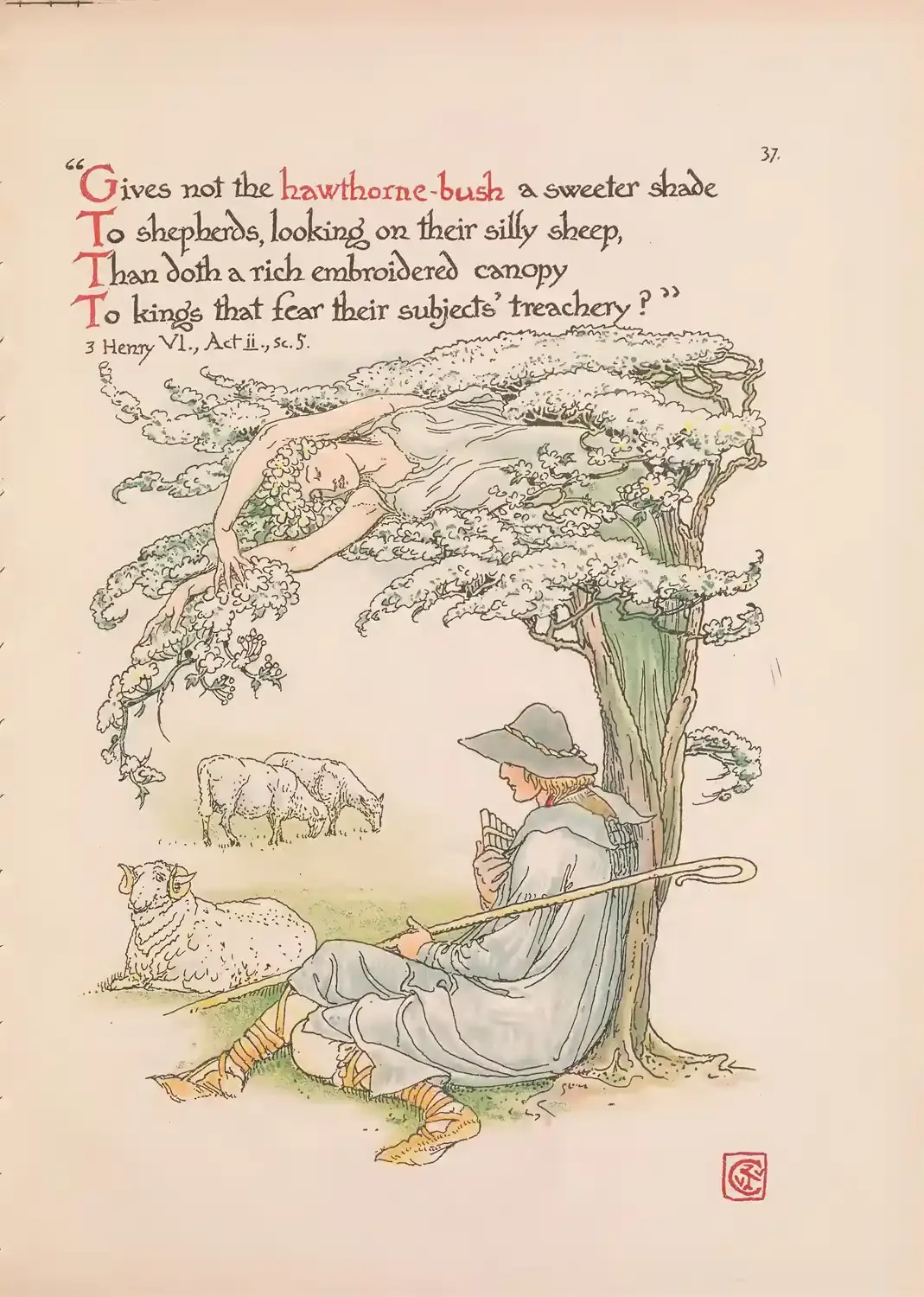
Walter Crane illustration from Flowers from Shakespeare's Garden (1909)
The hawthorn drew the Edwardian naturalists too. Edith Holden noted one in her famous nature diary on a walk that crossed onto the western edge of the moor itself:
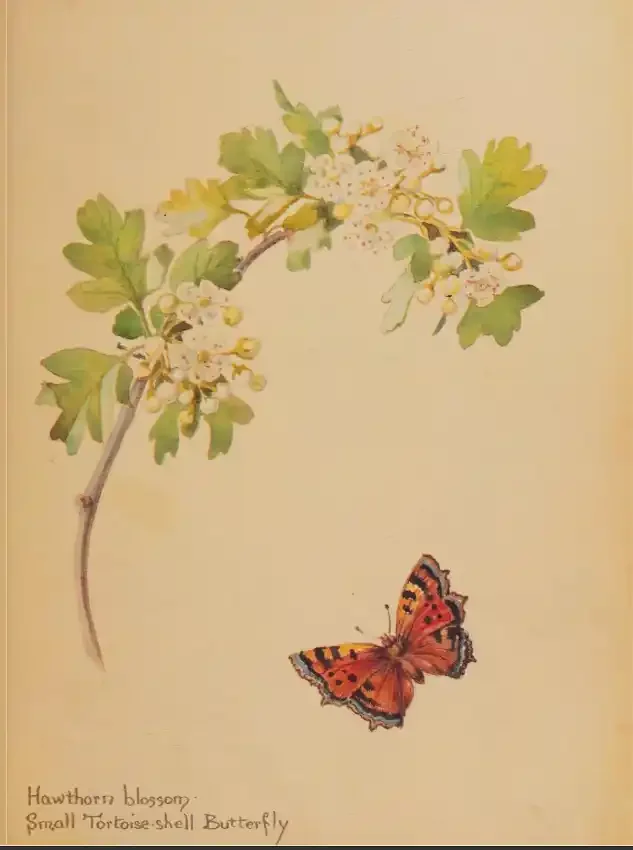
From “The Nature Notes of an Edwardian Lady”
“May 18th. Went through Walkhampton to Huckworthy Bridge. The ferns along the river-side were very luxuriant, all kinds — Harts’ Tongue; Male, Lady, Hard, English Maiden-hair, Shield and many others whose names I did not know. A little hawthorn tree among the boulders was just coming into blossom; they are scarce in this part.”
I’m not going to lie, the well of information about hawthorns in literature needs it’s own blog entry! I, however, need to get out and take some more photographs, so let’s leave this section for now.
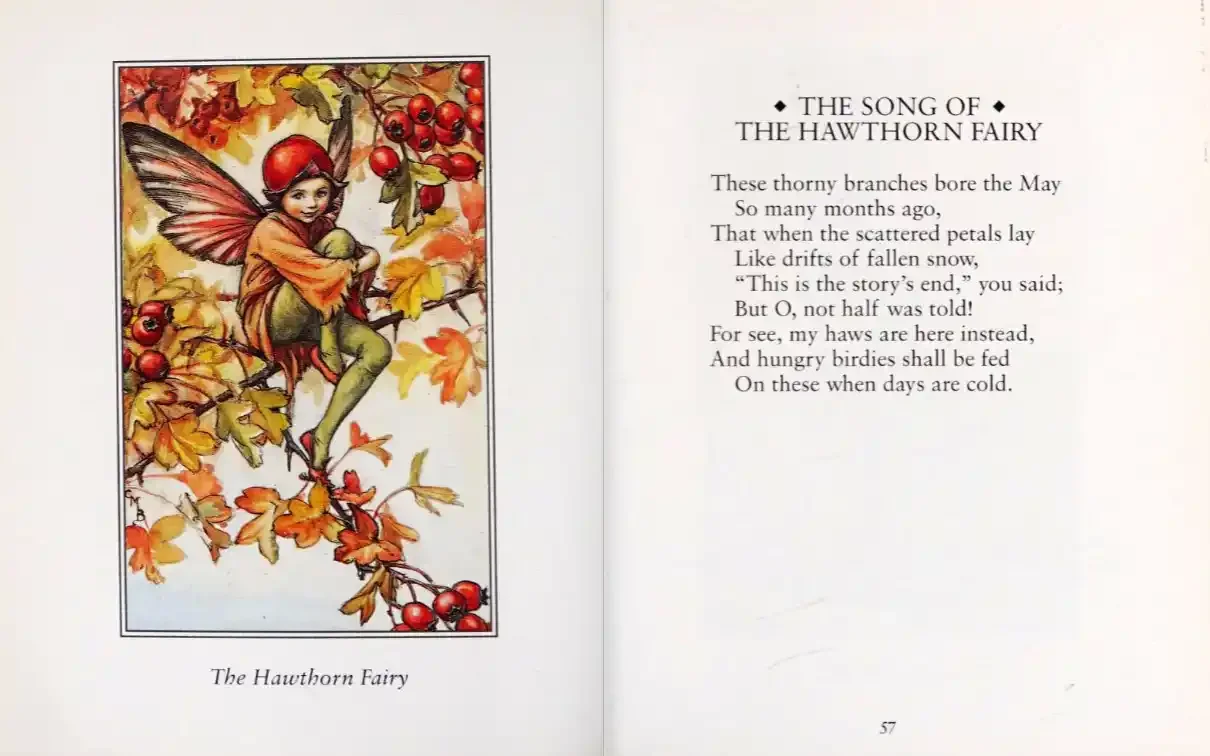
The Song of The Hawthorn Fairy by Cicely Mary Barker
The Dartmoor Hawthorn as food
Although, as you traverse the moor, you tend to hear a great many stories about hawthorn being known as “bread and cheese”, I could only find one written account of this, and even then, it’s a little iffy.
“The leaf buds are called by the children ‘bread and cheese’ — in Welsh, ‘Barra cause’. Pick and use as ‘salading’, between bread and butter. The small tight green buds before they open, can also be used to enliven the potato and beetroot salads of winter. Take about 1 teacupful of the buds, to 4 teacupfuls of the prepared potato salad”
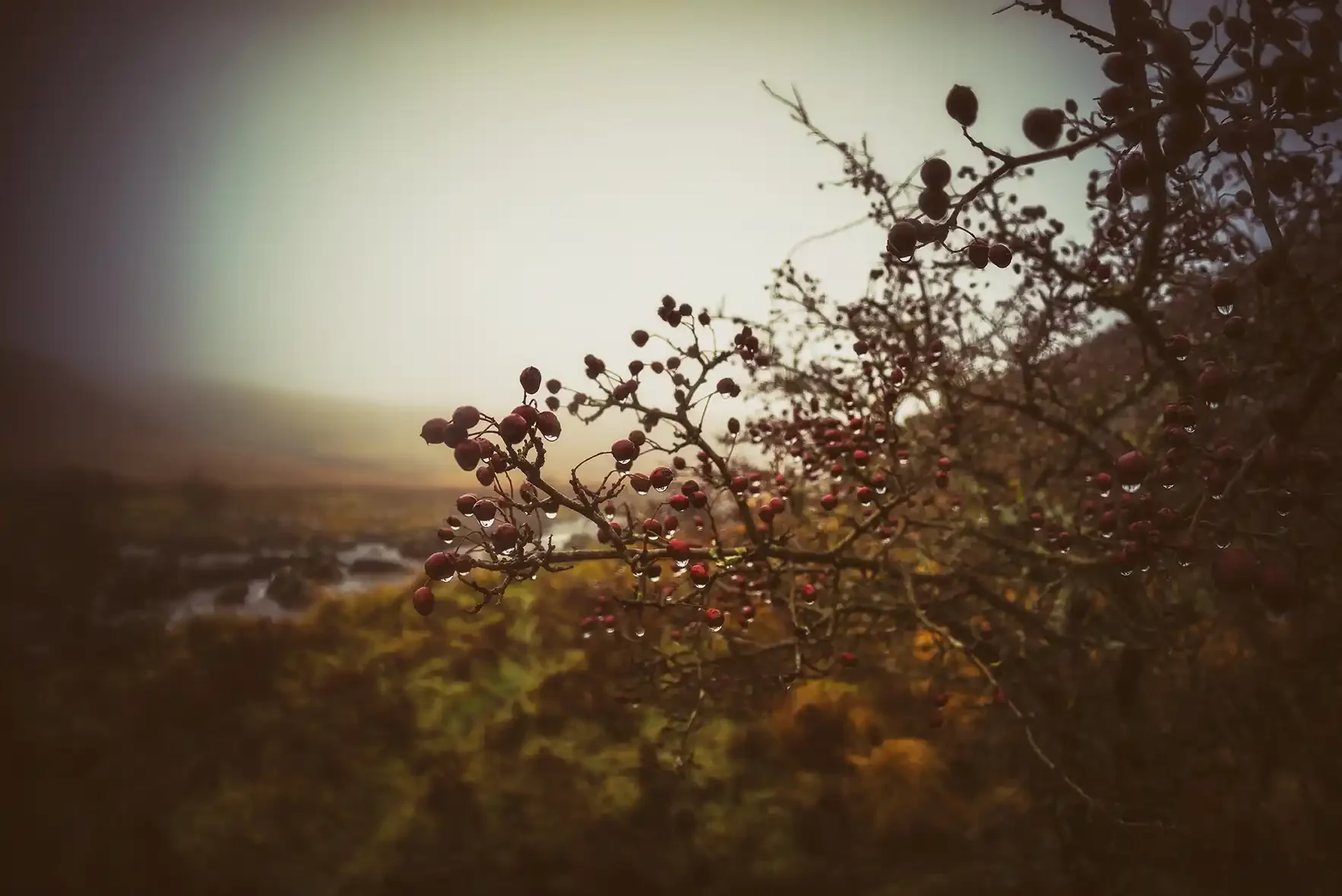
Autumnal Hawthorn in the mist and mizzle near Black-a-Tor Copse on Dartmoor
Dorothy’s assertion that it’s the buds that are made into a salad, between bread and butter (in my opinion) goes against the idea that it’s the leaves and the haws which are known as bread and cheese (which seems to be the general thought). Either way, I’ve eaten both bits and not died. Mrs Hartley isn’t wrong when she says; “The haws are very dry fruit (and to my mind are better left for the birds in winter)” 😁
“In some districts these mealy red fruits are called Pixie Pears, Cuckoo’s Beads and Chucky Cheese.”
Again, in my humble opinion they do not taste of cheese, however, I am well aware that the memory of trying foraged food is very dependant upon the location, the time of year and many other factors, not least your state of mind. I have tried Whortleberries on numerous occasions and at many areas around the moor. I have enjoyed all of these, however, one spot, on a particularly sunny day, by a pool under the shade of a rowan, the berries were exquisite … paling even the finest grapes I have tried.
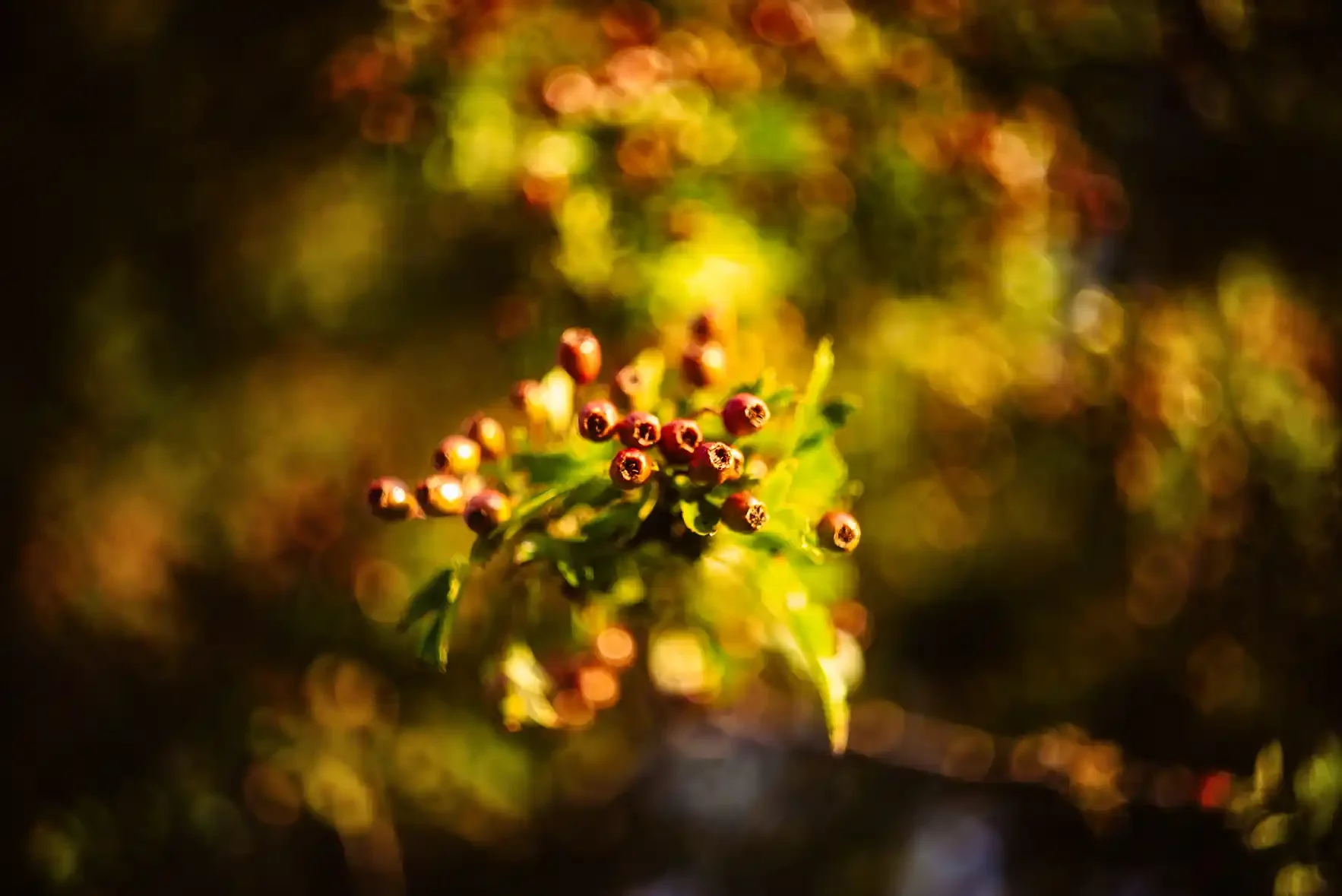
Hawthorn Berry Bokeh - A sunny autumnal day on Dartmoor
“In the olden days our jolly forefathers made great use of this aromatic-smelling tree, which then, as now, was more commonly known by its favourite name of “May,” from its flowering in that month. May, the queen of blossoms, was greeted on her arrival with all the royal rejoicings that her incoming deserved, and few, from sovereign down to poorest peasant, but strove their best to pay her due honour. May was kept universally, and, it is said, even the avenues of the metropolis looked like bowers, from the boughs which each man hung over his doorway. The young people of both sexes went a-Maying, accompanied by bands of music ; people of all ranks joined in the pastimes, from Bluff King Hal, who rode a-Maying from Greenwich to Shooters’ Hill, with Queen Katharine and his merry Court ; indeed, “ every man, except impediment,” as old Stowe quaintly remarks, “would walk into the sweet meadows and green woods, there to rejoice their spirits with the beauty and savour of sweet flowers, and with the harmony of birds praising God in their kind.” No Oriental Feast of Roses was more sacredly observed or carried out with greater glee than was the old English custom of Maying. Houses and churches were as habitually decked on Mayday with the blossom of the hawthorn, as they were at Christmas with holly”
Hawthorn Blossom Smells Like Death
Whilst writing this piece, I spotted this reference by Maud Grieve in 1931 …
“The flowers are mostly fertilized by carrion insects, the suggestion of decomposition in the perfume attracts those insects that lay their eggs and hatch out their larvae in decaying animal matter.”
This mention of “decomposition” made me remember reading somewhere that the blossom of the hawthorn smelt the same as that of “death”. This was many moons ago and although I can acknowledge that there is (in my opinion) a similarity, the idea hadn’t really stayed with me. Then I read an article in “Notes and Queries” and a switch was flicked …
“To return for a moment to England, in some district not specified, a different opinion of the perfume has prevailed, for ‘country cottagers aver that the scent of the hawthorn is exactly like the smell of the Great Plague of London.’”
Of course, this led down another rabbit hole!
Did you know that Francis Bacon (the really old one, not the artist) actually wrote about this in the 17th Century!
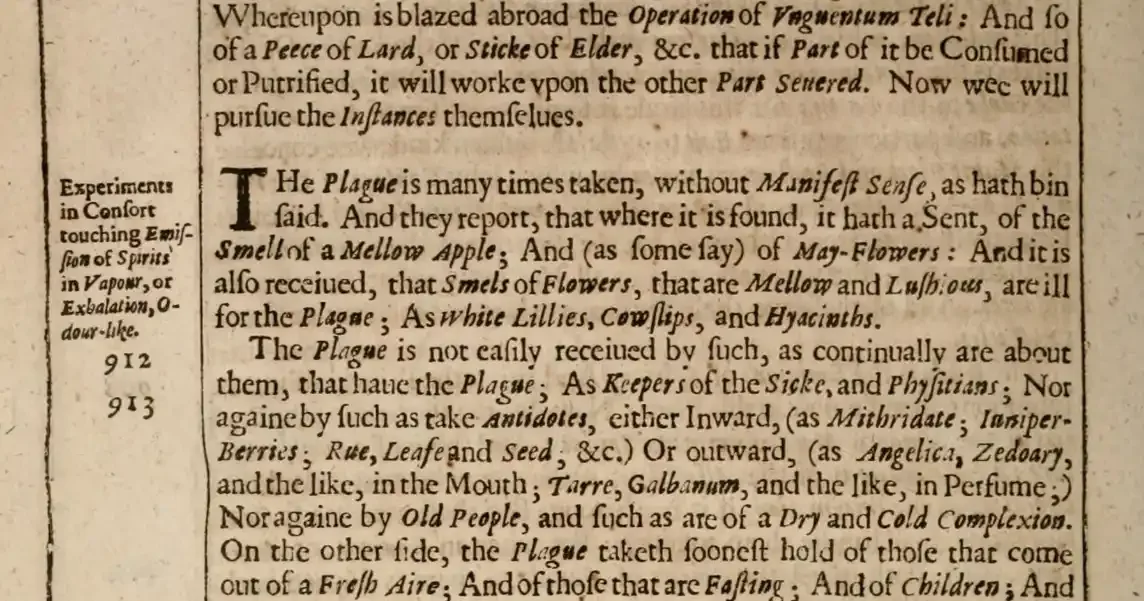
Sylva sylvarum: or A naturall historie. In ten centuries. Francis Bacon, 1561-1626

Death and the Dartmoor Hawthorn - A hawthorn I love to visit on the edge of Shelstone Tor
“The fragrance of hawthorn divides opinion. I quite like the smell but for many, the complex sweetness is unpleasant and for some, awakens thoughts of death or sex. The source of this complexity is triethylamine, a chemical produced by the hawthorn flowers to lure insect pollinators. Triethylamine has a fishy smell and is also produced by corpses and is found in sexual fluids perhaps explaining the association of the hawthorn fragrance with death and sex.”
So, as with many things called “folk knowledge” or warnings, furtively mentioned by the village “wise woman”, science has eventually caught up with the “cunning folk”. Fichtner & Wissemann (2021) in their (rather dry in comparison to the rest of my references 😁) publication, “Biological Flora of the British Isles: Crataegus monogyna” state that;
“In addition, it contains the yellow-coloured quercetin and has a scent of herring brine, due to a trimethylamine component. This disgusting smell attracts especially diptera fond of putrefying substances, such as muscids and tachinids, but also anthophilous diptera such as syrphids (hoverflies), as well as coleoptera and hymenoptera. Among the latter are mostly apids like the honey bee Apis mellifera (L.), mining bees Andrena barbilabris (Kirby), A. labiata Fabricius, A. scotica Perkins (=A. jacobi Perkins), A. synadelpha Perkins, A. varians (Kirby) and the mason bee Osmia cornuta (Latreille; Westrich,). The bumblebees, Bombus terrestris L., B. lucorum L. and B. pratorum L., are listed by Gyan and Woodell, along with Volucella spp., Eristalis spp. and other small- and medium-sized hoverflies.”
It’s important to note here that Strange references “Triethylamine” whilst Fichtner & Wissemann identify “Trimethylamine” - I only noticed the difference when editing this article, however it appears that both these chemicals exist in the hawthorn blossom. The smells of Sex and Death (nobody can deny how classy my writing has become).
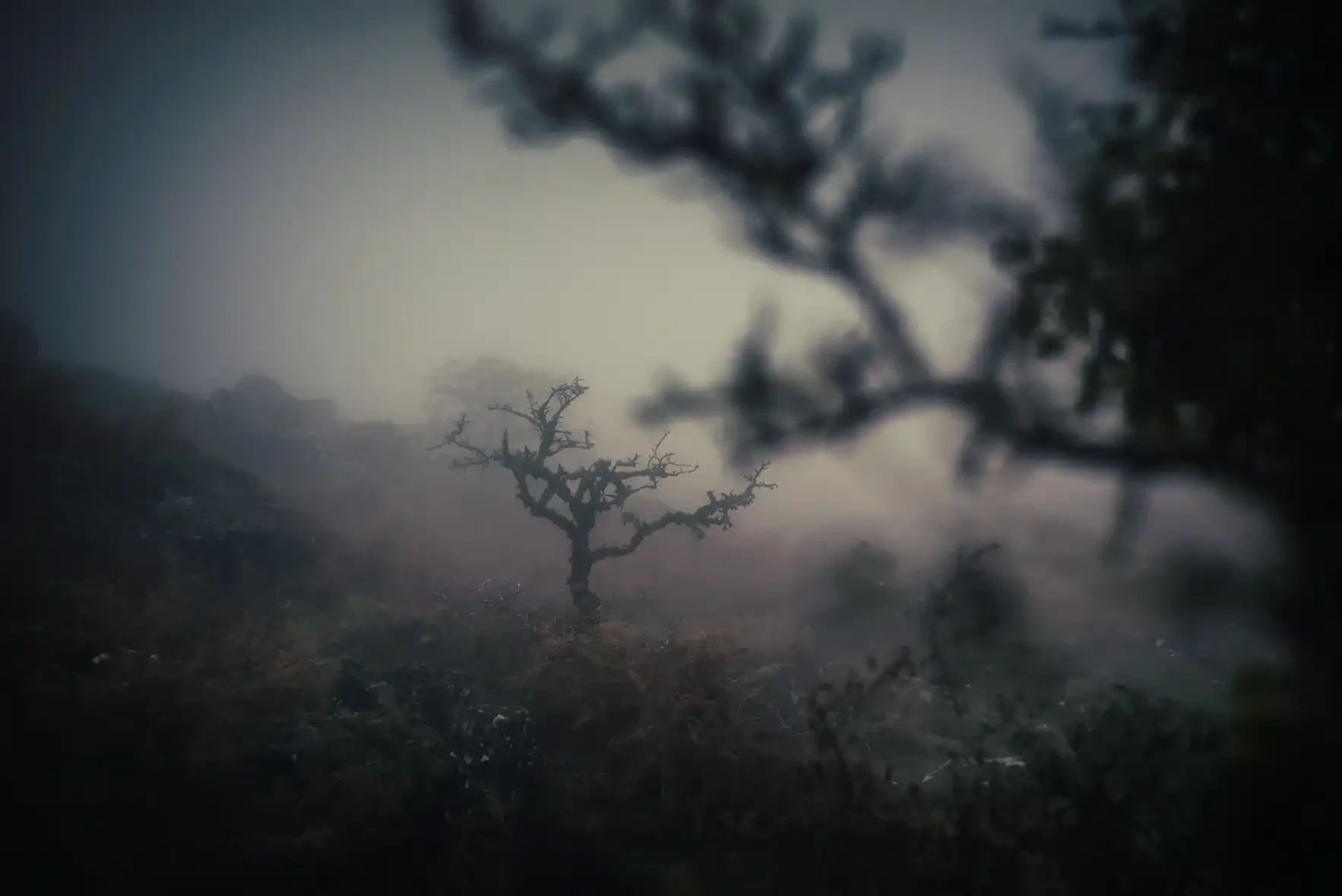
Hawthorns in The Mist on Dartmoor
So, this confirms a real world connection between “death” and the hawthorn and then explains the whole avoiding bringing this “smell” into your house.
Having smelt animal corpses on Dartmoor, I can attest that this smell is something you do not forget quickly. I’m sure in times past a body of a relative would have laid around the house for many days, and being in close contact with death in general was a more usual and common thing. Not a massive leap of imagination needed.
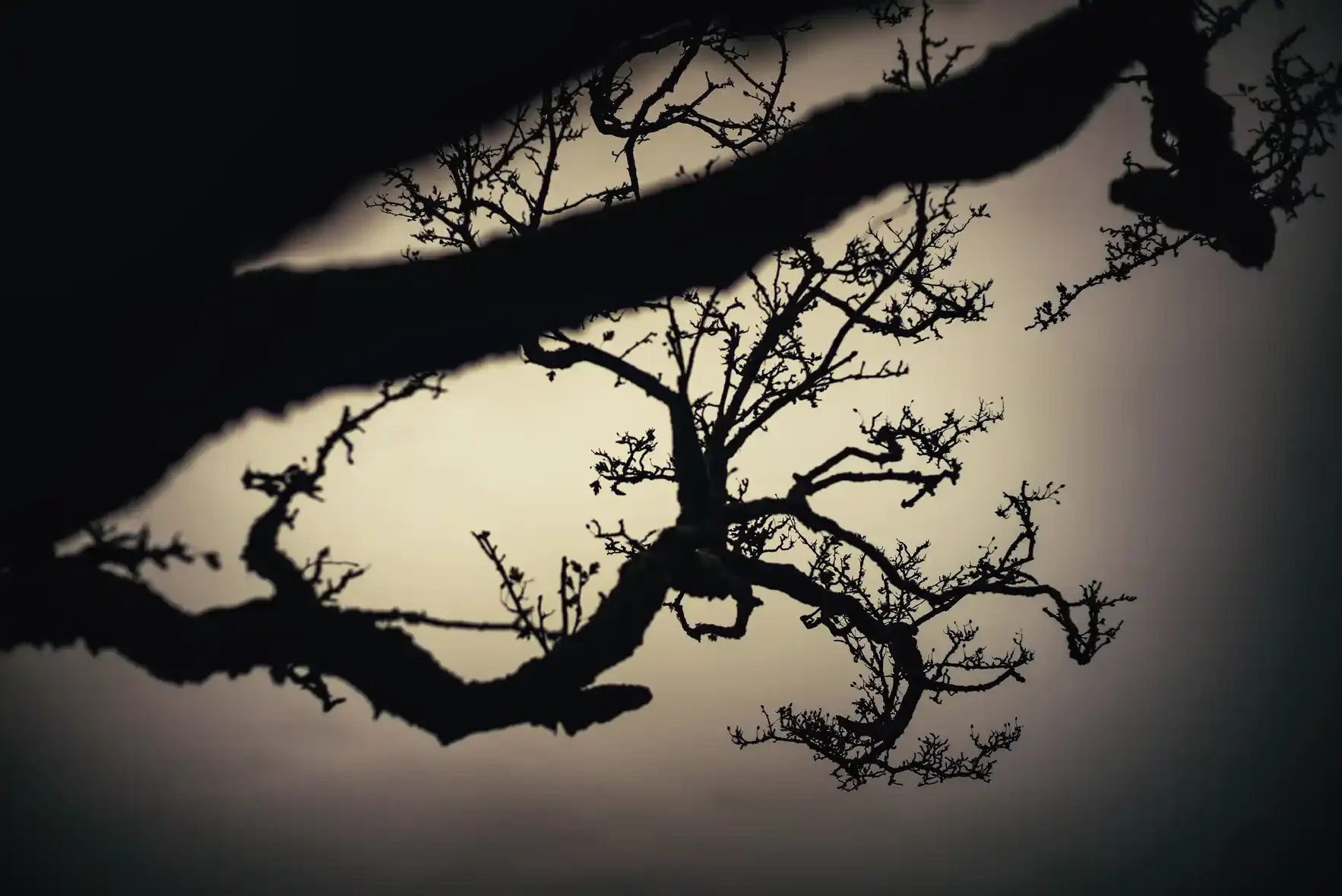
Misty Hawthorn below Arms Tor on Dartmoor
Photographing the Hawthorn
After all of that. The fairies, the plague, the (confusing) chemistry of decomposition, you’re probably wondering why I spend so much time photographing these little trees.
The honest answer is that nothing I've written above is the reason why.
It’s because they’re there.
If you see a hawthorn and aren’t moved in some way, you’re not a photographer.
The hawthorn isn't a conventionally pretty subject, I’m aware my enjoyment of them isn’t universal, and that’s unfortunate.
The trees themselves can be awkward, asymmetric, often half-dead and more often than not, in a very difficult place to reach.
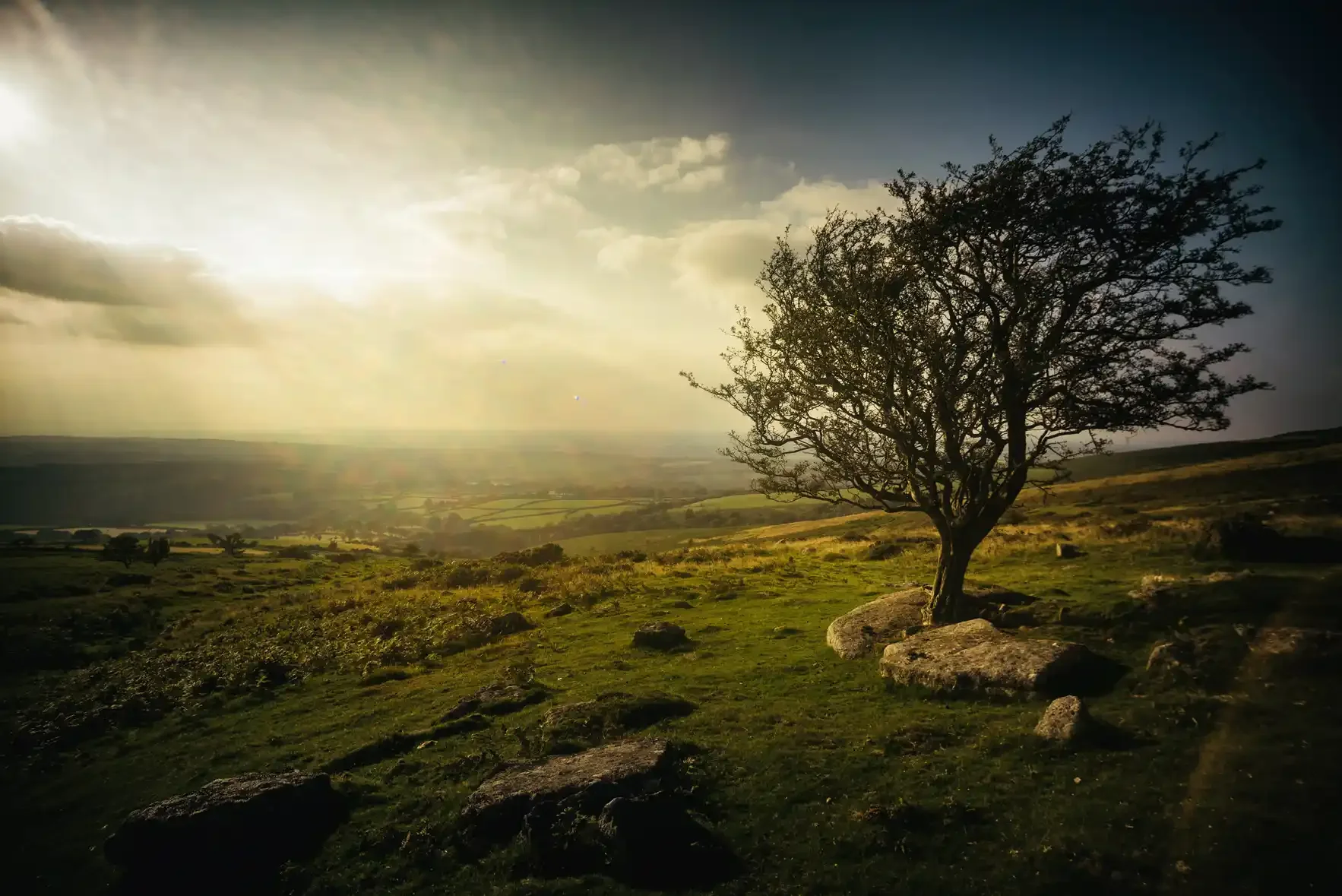
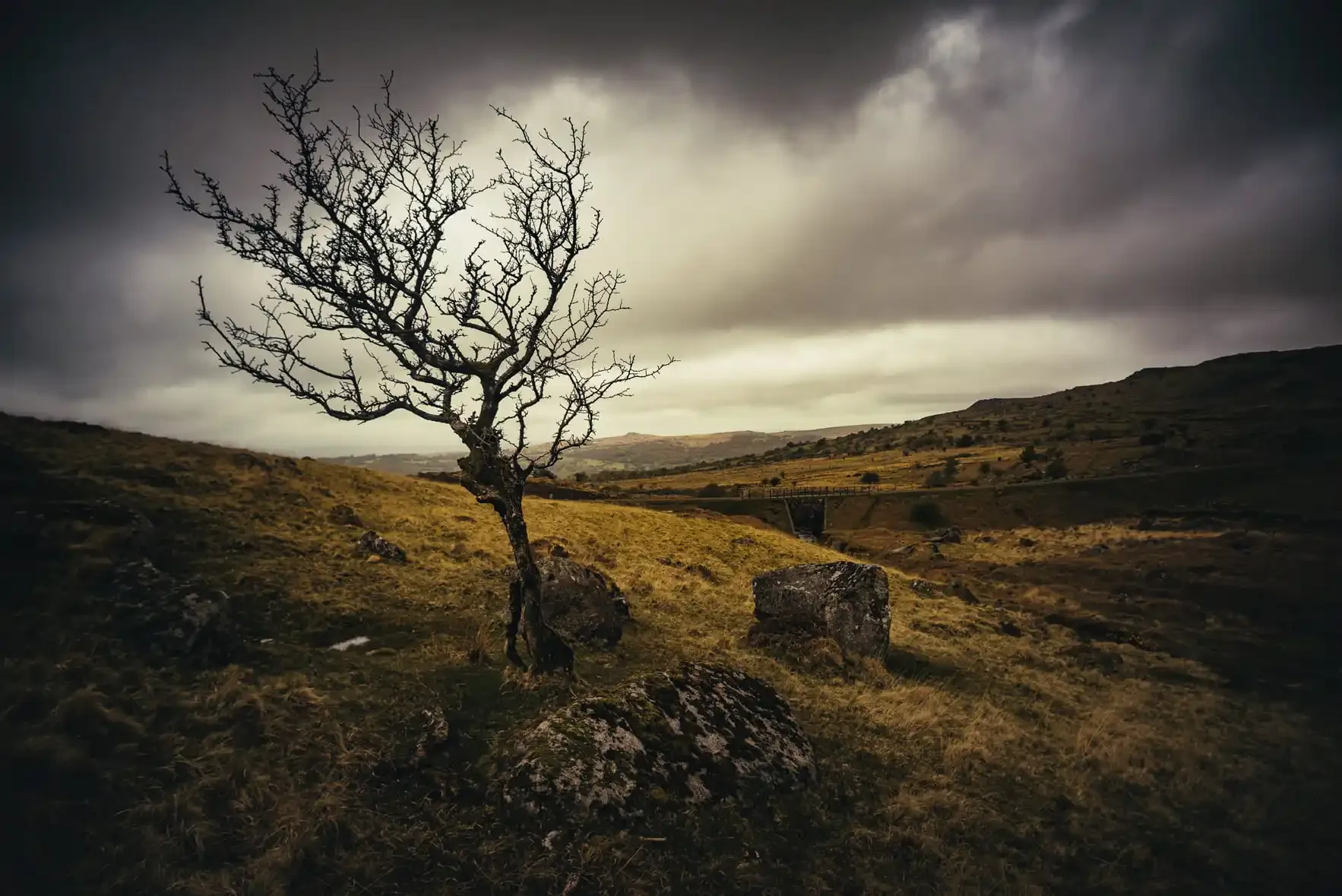
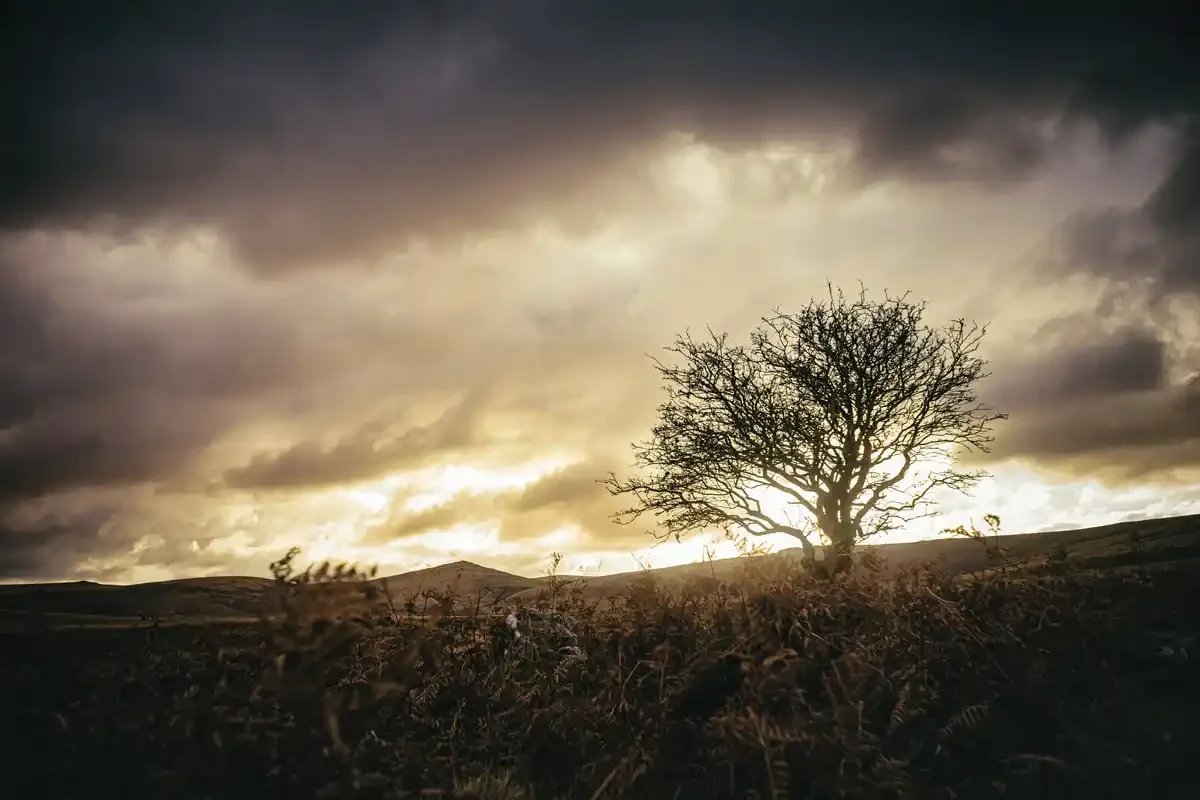
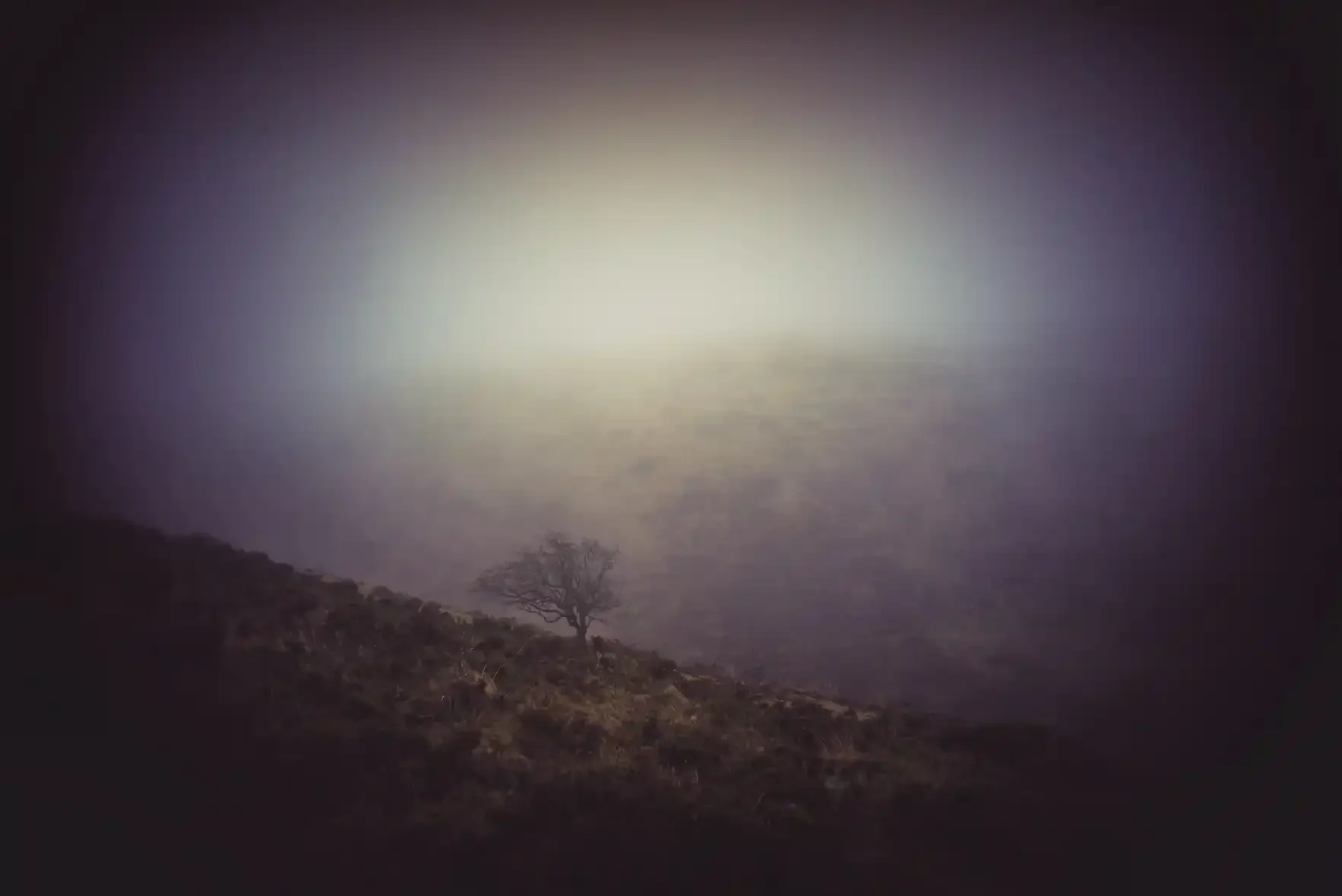
If you fancy any help finding your own favourite Hawthorn - I’m happy to help.
Some practical notes for anyone wanting to photograph Hawthorn on Dartmoor:
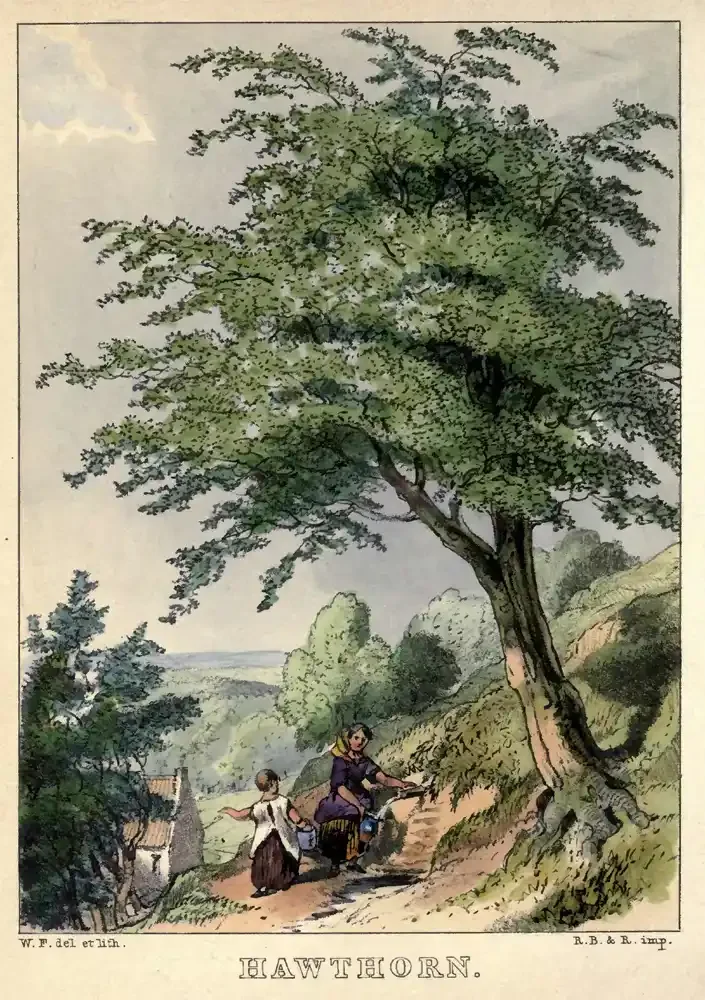
“Hawthorn” - Illustration from “Voices from the woodlands, descriptive of forest trees, ferns, mosses, and lichens” by Mary Roberts 1850
First off, if you don’t know the area, check for Firing Times (The Army use three areas on the North Moor for live firing).
The moor can be dangerous, wear the right boots and clothes, take a map and a compass (your phone WILL NOT WORK in certain areas) - tell somebody where you are going if you are new to a route.
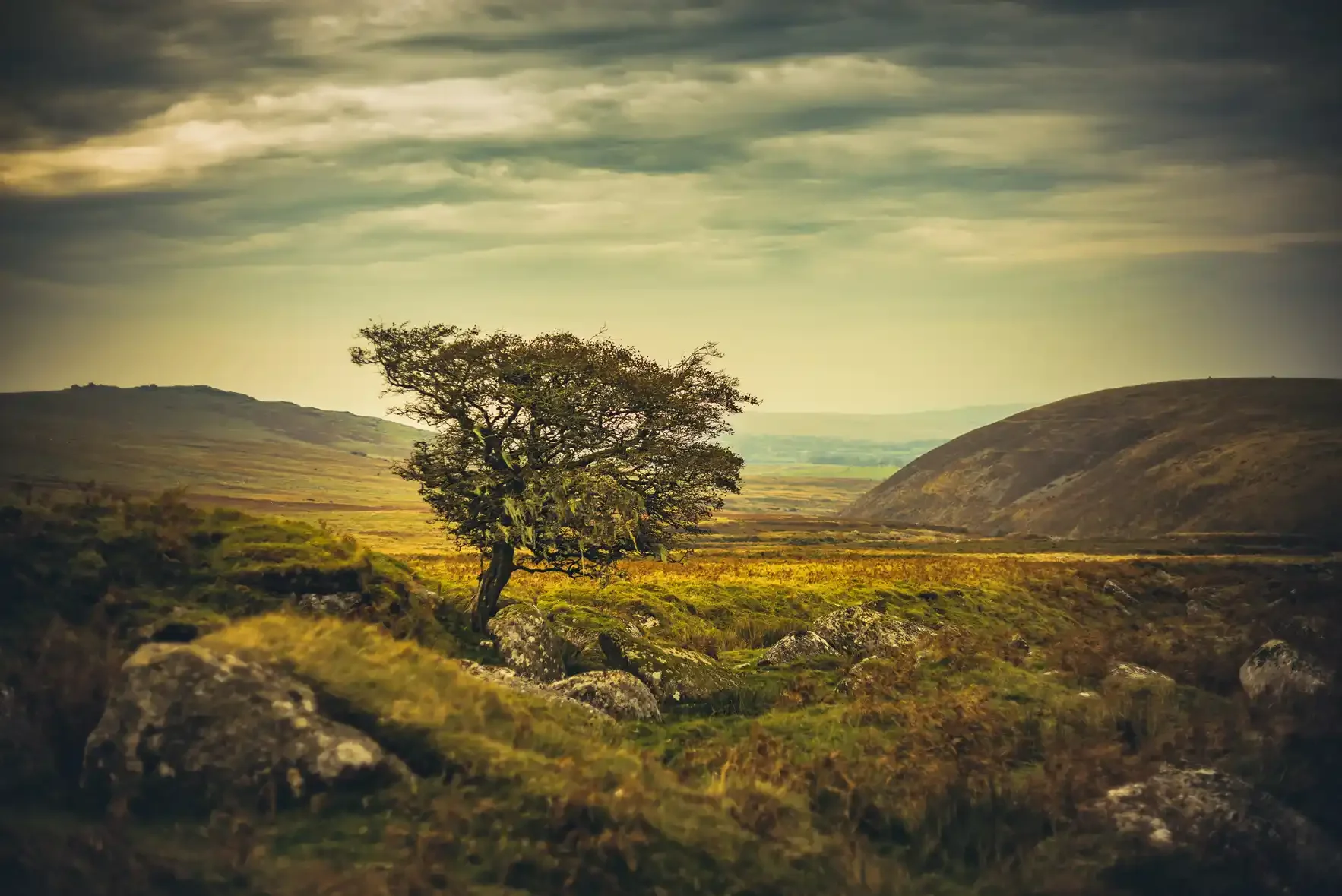
Don't chase Beltane on the calendar; chase the actual flowering. As I write this on the 4th of May, the trees on the northern edge are still mostly in bud, higher up they are only just in leaf.
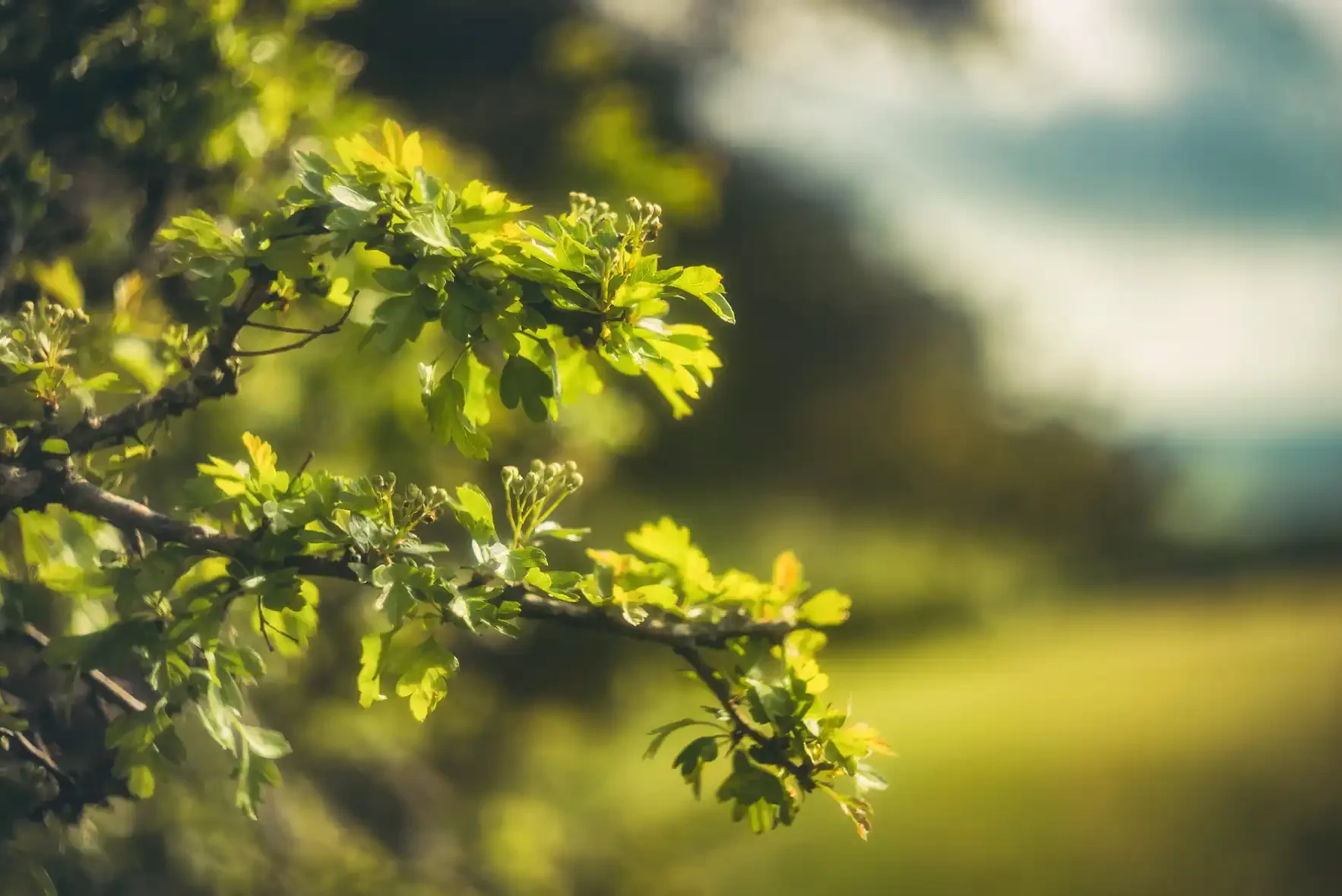
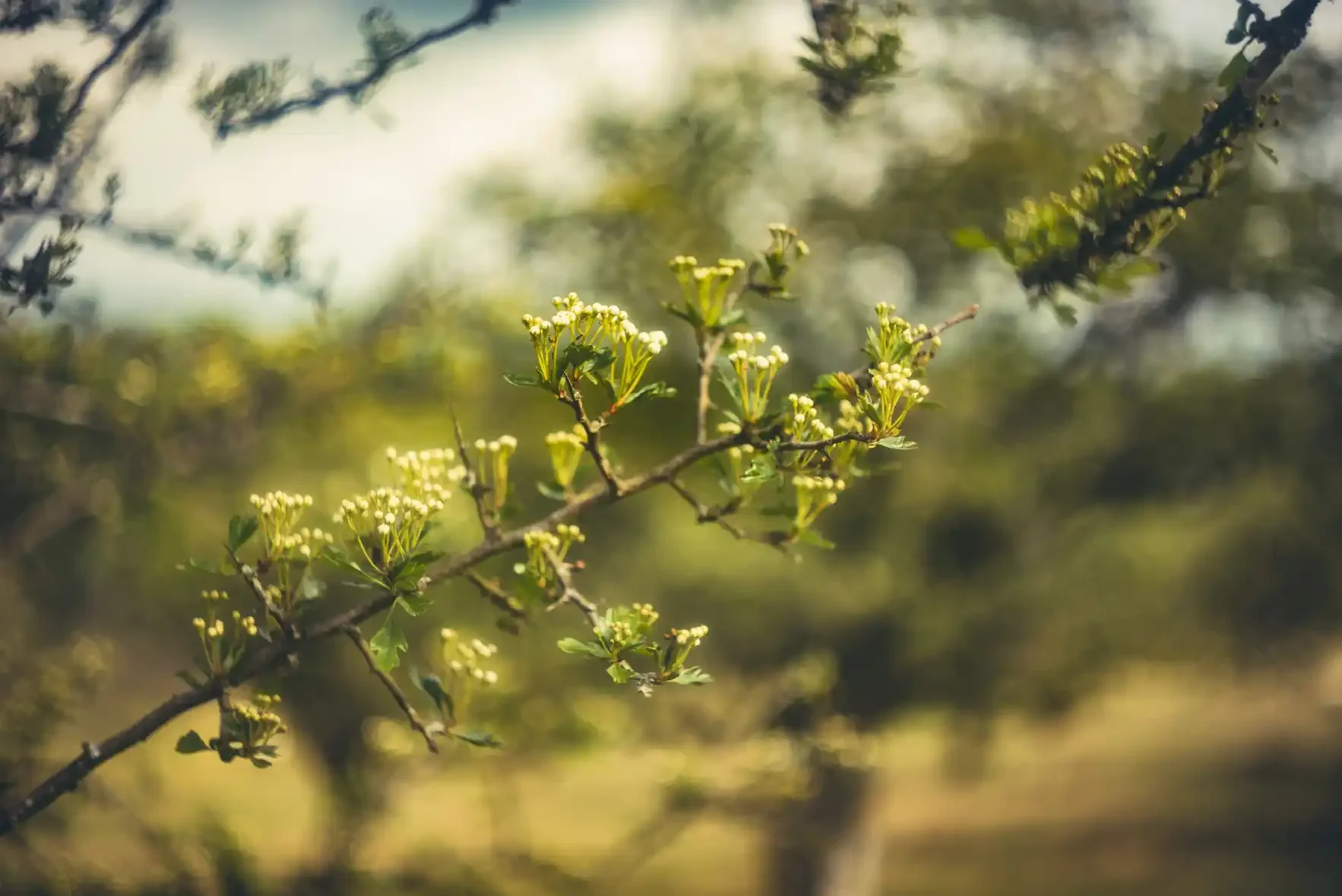
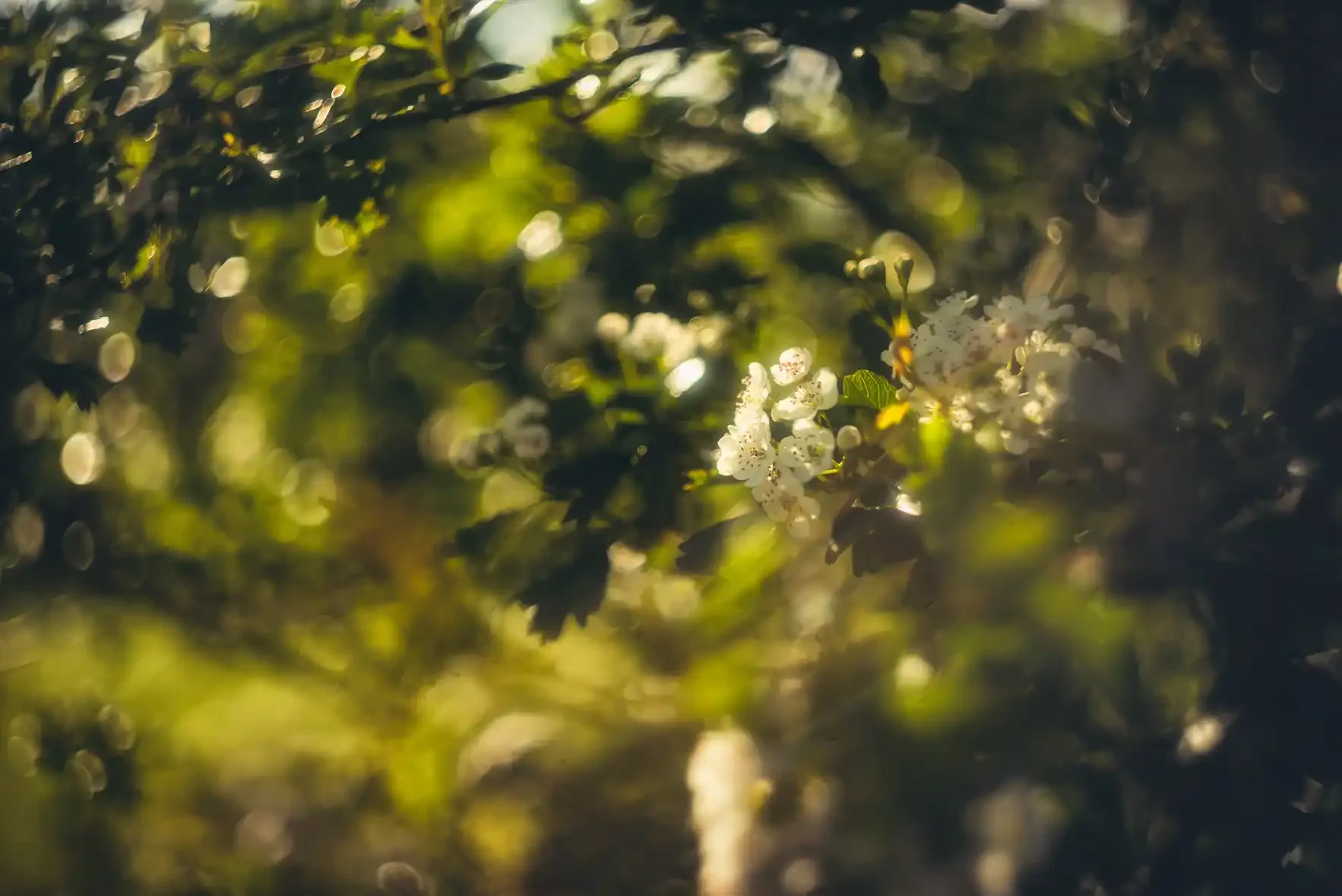
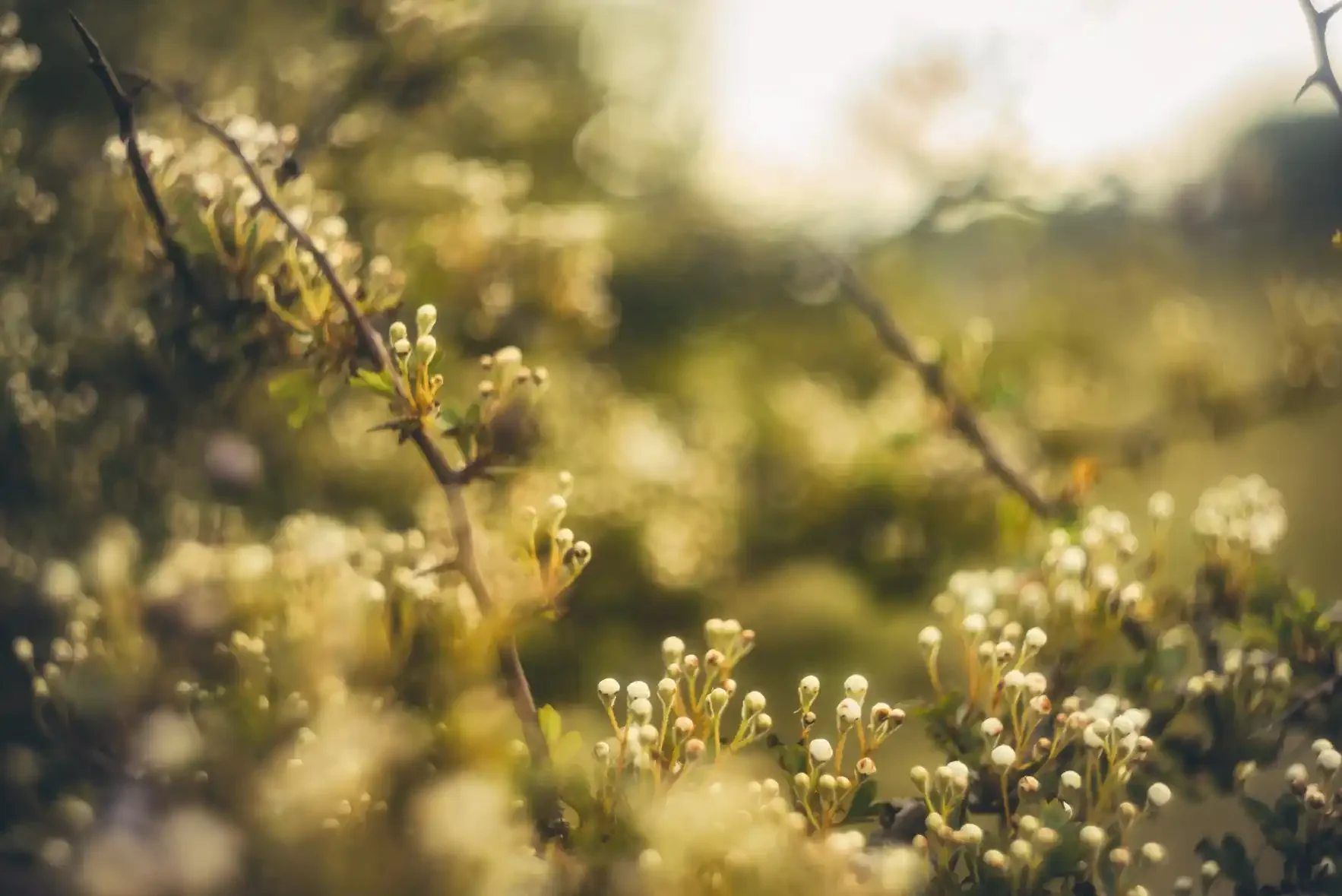
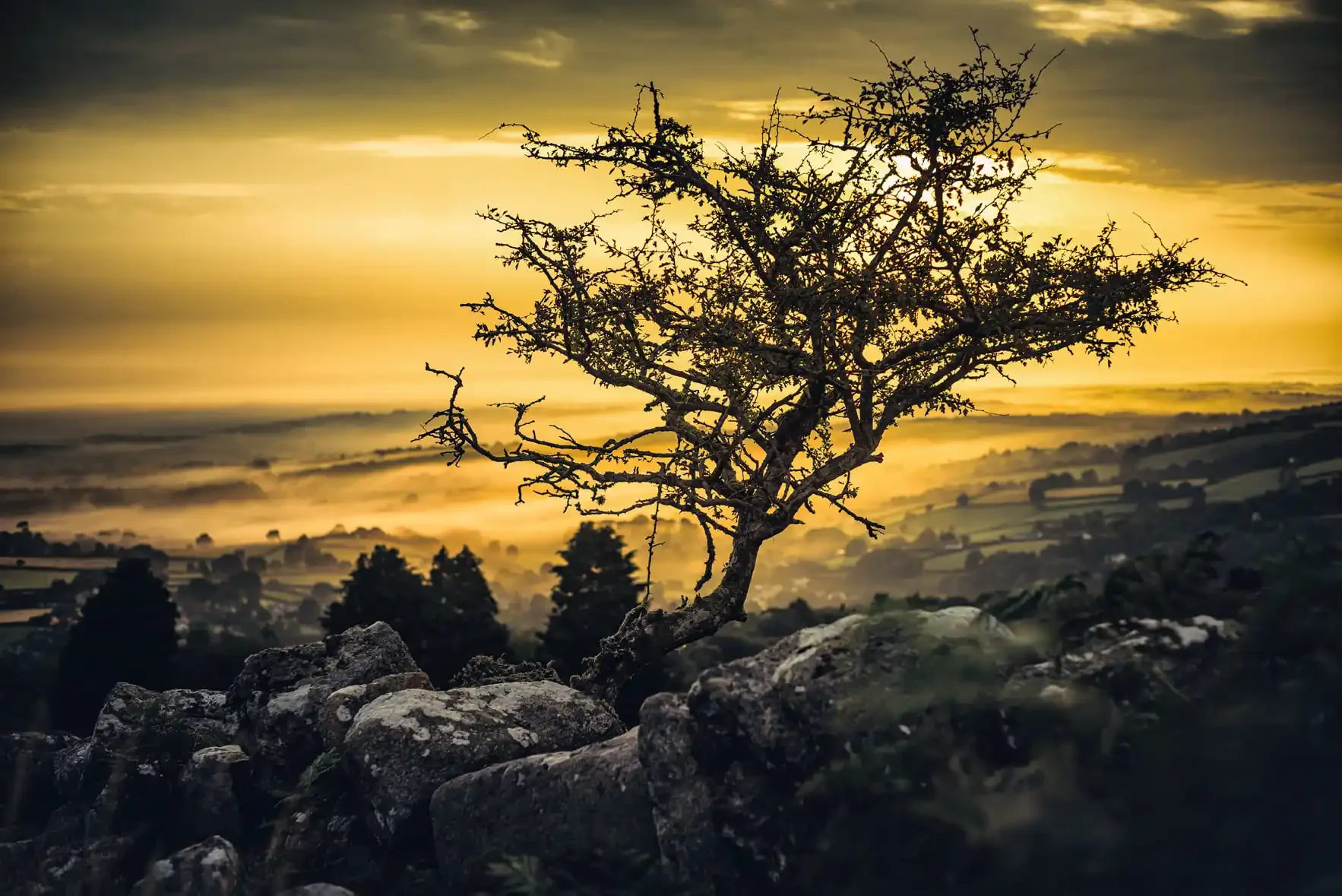
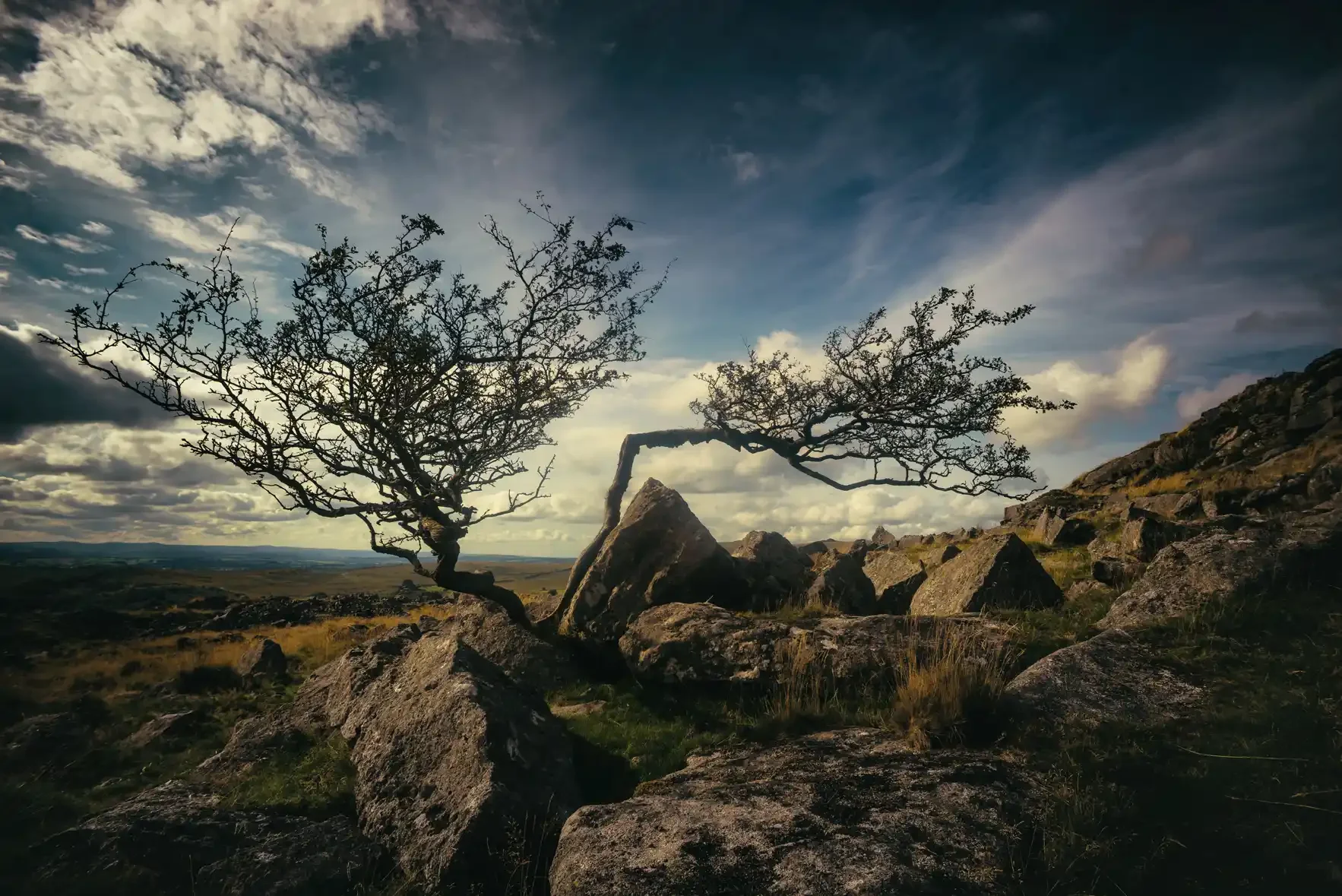
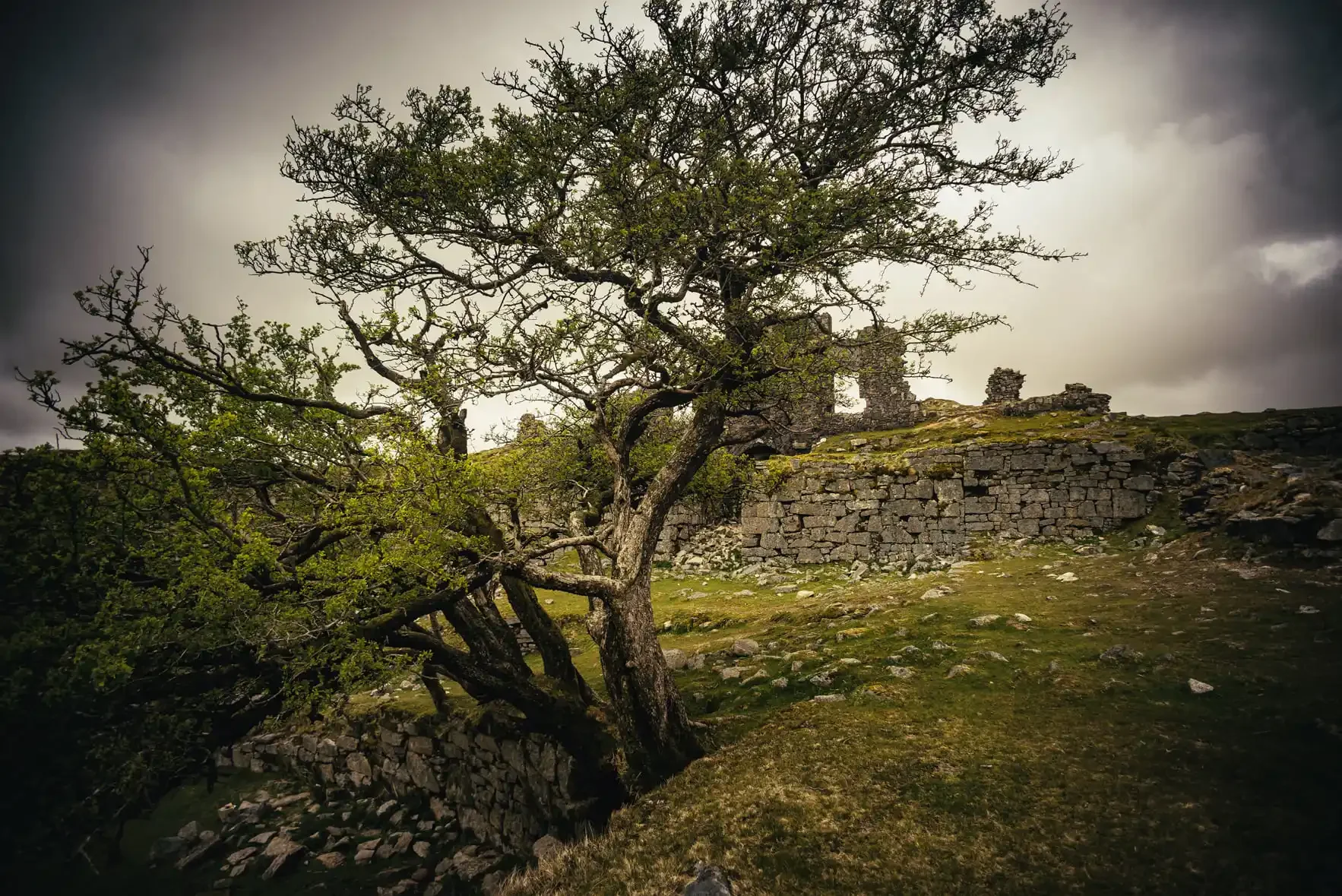
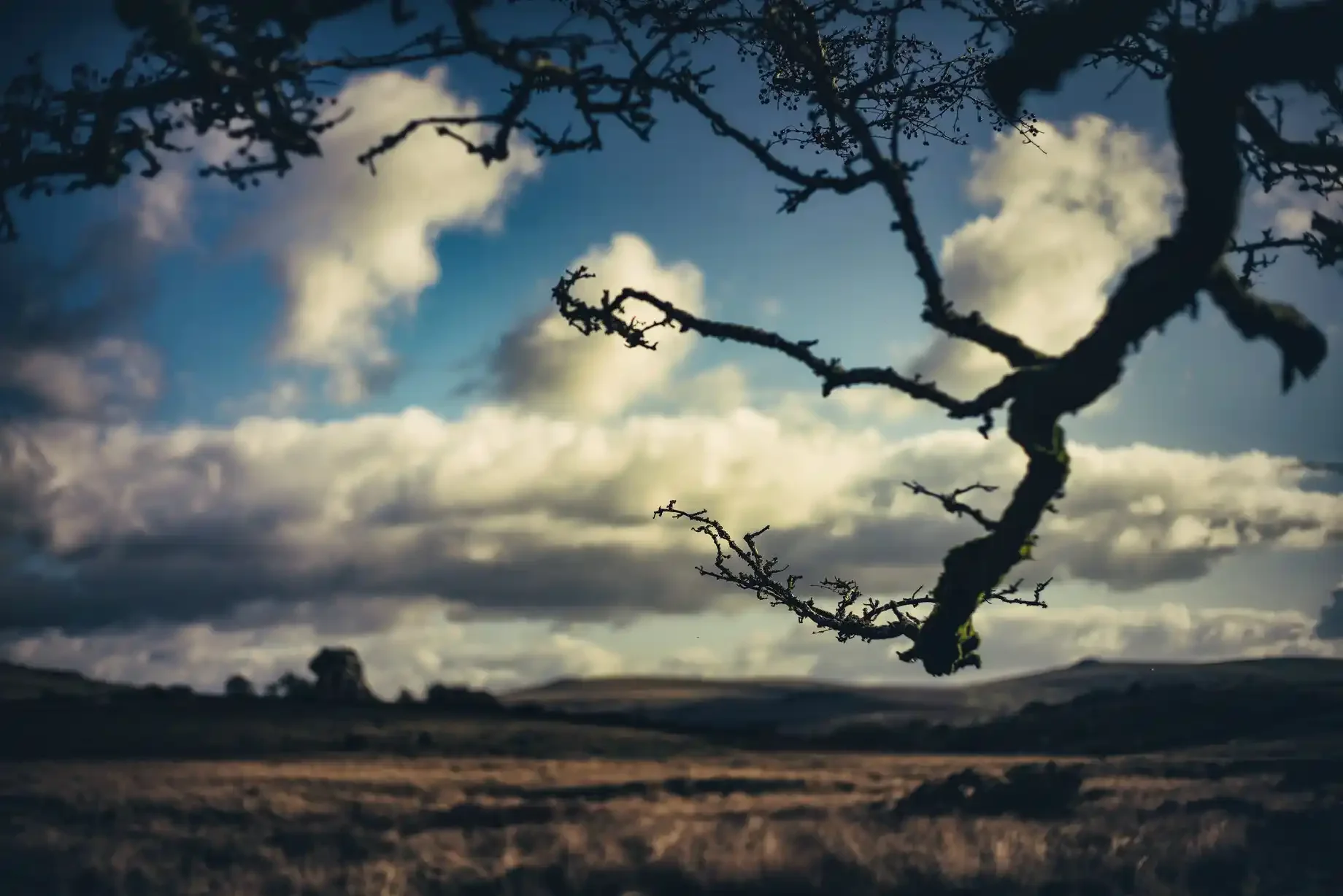
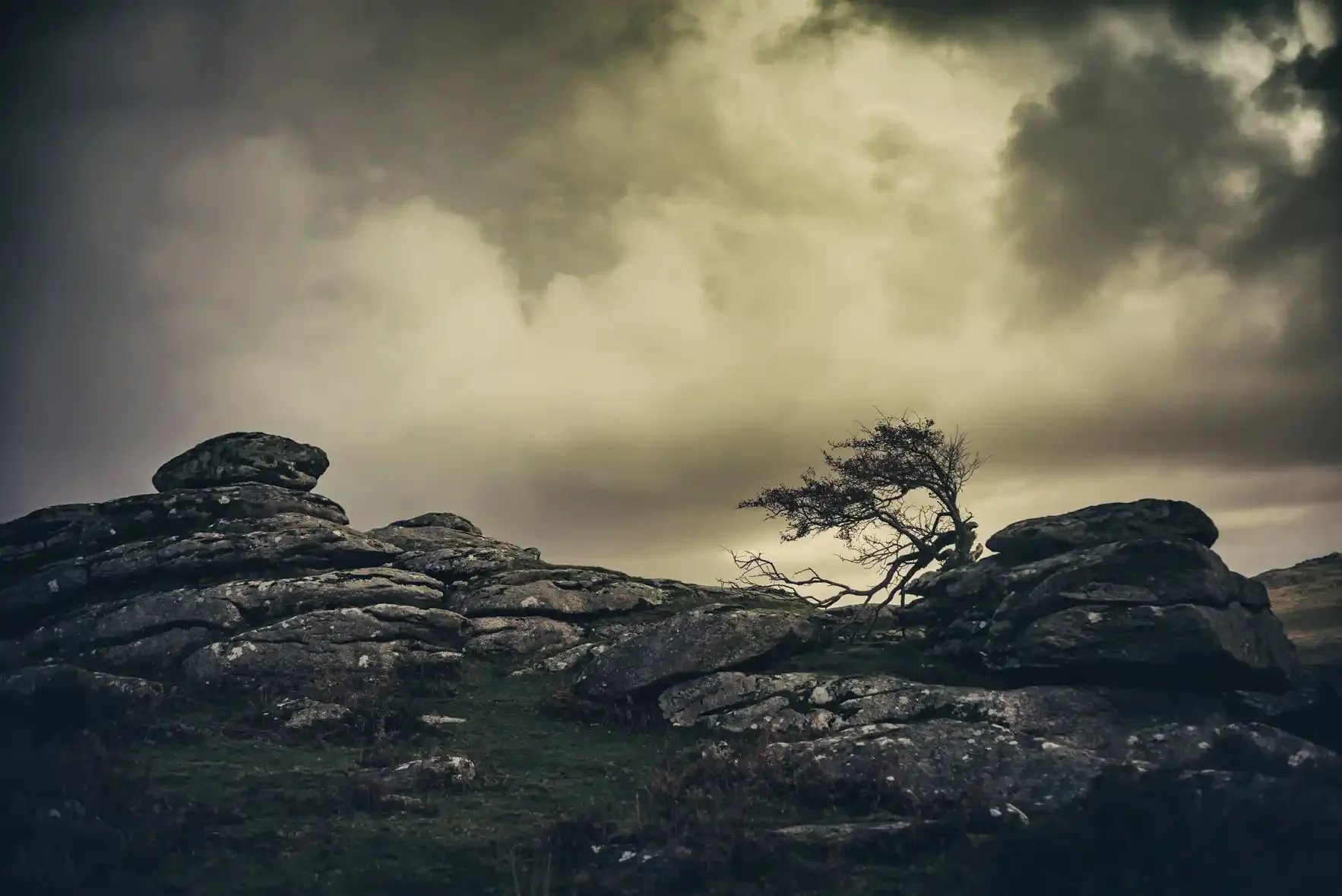
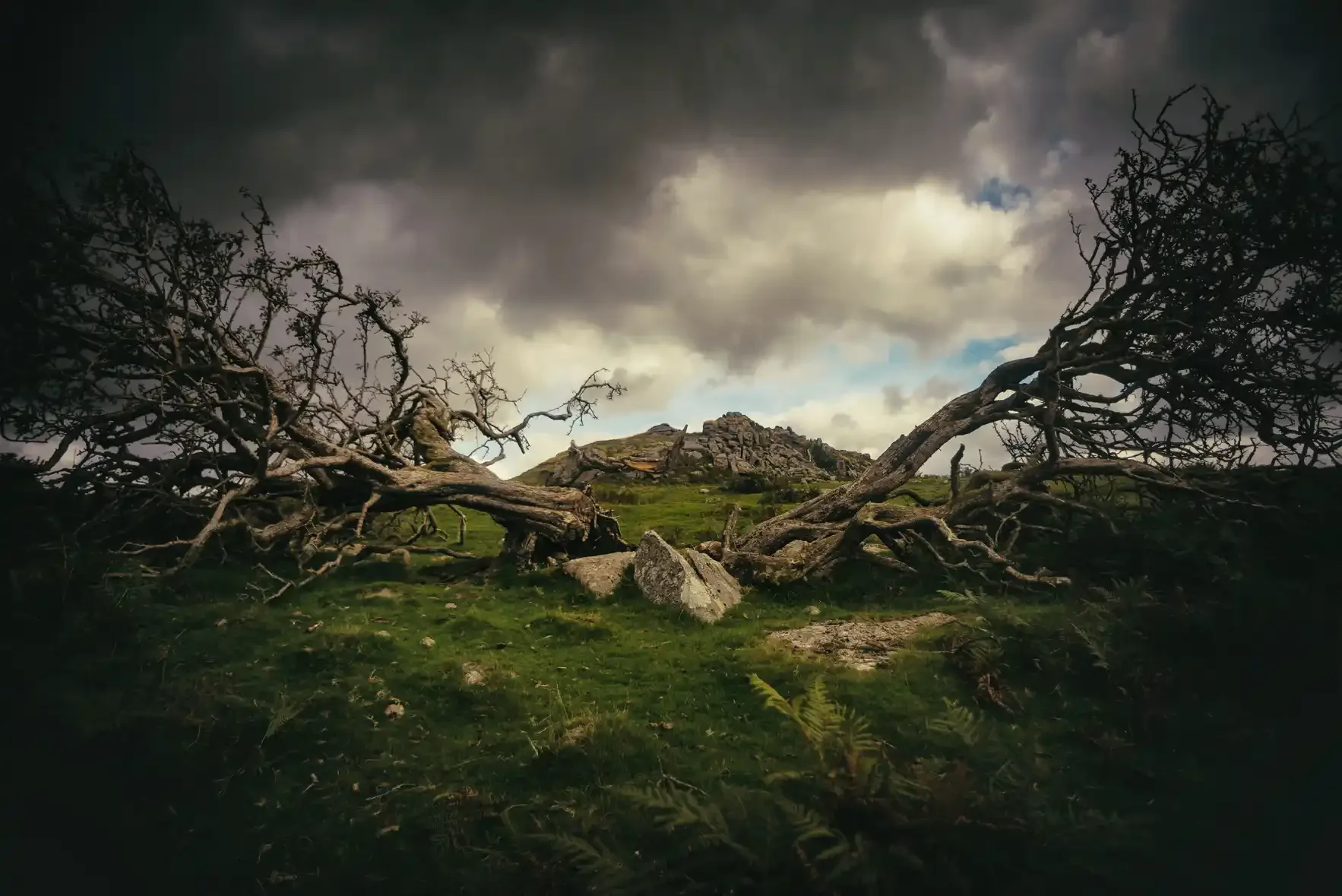
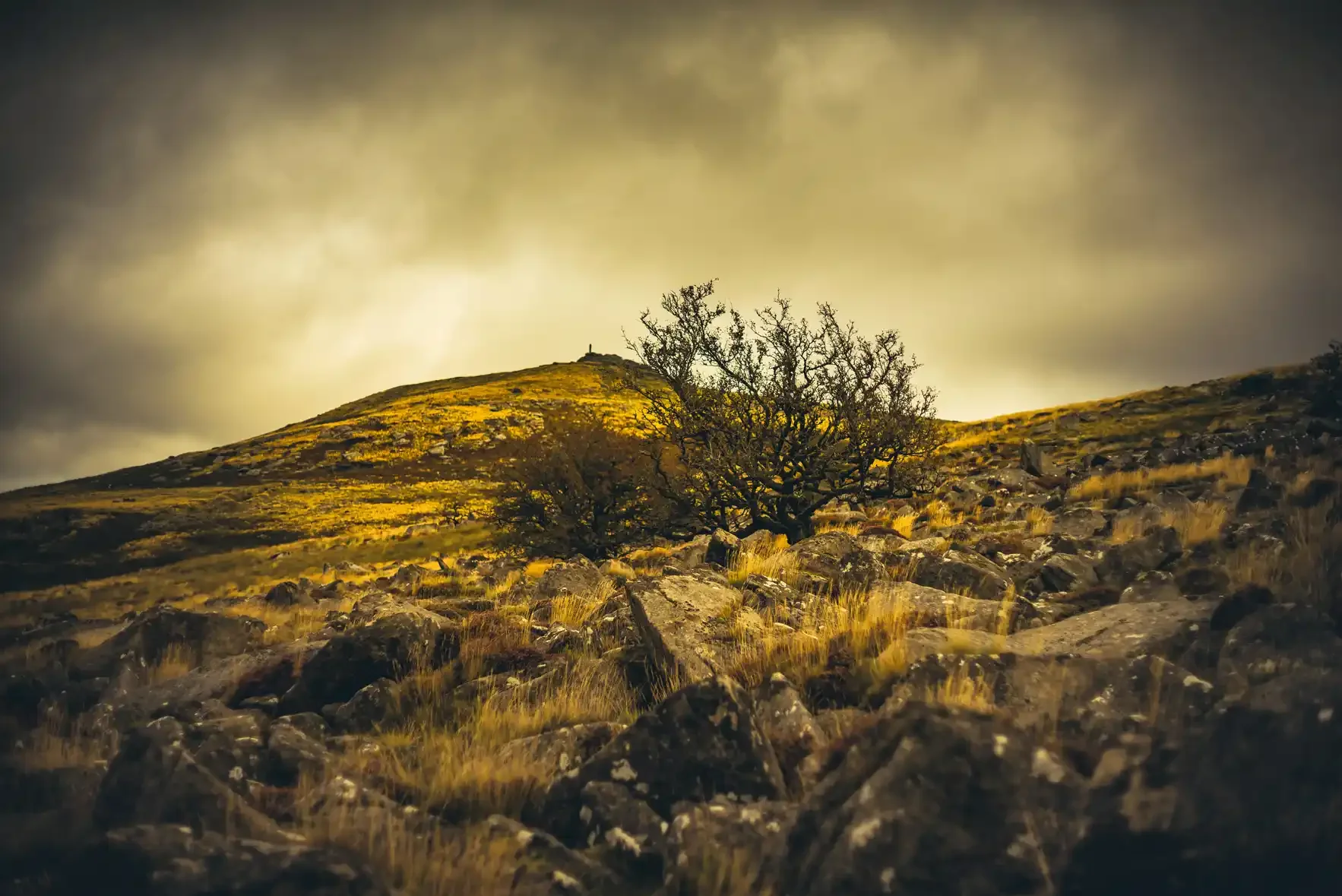
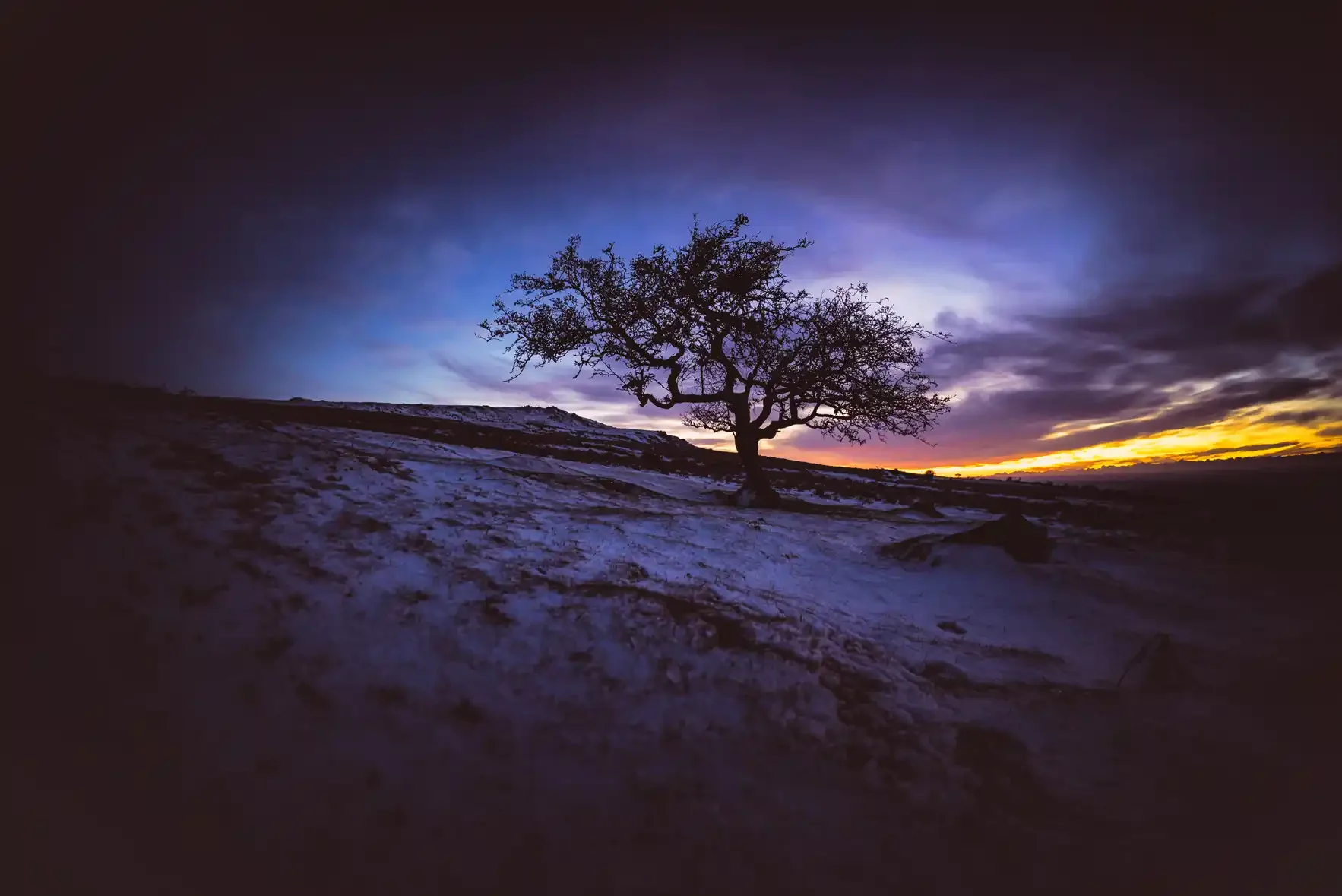
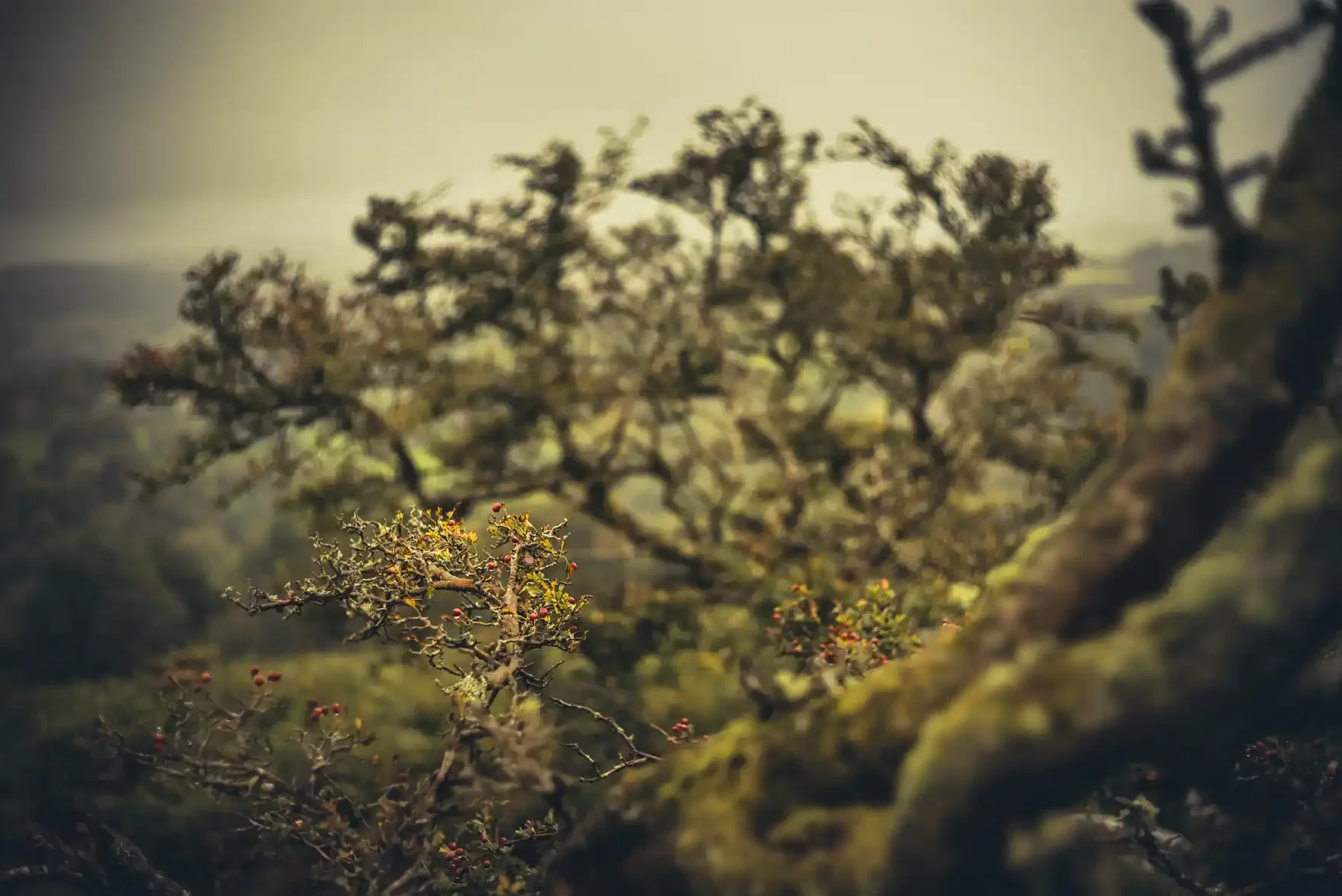
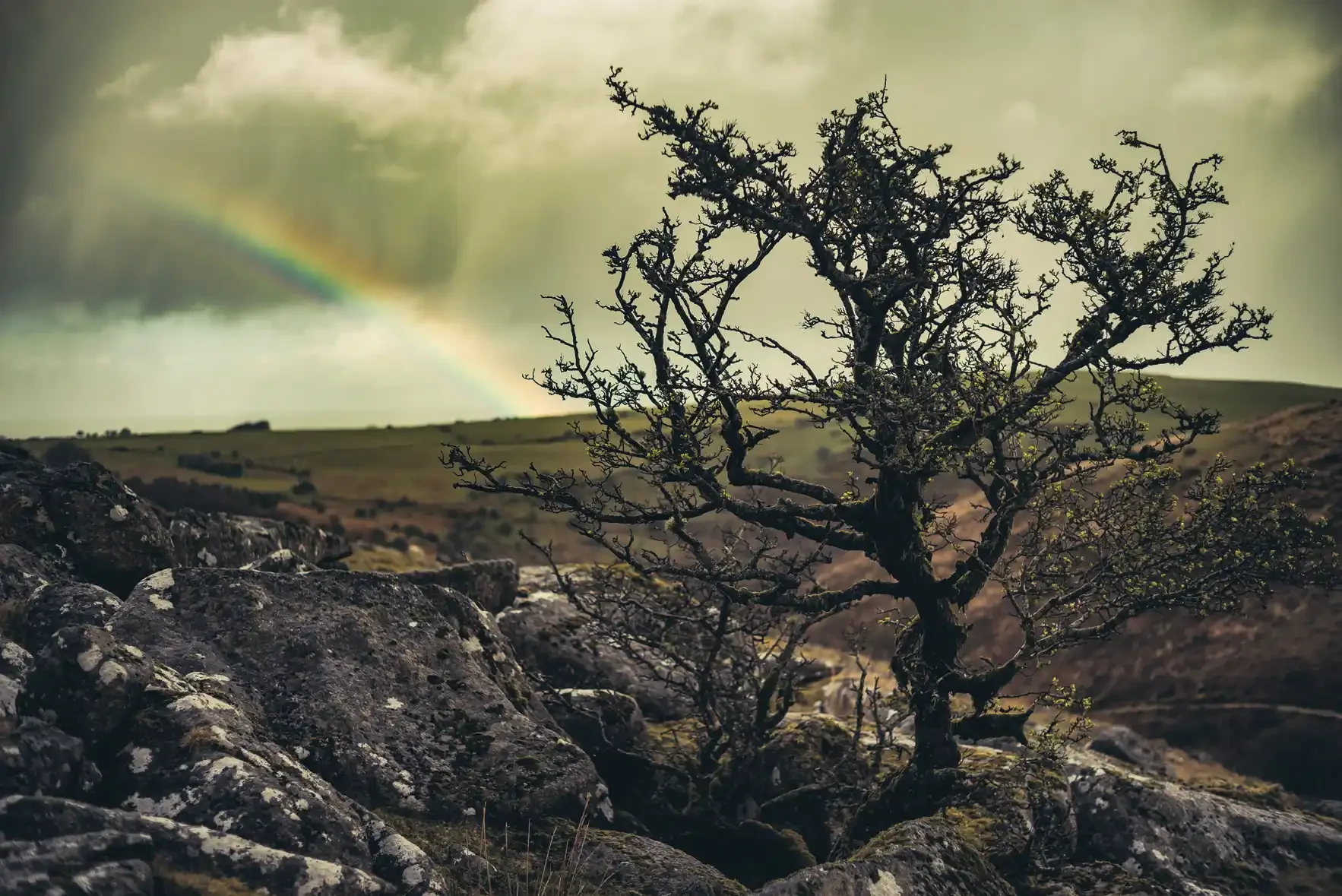
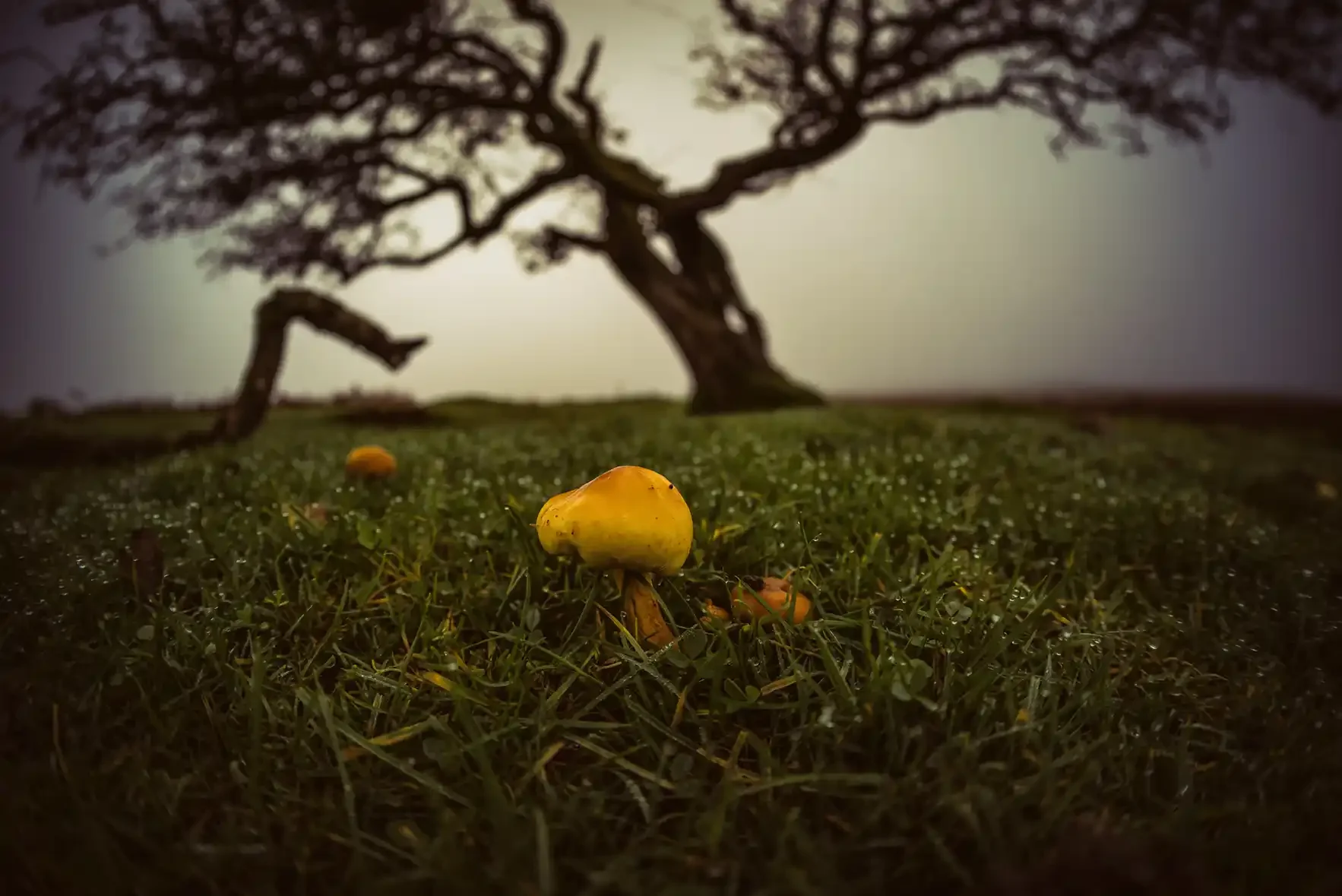
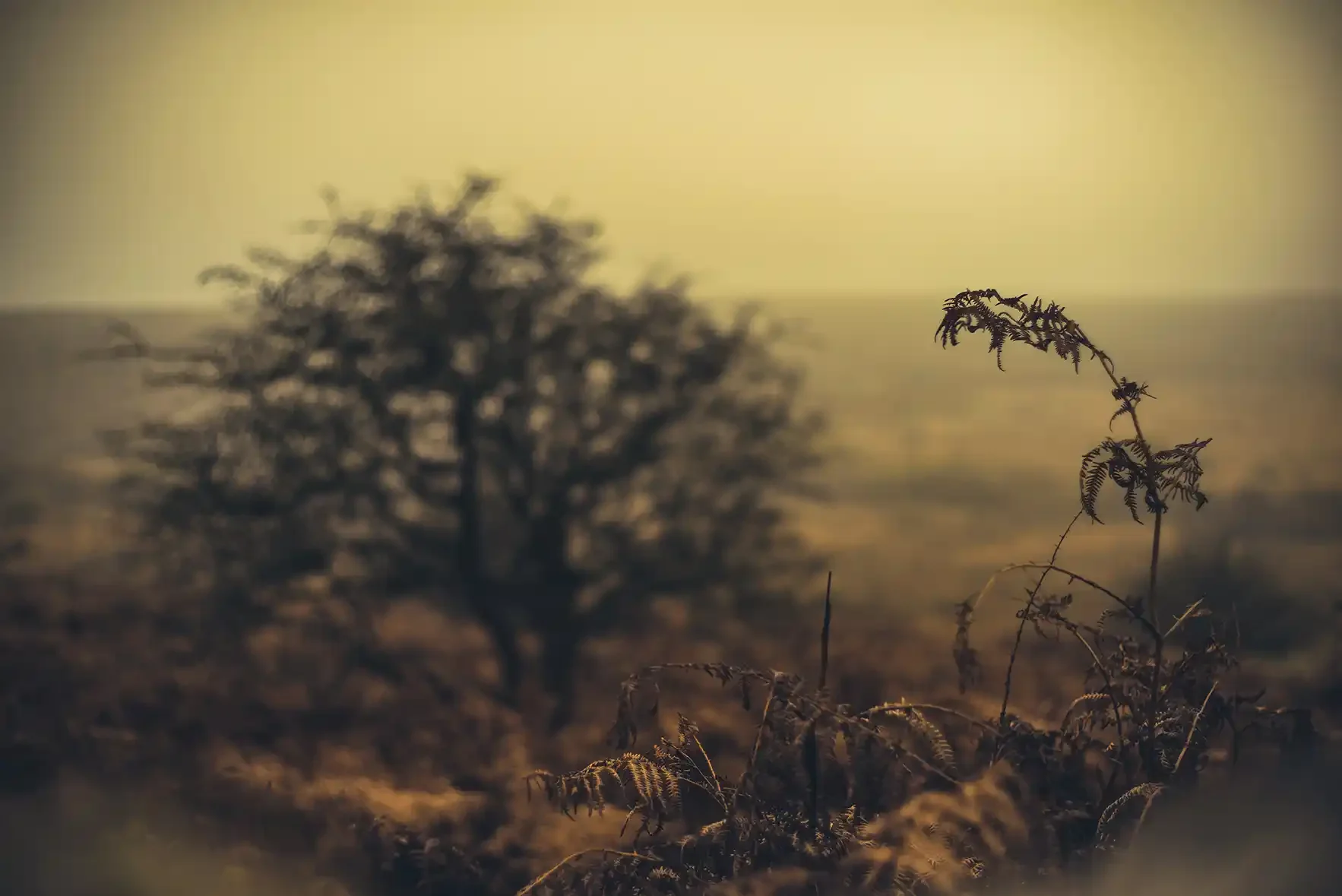
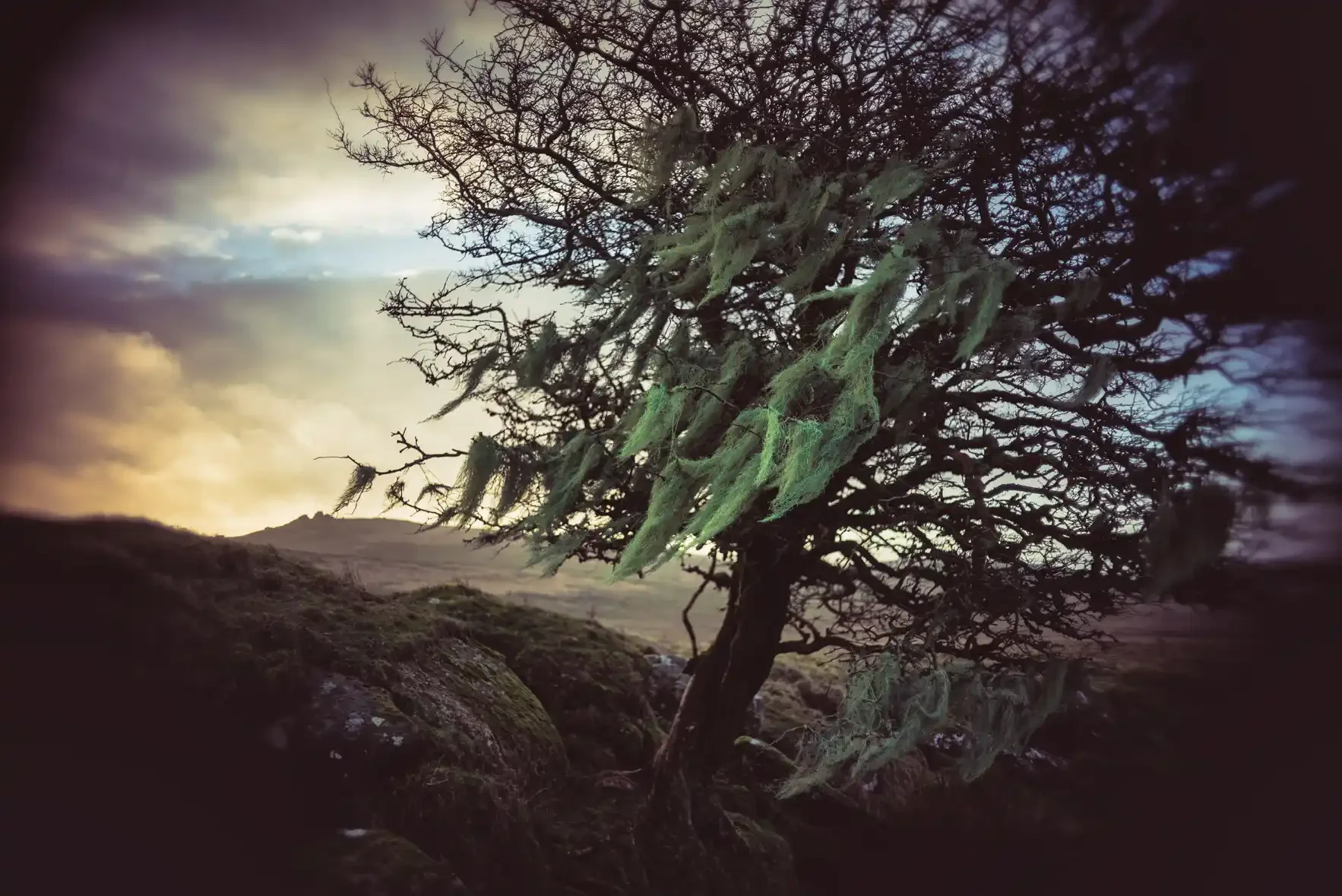
(The four images above were all shot on the same day, the day I finished editing this article … each Hawthorn showing a different level of “blossoming”)
Mist is always your friend. Personally (and people who know me will attest to this) I really dislike sunny days on the moor 😁
Hawthorn against a clean blue sky often looks dull and uninteresting, hawthorn in mist … woohoo!
Get low or climb above. Get in amongst the twisted branches. Shoot the “old man’s beard” lichen. Use the twisted branches to frame something in the distance. Curious photography.
Come back. The same tree in February, May, August and November makes for four entirely different photographs.
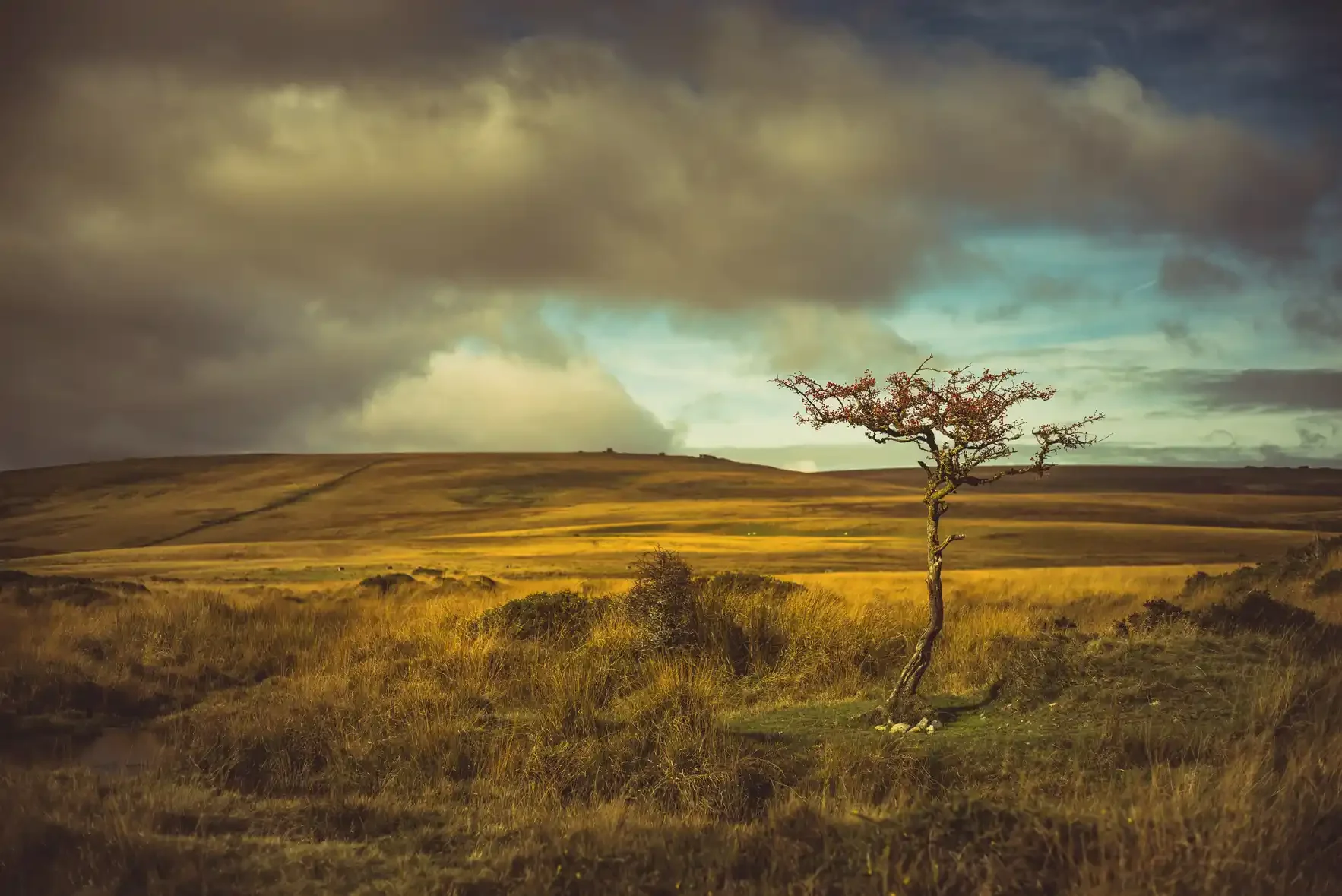
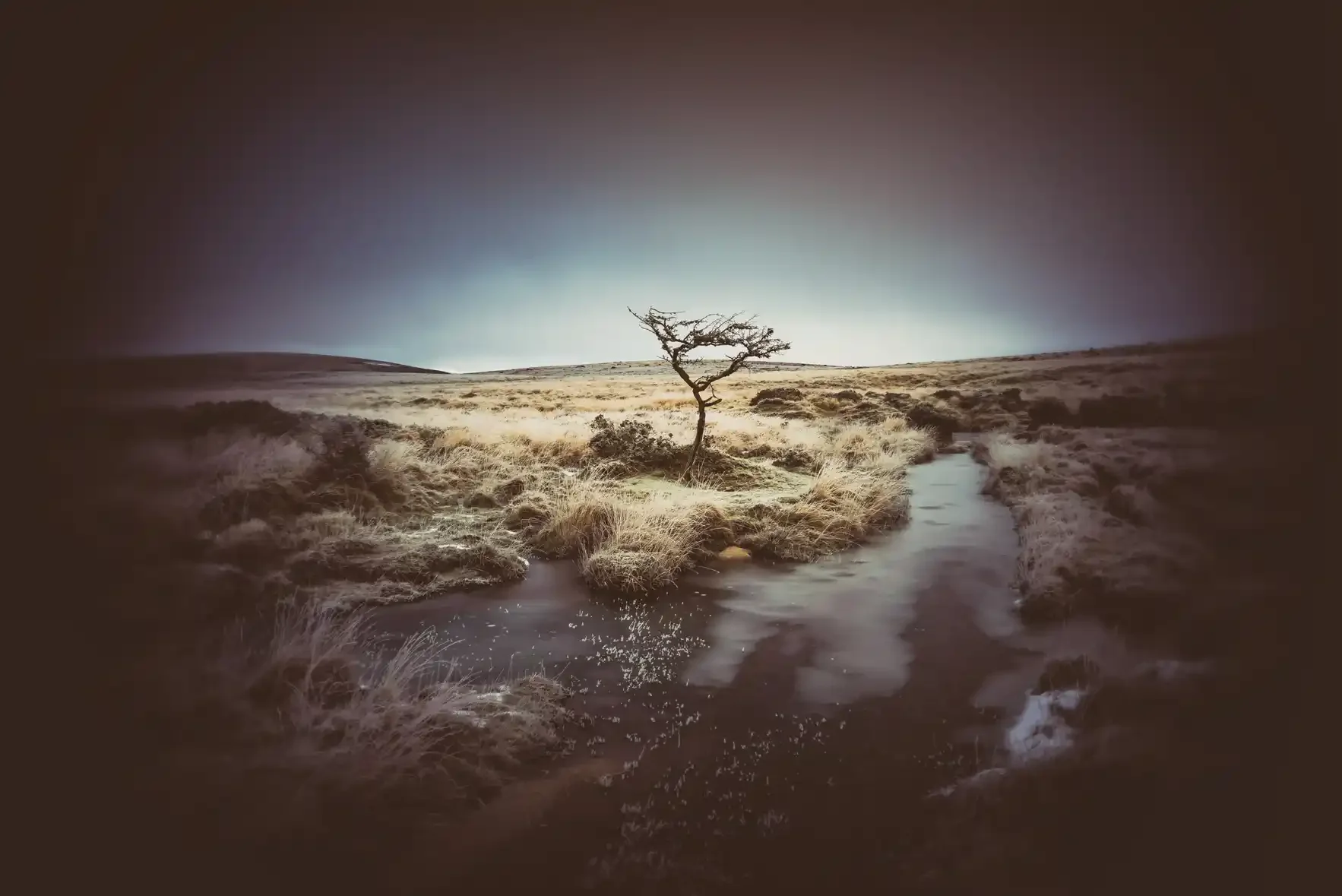
If you'd like to meet some of these beauties in person; the ones that hide in plain sight, the ones the maps don't mark; that's exactly what my guided walks and photography workshops are for.
I’m also working on a zine since writing this has made me realise I have amassed quite the collection of Hawthorn Photographs 💚📷 If this interests you at all and you’d like to reserve a copy (or would like more information - please contact me 😍
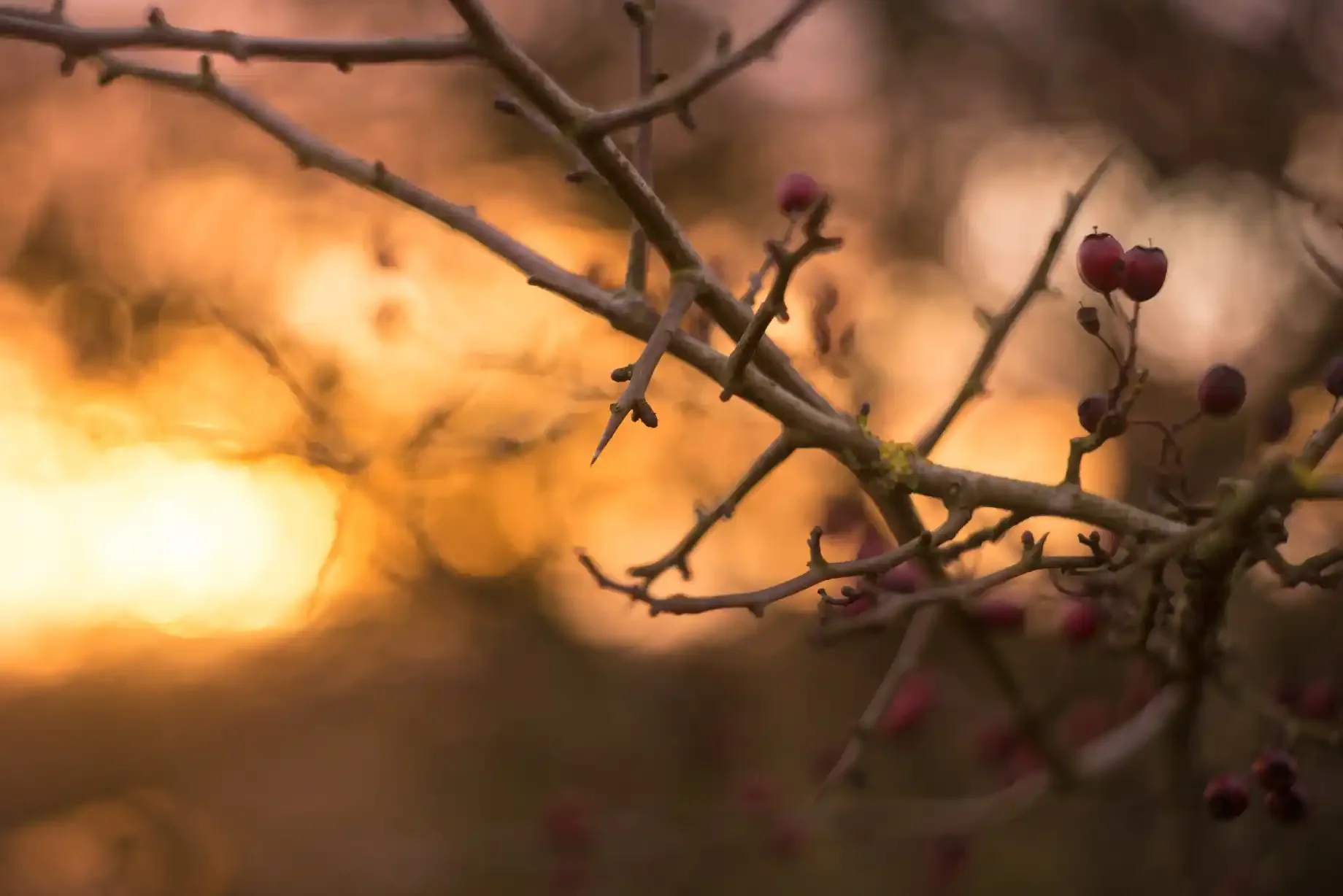
Hawthorn Bokeh - November by the River Lyd on Dartmoor
Hawthorn as a Prop for Portrait Photography
It wasn’t until a few weeks after I’d finished writing this article, that I realised I was always using hawthorn in my portrait shoots on the moor. I guess they just “are” part of the moor and you end up kind of taking them for granted. Anyway, I seem to use them a great deal …
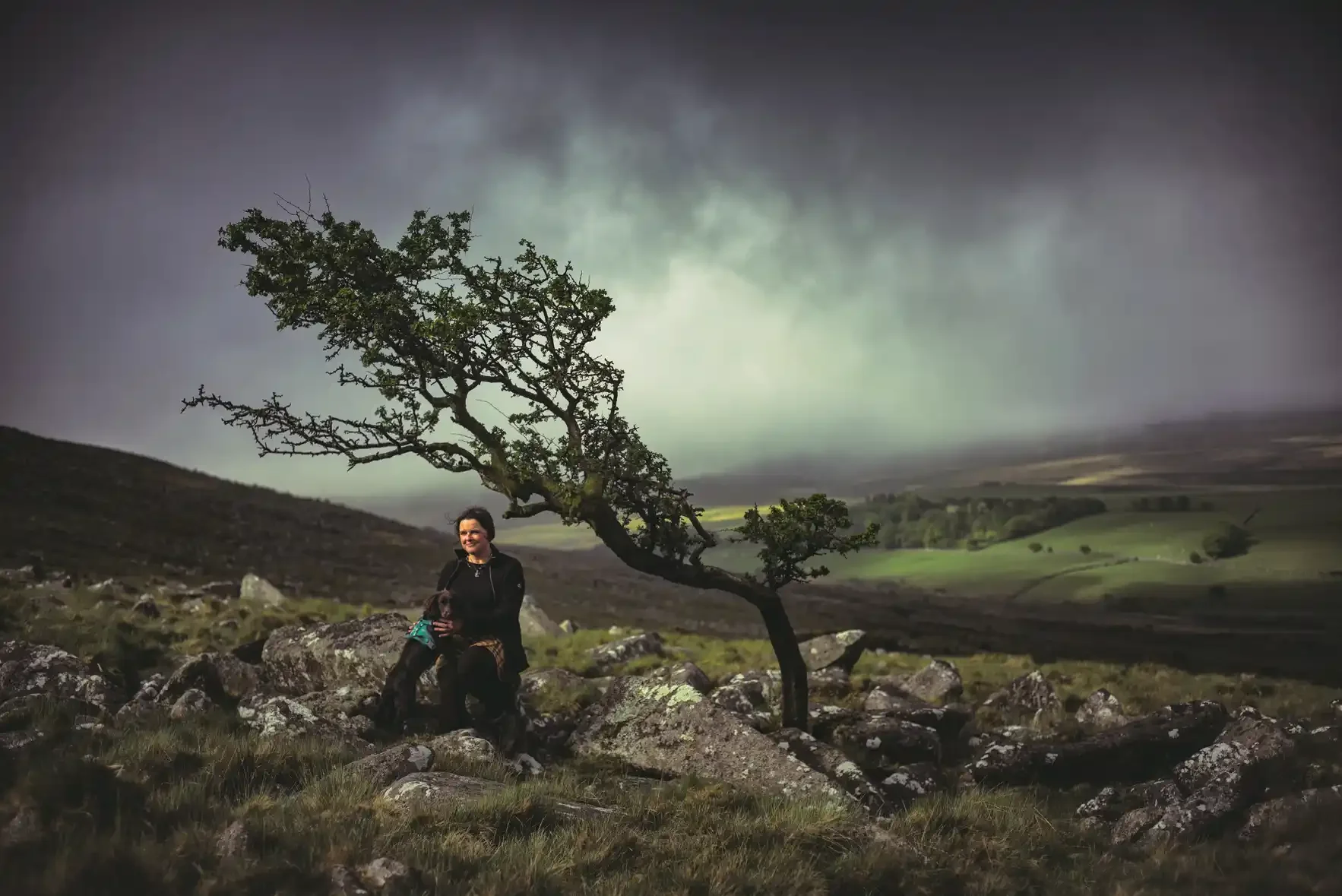
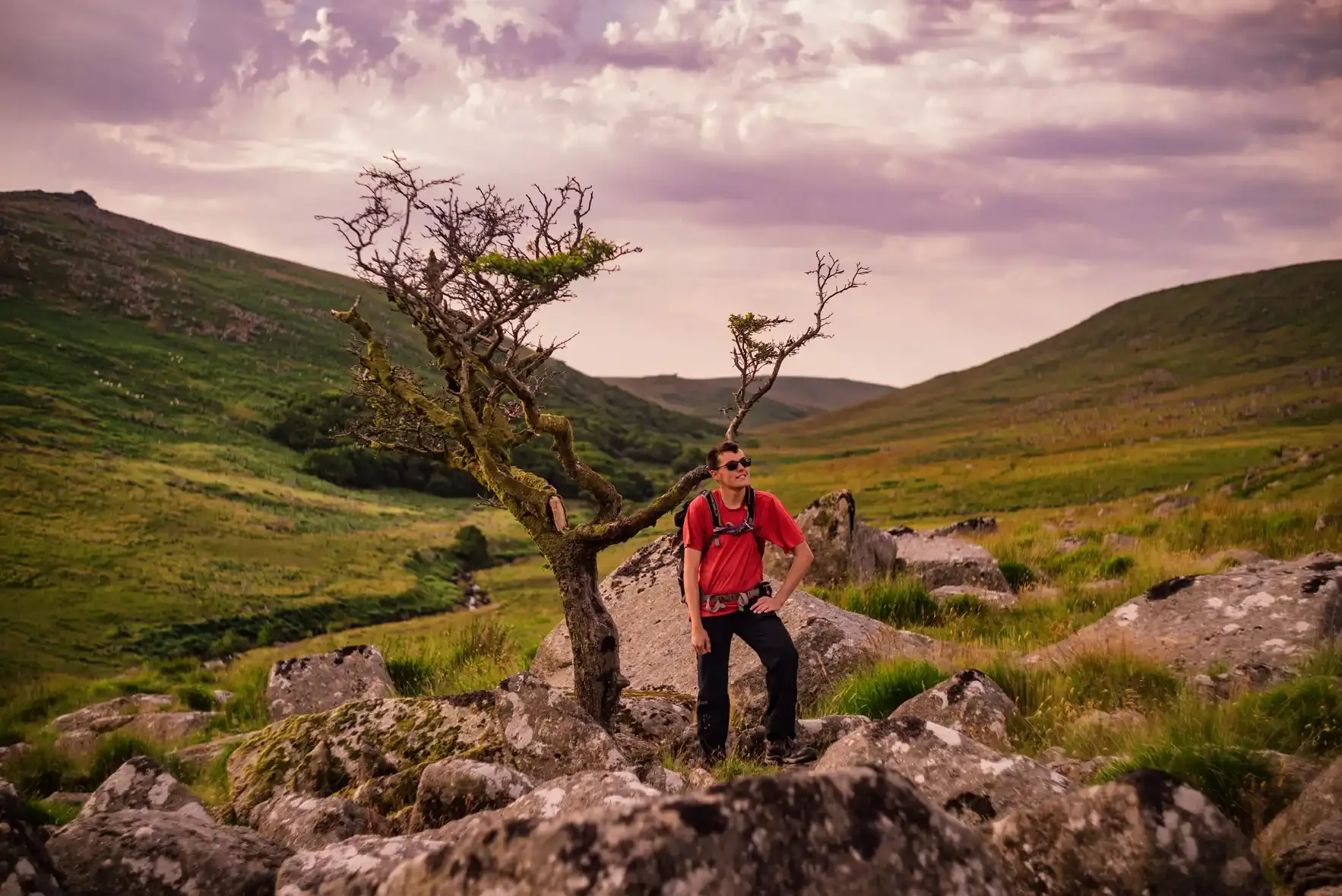
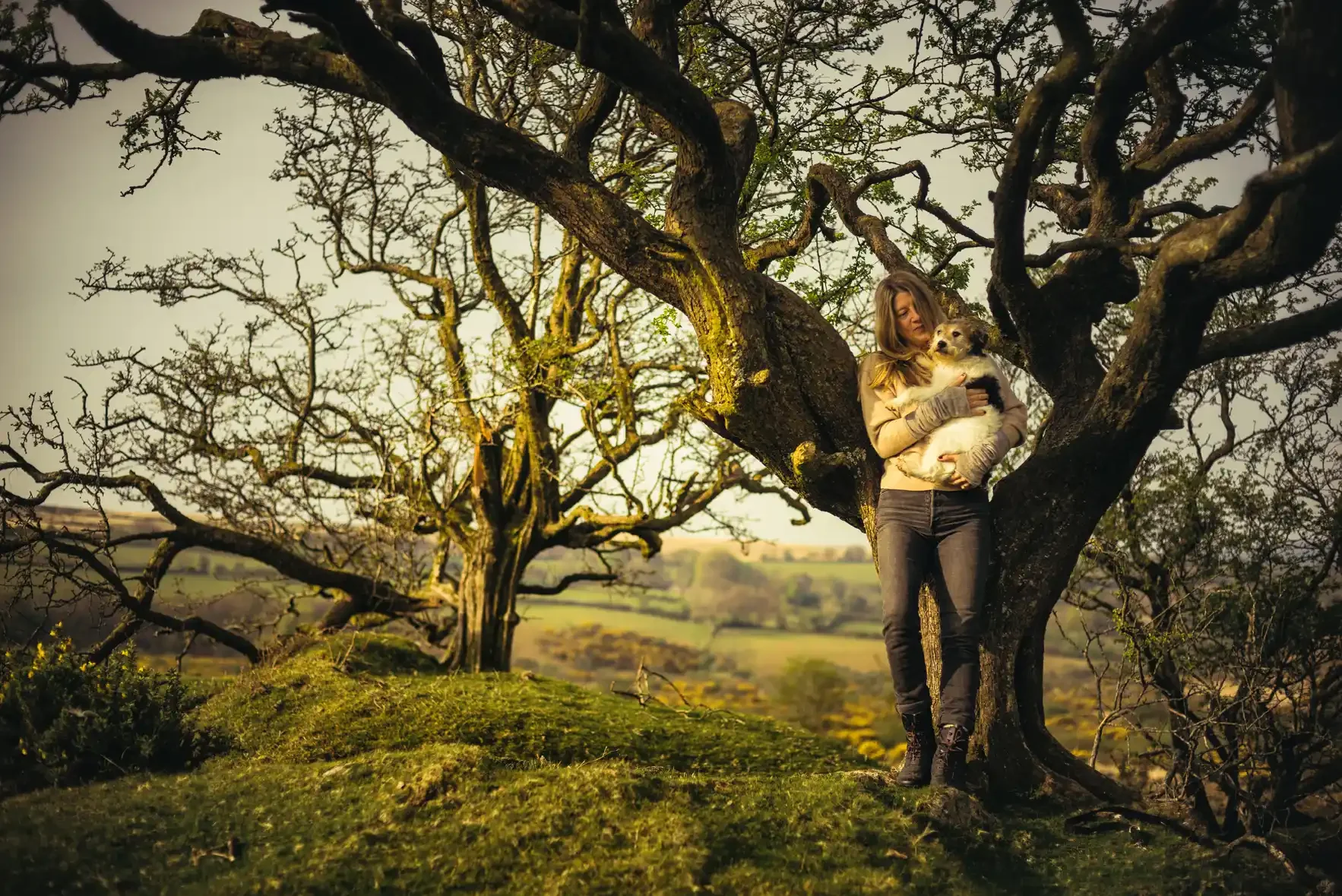
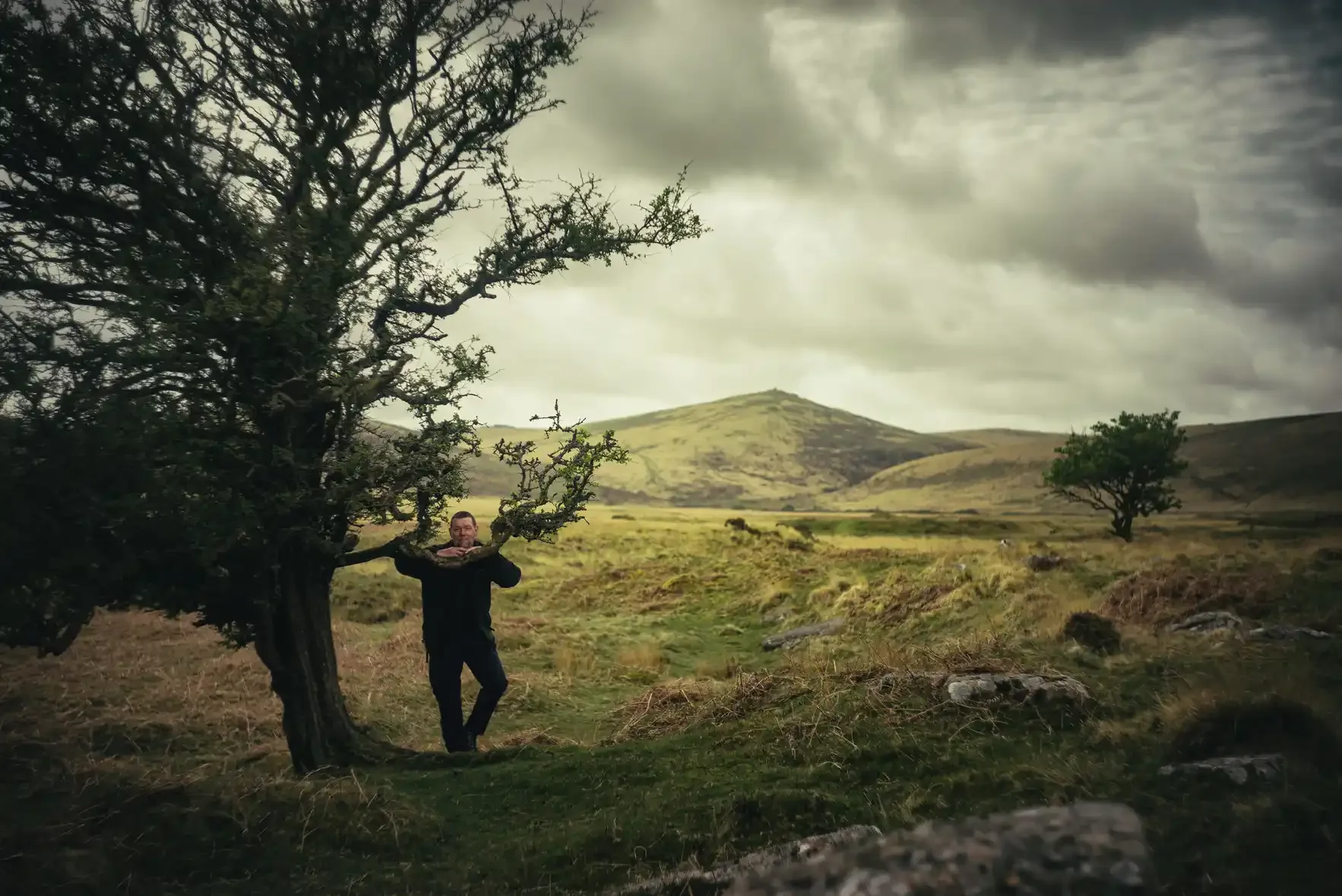

I’ll try to remember to add more Portraits in Hawthorn as I amass them 😍
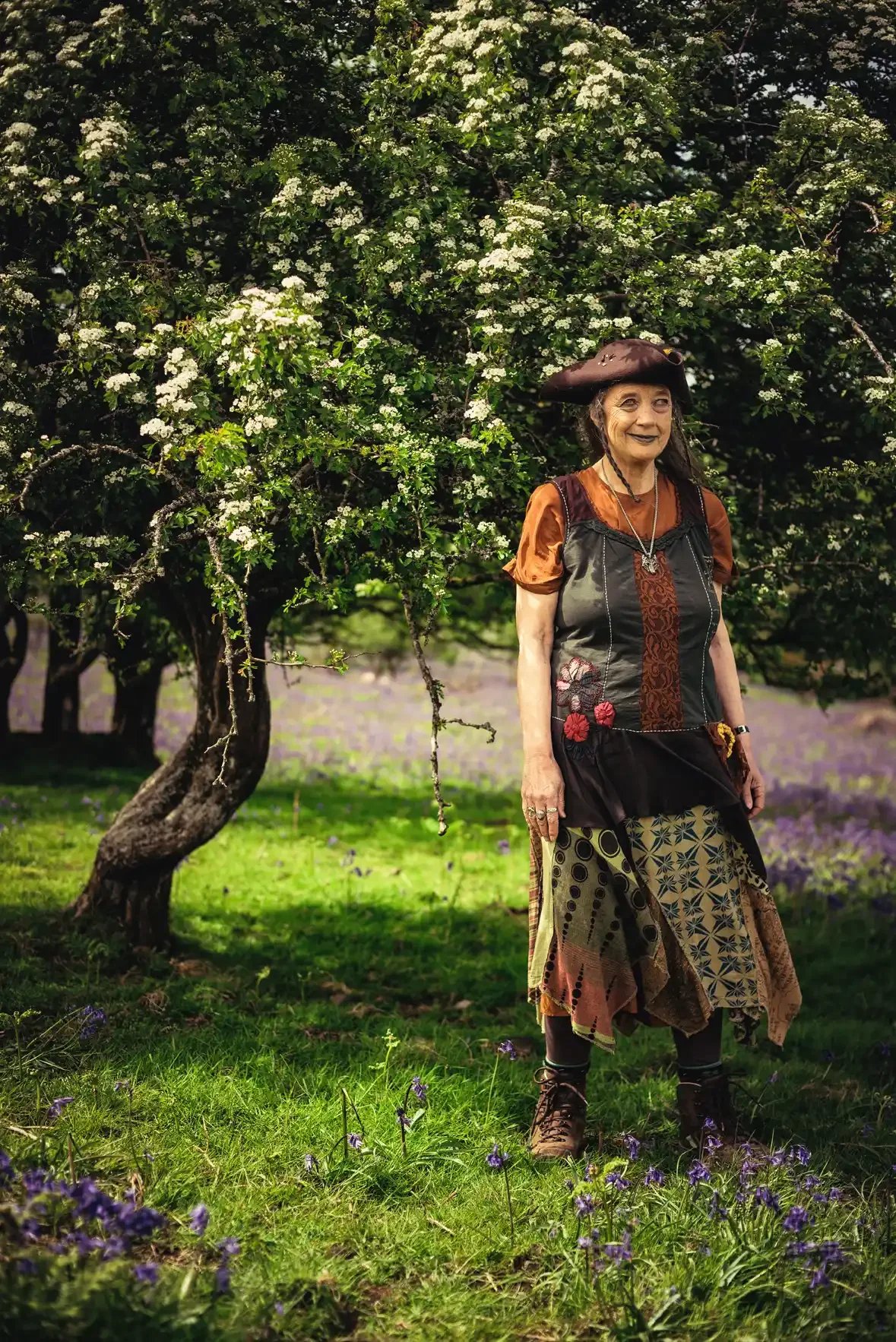
Poet Susan Taylor on a very beautiful East Hill, Hawthorn Blossom and Bluebells.
If you’d like a portrait shoot (with a hawthorn or not) - feel free to get in touch or check out my portrait packages.
Further Reading:
Robert Herrick - "Corinna's Going A-Maying" (1648)
Sylva sylvarum: or A naturall historie. In ten centuries. Francis Bacon, 1561-1626
Old Thorn-Trees and Thorn-Lore
Biological Flora of the British Isles: Crataegus monogyna
Ancient legends, mystic charms & superstitions of Ireland, with sketches of the Irish past
Philip Strange Science and Nature Writing
Voices from The Woodlands - descriptive of forest trees, ferns, mosses, and lichens