Why Photographers Should Visit Dartmoor National Park
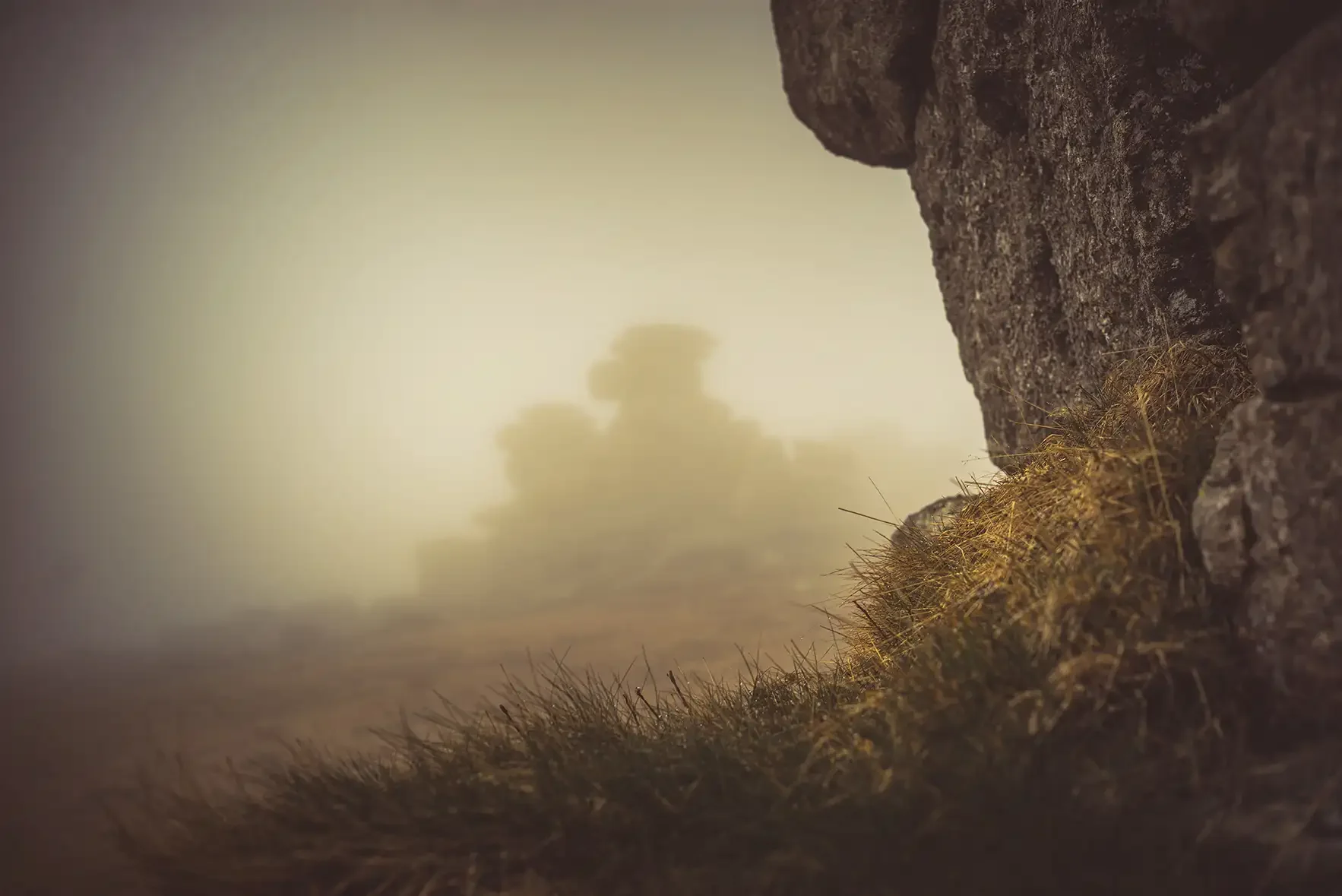
Staple Tors - a brilliant spot to take some photographs on Dartmoor - and fairly easy to get to
Dartmoor - A Photographers Playground
Dartmoor National Park is one of the most rewarding places in the UK for photographers, with a rare mix of large, open landscapes, intimate details and genuinely mad weather.
If you feel safer knowing your guide understands the landscape and the dangers of moorland walking, take a look at my Guided Photography Walks, or contact me for a bespoke photography experience.
A Landscape Crying Out for a Photographer
At around 368 square miles or 954 square kilometres, Dartmoor can be considered fairly compact with a fantastically varied landscape, making it easy to build strong images without travelling miles and miles. That being said, even when I’m walking the same trusted path time and time again I’m forever spotting new and interesting things to photograph.
Rolling grasslands, sometimes appearing never ending (especially when you’re getting really tired) give way to vast hillsides and rock strewn tors provide masses of opportunities for ready made focal points for your wide angle vistas and telephoto details. Whilst deep river valleys and wooded gorges provide more enclosed, intimate areas that contrast beautifully with the sometimes desolate higher ground.
Old abandoned farms and Industrial ruins, granite walls, clapper bridges and amazing ancient Stone Circles and Rows give a human scale to the landscape and can create amazing leading lines for compositions.
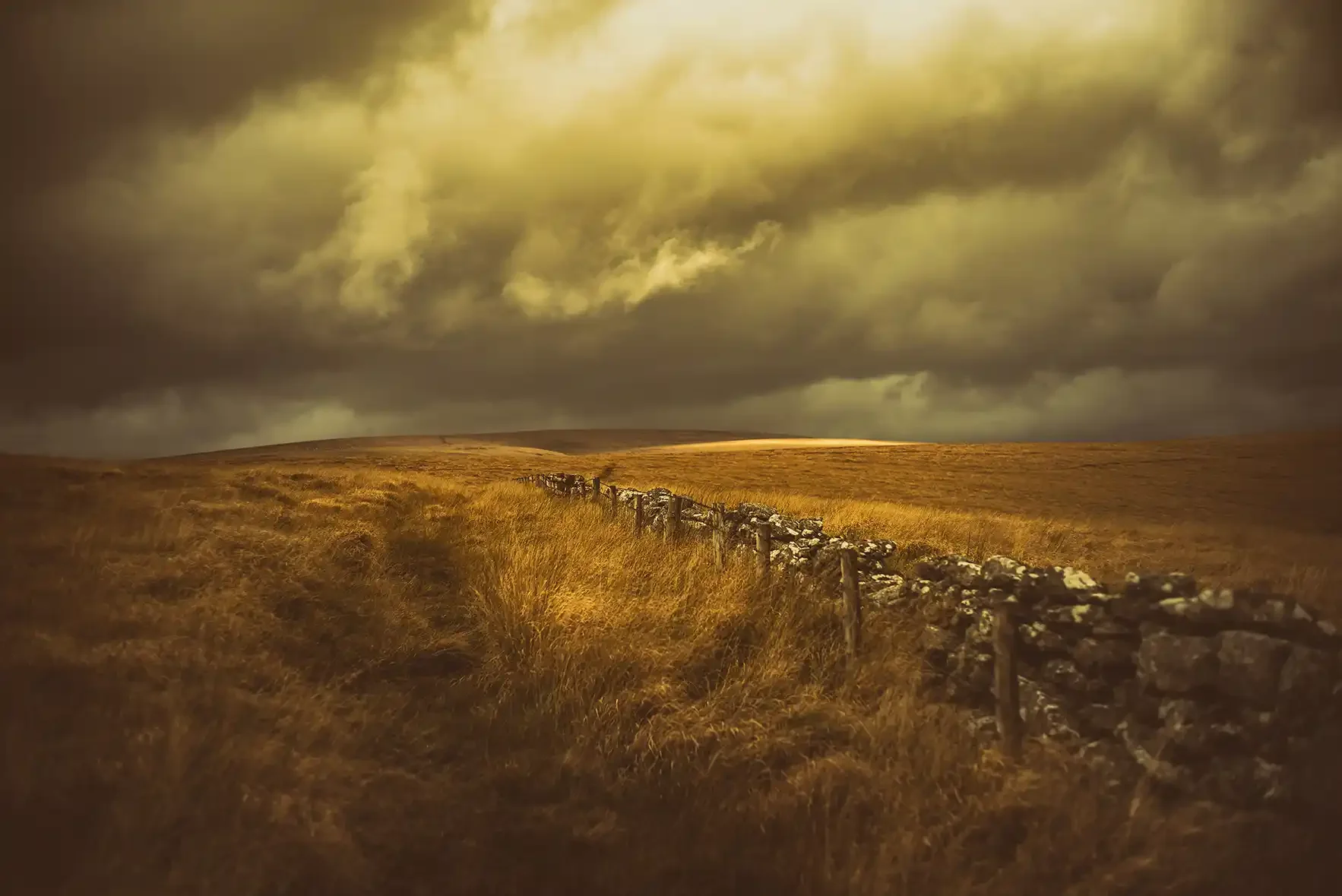
Leading to Sittaford Tor
Because elevations and terrain change quickly, you can move from high, windswept views to more sheltered river valley floors or ancient woodlands in a single session, always keeping your options open if the light changes or the weather takes a turn.
Take a look at my ever increasing Dartmoor Gallery, or if you have a specific location in mind, drop me a line.

Black-a-Tor Copse with a thin layer of snow
All Seasons in One Day
Dartmoor is one of those places where the “wrong” weather more than often produces the better photographs.
In Springtime, fresh mossy greens and ferns, bluebells, gorse and sparkling brooks give energy and colour to woodlands and valleys. In the summer, longer days and fuller golden hours highlight the pastel of the heathers.
Autumn on Dartmoor adds beautiful russets to woodlands and brackens, mist and lower light add to the drama. And, finally in Winter, dustings of snow (or sometimes drifts) and hard frosts can transform normally familiar locations into icy wonderlands.
Dartmoor’s ever changing weather is definitely a bonus to the photographer who doesn’t mind getting a little wet and cold. It can create amazing backlit showers, rainbows, shafts of light and classic Dartmoor clag (thick, low-lying fog or mist that frequently blankets the moorland).
Working on Dartmoor teaches you to respond to conditions as they happen, rather than chasing perfect forecasts. I live by this idea, walking and taking photographs rather than going out specifically to shoot something. You can see more about my style of photography on my Curious Photography page.
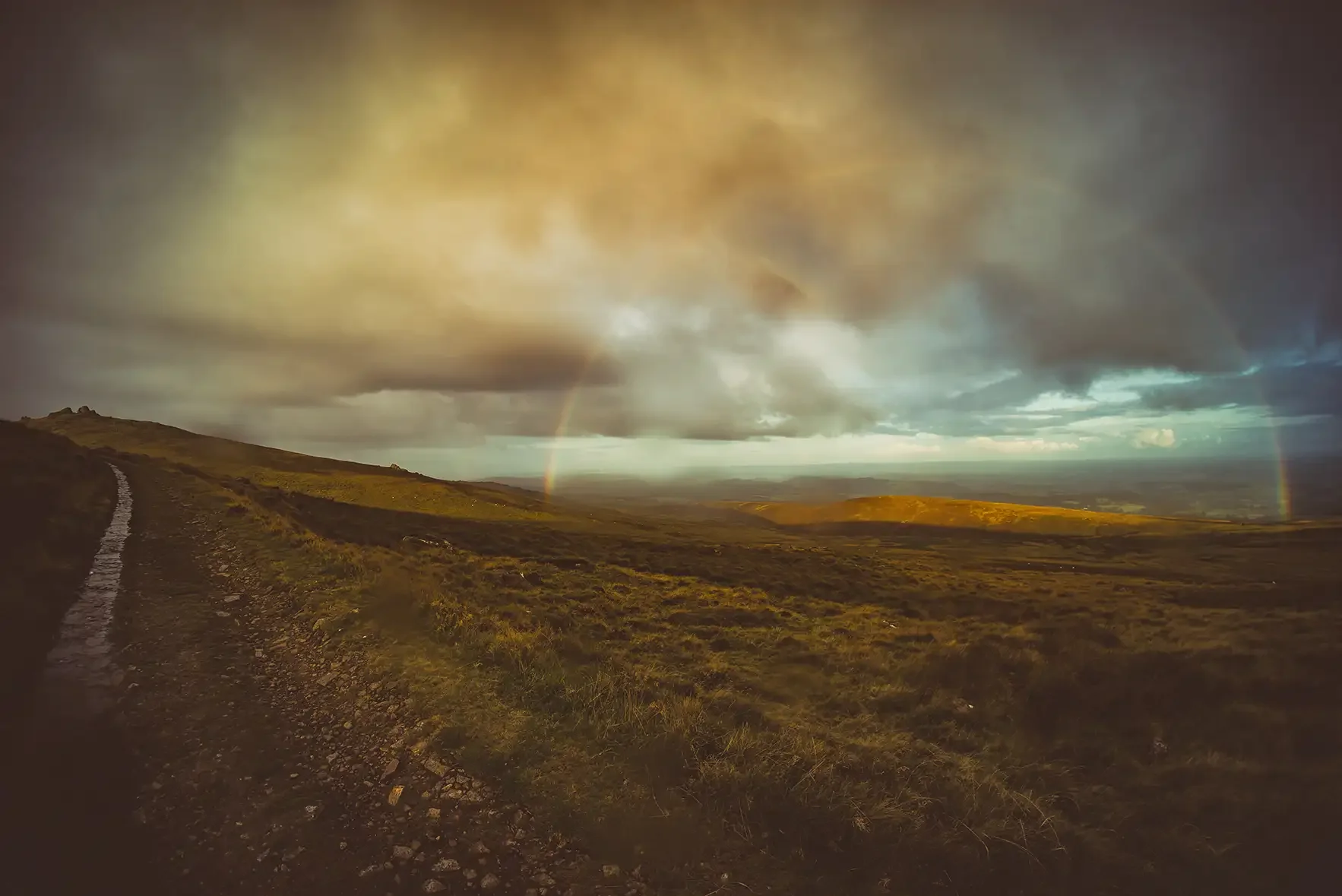
Rainbow by Rattlebrook Railway
“Fust it rain’d then it blaw’d
The it ‘ail’d then it snaw’d
Then it com’d a shower o’ rain
Then it vreez’d an blaw’d agean.”
Dartmoor - Open Moorland, Tors, Ruins and Ancient Woodlands
What makes Dartmoor especially brilliant for an avid photographer is the rich diversity of subjects in such a small area.
The tors and high points, many with massive sculptural like rock outcrops and panoramic views offer the classic big sky for amazing sunrises and sunsets.
Gnarled oaks and stunted lone hawthorn, moss covered boulders and tumbled clitter in Dartmoor’s famous mizzle or mist can give your images a fantastical feel.
Rivers and waterfalls, fast flowing streams and windswept grasses provide opportunities for long exposures, whilst pools in peat bogs and ponds and reflections in puddles give you the chance to experiment and maybe create something a little more abstract.

Reflections in a puddle near Black-a-Tor Copse on Dartmoor
Ancient Stone Circles, settlements and Hut Circles, Granite crosses, mine workings, quarries, farm ruins and railway remains add to the narrative of your landscapes.
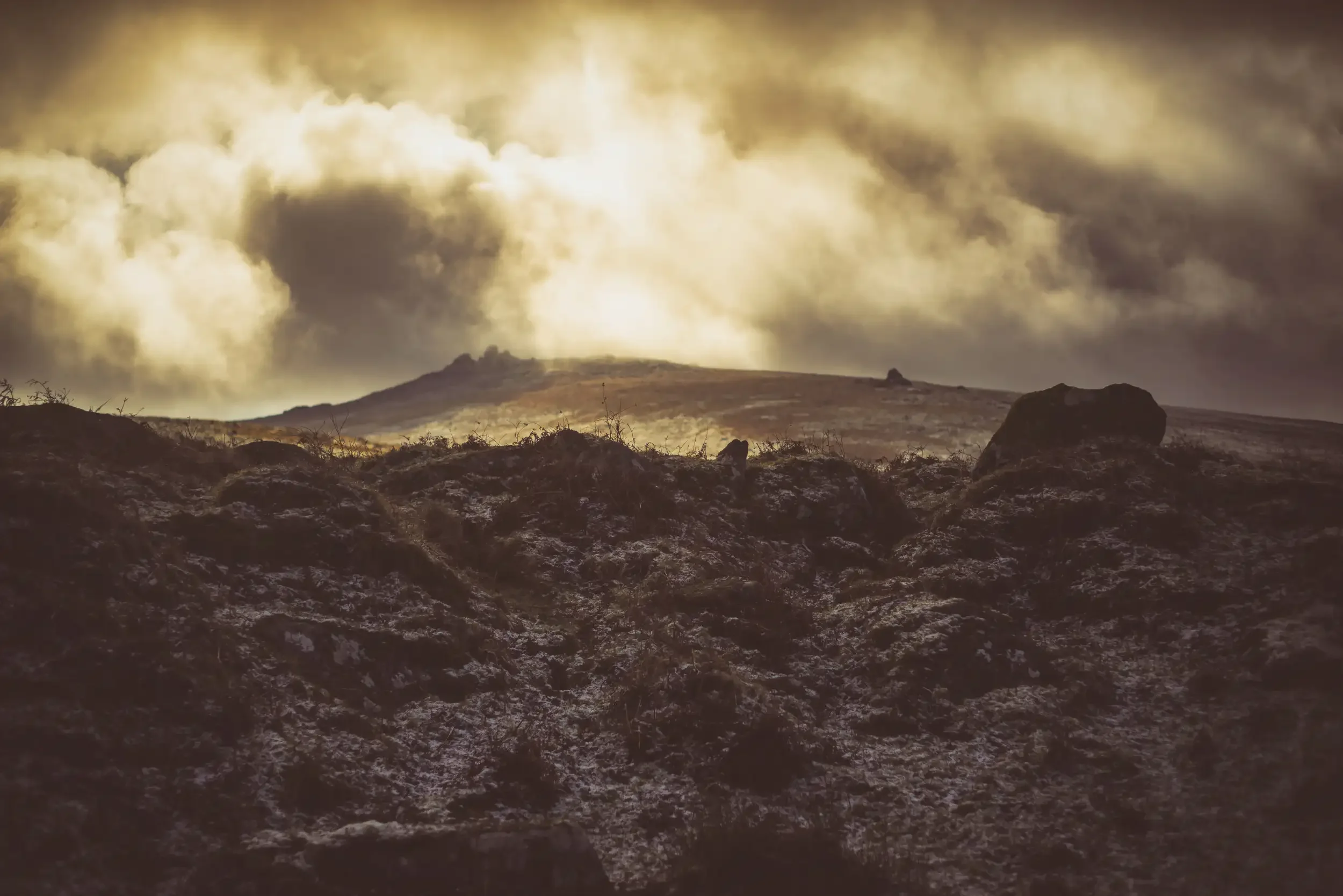
Great Links Tor appears from behind a veil of mist
The mixture of features means you can take the shortest of walks and fill your portfolio with everything from lichen to moss from rowan to beech grasses to granite and everything in between.
Solitude and big skies
Despite its massive popularity, large swathes of Dartmoor can still feel remarkably empty, especially if you are happy to step away from the usual tourist viewpoints. Google the word “Grockle” for a few moments entertainment 😂
Away from the standard spots, it’s easy to find space and to have nothing but Nature in your frame. The vast openness can feel intimidating if you’re more used to crowds, but it’ll definitely help you to compose those awe inspiring images.
For those photographers who like to work slowly, revisit locations and wait for the right moment, the opportunities are waiting. And for those photographers (like myself) who find the journey part of the whole experience, there is always something to point your camera at, even if that appears to be nothing.
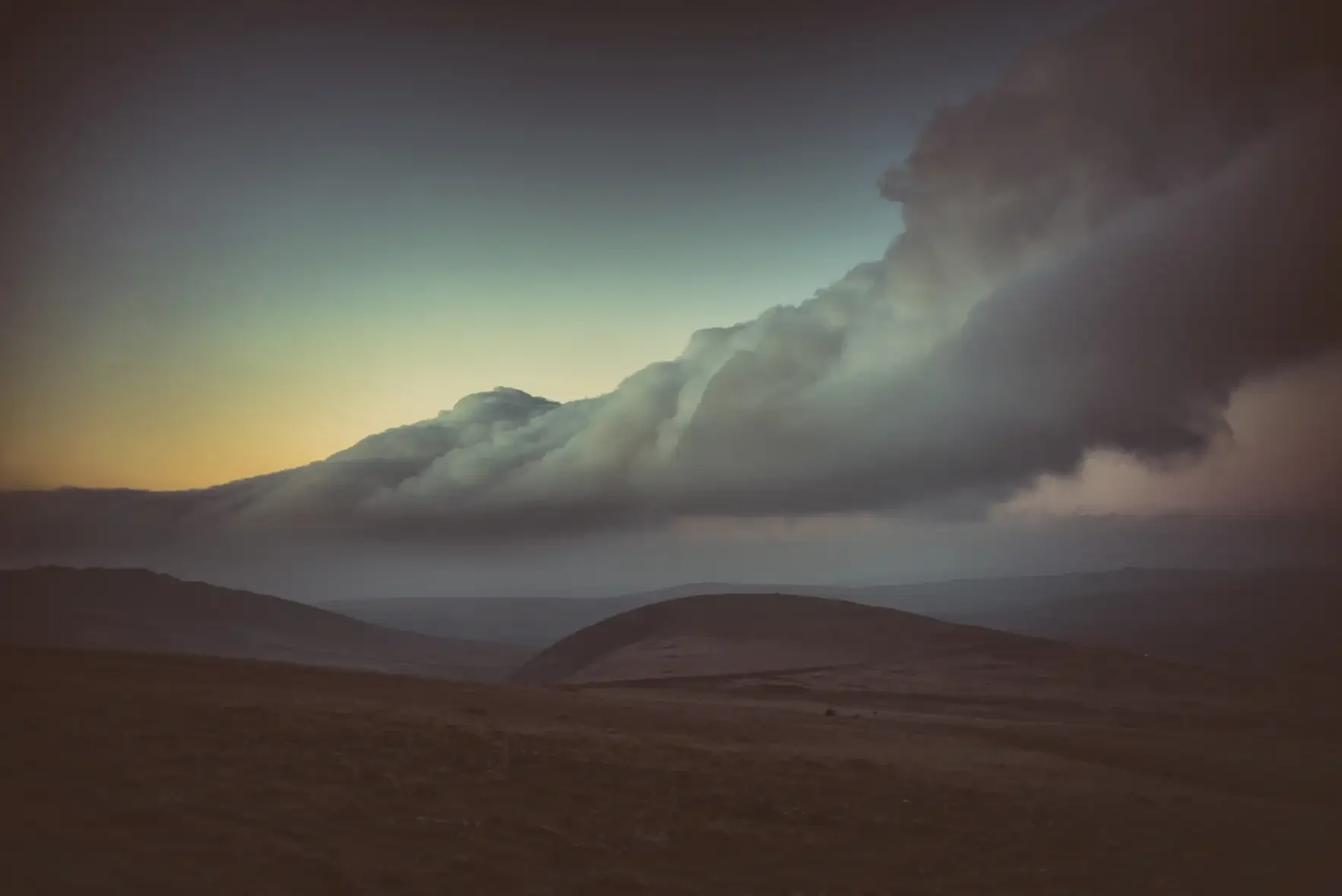
Amazing Cloud over Plum Pudding Hill (aka Great Nodden)
There’s Always Time and Space to Experiment on Dartmoor
In my opinion one of the beautiful aspects of Dartmoor is it’s an open air classroom for photographers at any level.
Constantly changing light and weather means one moment you are shooting in bright sunlight and the next torrential rain. I’ve been at Lints Tor in sunshine in May and by the time we climbed to High Willhays there was heavy hale and the temperature had plummeted.
Visiting a tor gives you scope to experiment with all focal lengths, shoot closeups of the granite outcrops or wide angles of vistas stretching into the distance.
Many people dislike a low contrast image, but mist on Dartmoor is your friend (at least for photography) every image in mist is heightened in drama at least threefold (just make sure you know where you are and how to get back).
Dartmoor is all about looking and seeing. Never forget to look behind you!
If you’re new to the moor or don’t fancy trying to traverse a bog or two, feel free to take a look at my guided walks. I’m always happy to help out and can be as hands on or hands off as you require.

An old TV lens adds magic to a photograph taken near The River Dart
Practical considerations for visiting photographers on Dartmoor
While Dartmoor is accessible, it still demands respect and preparation.
There are a few things many people who visit Dartmoor are unaware of and I don’t normally see these addressed properly.
*** PARTS OF DARTMOOR ARE USED BY THE MILITARY - THEY USE LIVE AMMUNITION ***
There are three military ranges on Dartmoor and they all have live firing at one time or another. Red flags are flown on tors within the ranges and red lamps by night when firing is taking place and wardens patrol the perimeters, this doesn’t mean you shouldn’t check before setting off on a walk.
Although Dartmoor is well know for allowing “Wild Camping” it should be remembered that this is only in certain areas and that you can only camp if you are carrying your kit with you. Check the Dartmoor National Park Map to see where you are allowed to camp and other restrictions that apply.
Weather on Dartmoor can change incredibly quickly, wear decent waterproofs, warm layers and always carry a map and compass (along with any GPS or phone navigation app) - Large areas of Dartmoor receive zero mobile phone coverage, so never solely rely upon your phone.
There are some very distinct and easily walkable tracks on Dartmoor, however these are the exception and not the rule. Many tracks are rough and most of the moor is pathless and boggy in places. Wear sturdy footwear and know your limits in these conditions.
The moor has common grazing rights and you will come across sheep, cattle and ponies on your journey.
Dogs need are to be kept on leads at certain times of the year to protect livestock and breeding ground birds and they should always be under your control.
Ground Nesting Birds - Areas to Avoid
A little planning can go a long way. Know where you’re going to park, how long your route will take and let somebody know where you are going!
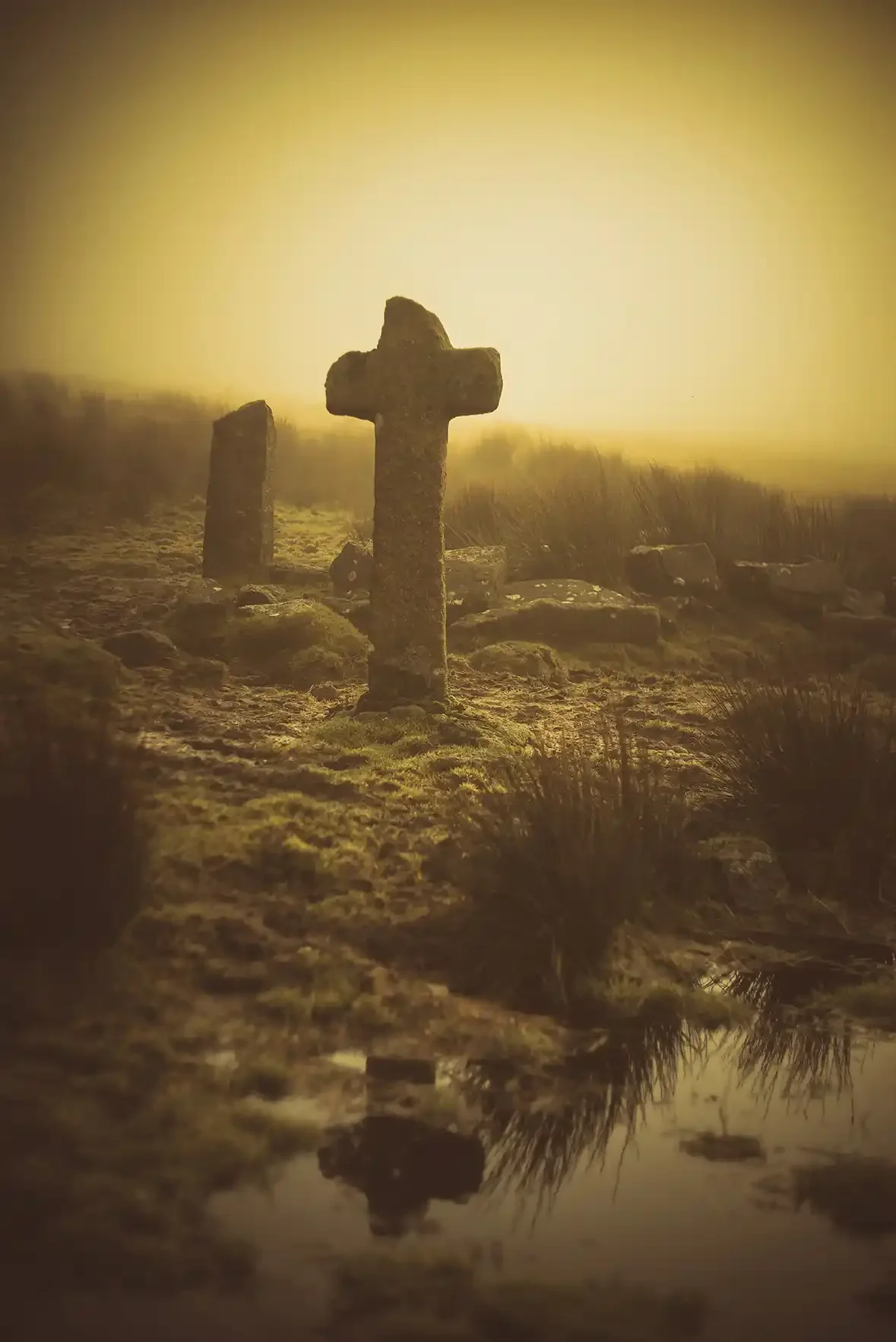
Cross at Misery Mount
Why it’s worth the effort to visit Dartmoor with your camera
For many photographers, Dartmoor becomes a place they return to repeatedly rather than ticking off their “to-do” list just the once. There are many people who spend most of their time on Dartmoor that are still finding new things to see and photograph (I know because I am one of them 😍)
If you enjoy fantastical atmospheric landscapes, changeable conditions and places that show a different side to them time and time again, Dartmoor National Park offers almost endless photographic potential.
If you’re looking for a helping hand, as a fully qualified Hill & Moorland Leader and a photographer, I’m in a unique position to offer help and advice. Although I’m known for running Workshops and Photographic Walks on Dartmoor, asking costs nothing 😍